
Catalogue Search | MBRL


Are you sure you want to remove the book from the shelf?

{{itemTitle}}
8,447
result(s) for
"Physicians Professional ethics."
Sort by:

Medicine and morality : crises in the history of a profession
\"Medical professionals are expected to act in the interest of patients, the public, and the pursuit of medical knowledge. Their disinterested pursuit offers them credibility and authority. But what happens when doctors' supposed impartiality comes under fire? Medicine and Morality considers the ways in which moral and scientific norms in Canadian medicine have emerged and evolved over time. Critics of biomedicine tend to discuss conflict of interest as a contemporary phenomenon - namely in relation to the damaging influence of the pharmaceutical industry on medical practice and research. But Helen Kang examines three moments in the history of the medical profession in Canada, spanning more than 150 years, when doctors' moral and scientific authority was questioned. Kang shows that, in these moments of crisis, the profession was compelled to re-examine its priorities, strategize in order to regain credibility, and redefine what it means to be a good doctor. Medicine and Morality reveals that professional medicine defines integrity, objectivity, accountability, neutrality, and other ideals according to its social, political, historical, and economic struggles with the state, the media, and even the public. In other words, moral and scientific standards in medicine are determined in direct relation to, not in spite of, conflict of interest.\"-- Provided by publisher.
Book

Disrupted dialogue : medical ethics and the collapse of physician-humanist communication (1770-1980)
Medical ethics changed dramatically in the past 30 years because physicians and humanists actively engaged each other in discussions that sometimes led to confrontation and controversy, but usually have improved the quality of medical decision-making. Before then medical ethics had been isolated for almost two centuries from the larger philosophical, social, and religious controversies of the time. There was, however, an earlier period where leaders in medicine and in the humanities worked closely together and both fields were richer for it. This volume begins with the 18th century Scottish Enlightenment when professors of medicine such as John Gregory, Edward Percival, and the American, Benjamin Rush, were close friends of philosophers like David Hume, Adam Smith, and Thomas Reid. They continually exchanged views on matters of ethics with each other in print, at meetings of elite intellectual groups, and at the dinner table. Then something happened, physicians and humanists quit talking with each other. In searching for the causes of the collapse, this book identifies shifts in the social class of physicians, developments in medical science, and changes in the patterns of medical education. Only in the past three decades has the dialogue resumed as physicians turned to humanists for help just when humanists wanted their work to be relevant to real-life social problems. Again, the book asks why, finding answers in the shift from acute to chronic disease as the dominant pattern of illness, the social rights revolution of the 1960’s, and the increasing dissonance between physician ethics and ethics outside medicine. The book tells the critical story of how the breakdown in communication between physicians and humanists occurred and how it was repaired when new developments in medicine together with a social revolution forced the leaders of these two fields to resume their dialogue.
eBook


On the take : how medicine's complicity with big business can endanger your health
We all know that doctors accept gifts from drug companies, ranging from pens and coffee mugs to free vacations at luxurious resorts. But as this book exposes, these innocuous-seeming gifts are just the tip of an iceberg that is distorting the practice of medicine and jeopardizing the health of millions of Americans today. This book offers an unsettling look at the pervasive payoffs that physicians take from big drug companies and other medical suppliers, arguing that the billion-dollar onslaught of industry money has deflected many physicians' moral compasses and directly impacted the everyday care we receive from the doctors and institutions we trust most. Underscored by countless chilling untold stories, the book illuminates the financial connections between the wealthy companies that make drugs and the doctors who prescribe them. The book details the shocking extent of these financial enticements and explains how they encourage bias, promote dangerously misleading medical information, raise the cost of medical care, and breed distrust.
eBook
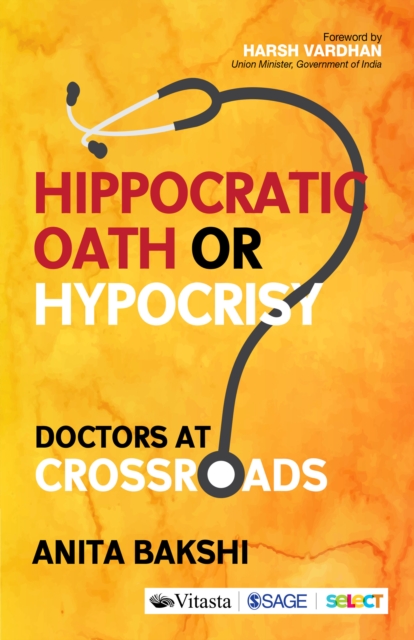
Hippocratic Oath or Hypocrisy?
An honest portrayal of the medical industry today by a doctor who is a part of the system herself.
eBook

The Hippocratic oath and the ethics of medicine
This engaging book examines what the Hippocratic Oath meant to Greek physicians 2400 years ago, and reflects on its relevance to medical ethics today. Drawing on the writings of ancient physicians, Greek playwrights, and modern scholars, each chapter explores one of its passages and concludes with a modern case discussion. The Oath proposes principles governing the relationship between the physician and society and patients. It rules out the use of poison and a hazardous abortive technique. It defines integrity and discretion in physicians’ speech. The ancient Greek medical works written during the same period as the Oath reveal that Greek physicians understood that they had a duty to avoid medical errors and learn from bad outcomes. These works showed how and why to tell patients about their diseases and dire prognoses in order to develop a partnership for healing and to build the credibility of the profession. Miles uses these writings to illuminate the meaning of the Oath in its day and in so doing shows how, and why it remains a valuable guide to the ethical practice of medicine. This is a book for anyone who loves medicine and is concerned about the ethics and history of this profession.
eBook

After harm : medical error and the ethics of forgiveness
Medical error is a leading problem of health care in the United States. Each year, more patients die as a result of medical mistakes than are killed by motor vehicle accidents, breast cancer, or AIDS.
While most government and regulatory efforts are directed toward reducing and preventing errors, the actions that should follow the injury or death of a patient are still hotly debated. According to Nancy Berlinger, conversations on patient safety are missing several important components: religious voices, traditions, and models.
In After Harm, Berlinger draws on sources in theology, ethics, religion, and culture to create a practical and comprehensive approach to addressing the needs of patients, families, and clinicians affected by medical error. She emphasizes the importance of acknowledging fallibility, telling the truth, confronting feelings of guilt and shame, and providing just compensation. After Harm adds important human dimensions to an issue that has profound consequences for patients and health care providers.
eBook


Medicine, money, and morals : physicians' conflicts of interest
Medicine, Money and Morals explores physicians’ financial conflicts of interest. These conflicts are described and explained with details of how they have changed overtime and how professionals and society have addressed them in the past. Parallels are drawn with conflicts of interest in other professions including lawyers, public officials, and financial advisors. It is shown that these problems are getting worse and how they affect patients, society in general, and the doctors themselves. Based on his own experience as a health lawyer, along with investigative reporting and a careful study of health ethics, law and policy, the author reveals the full dimensions of the problem. This controversial book will be of interest to all physicians, public health officials, and medical ethicists as well as patients themselves. become a health policy issue. This book explains what these conflicts of interest are, how they have changed over the past century, what the organized medical profession has done about them in the past and how these problems are dealt with now by physicians and society. It also shows how such problems are dealt with in other fields and what options society has in trying to address these issues in the future.
eBook
