
Catalogue Search | MBRL


Are you sure you want to remove the book from the shelf?

{{itemTitle}}
1,948
result(s) for
"Physics Formulae."
Sort by:

Sciencia : mathematics, physics, chemistry, biology, and astronomy for all
\"From the structure of the cosmos to that of the human body, the discoveries of science over the past few hundred years have been remarkable. Sciencia spans the realms of mathematics, physics, chemistry, biology, and astronomy, offering an invaluable introduction to each. Curious about quarks, quasars, and the fantastic universe around you? Ever wanted to explore a mathematical proof? Need an introduction to biochemistry? Beautifully illustrated with engravings, woodcuts, and original drawings and diagrams, Sciencia will inspire inquisitive readers of all ages to appreciate the interconnected knowledge of the modern sciences\"--Page 4 of cover.
Book
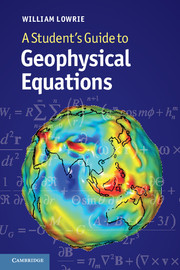
A Student's Guide to Geophysical Equations
The advent of accessible student computing packages has meant that geophysics students can now easily manipulate datasets and gain first-hand modeling experience - essential in developing an intuitive understanding of the physics of the Earth. Yet to gain a more in-depth understanding of physical theory, and to develop new models and solutions, it is necessary to be able to derive the relevant equations from first principles. This compact, handy book fills a gap left by most modern geophysics textbooks, which generally do not have space to derive all of the important formulae, showing the intermediate steps. This guide presents full derivations for the classical equations of gravitation, gravity, tides, earth rotation, heat, geomagnetism and foundational seismology, illustrated with simple schematic diagrams. It supports students through the successive steps and explains the logical sequence of a derivation - facilitating self-study and helping students to tackle homework exercises and prepare for exams.
eBook

Collective flow in single-hit QCD kinetic theory
A
bstract
Motivated by recent interest in collectivity in small systems, we calculate the harmonic flow response to initial geometry deformations within weakly coupled QCD kinetic theory using the first correction to the free-streaming background. We derive a parametric scaling formula that relates harmonic flow in systems of different sizes and different generic initial gluon distributions. We comment on similarities and differences between the full QCD effective kinetic theory and the toy models used previously. Finally we calculate the centrality dependence of the integrated elliptic flow
v
2
in oxygen-oxygen, proton-lead and proton-proton collision systems.
Journal Article
Weight shifting operators and conformal blocks
A
bstract
We introduce a large class of conformally-covariant differential operators and a crossing equation that they obey. Together, these tools dramatically simplify calculations involving operators with spin in conformal field theories. As an application, we derive a formula for a general conformal block (with arbitrary internal and external representations) in terms of derivatives of blocks for external scalars. In particular, our formula gives new expressions for “seed conformal blocks” in 3d and 4d CFTs. We also find simple derivations of identities between external-scalar blocks with different dimensions and internal spins. We comment on additional applications, including deriving recursion relations for general conformal blocks, reducing inversion formulae for spinning operators to inversion formulae for scalars, and deriving identities between general 6
j
symbols (Racah-Wigner coefficients/“crossing kernels”) of the conformal group.
Journal Article
Fishnet four-point integrals: integrable representations and thermodynamic limits
A
bstract
We consider four-point integrals arising in the planar limit of the conformal “fishnet” theory in four dimensions. They define a two-parameter family of higher-loop Feynman integrals, which extend the series of ladder integrals and were argued, based on integrability and analyticity, to admit matrix-model-like integral and determinantal representations. In this paper, we prove the equivalence of all these representations using exact summation and integration techniques. We then analyze the large-order behaviour, corresponding to the thermodynamic limit of a large fishnet graph. The saddle-point equations are found to match known two-cut singular equations arising in matrix models, enabling us to obtain a concise parametric expression for the free-energy density in terms of complete elliptic integrals. Interestingly, the latter depends non-trivially on the fishnet aspect ratio and differs from a scaling formula due to Zamolodchikov for large periodic fishnets, suggesting a strong sensitivity to the boundary conditions. We also find an intriguing connection between the saddle-point equation and the equation describing the Frolov-Tseytlin spinning string in
AdS
3
×
S
1
, in a generalized scaling combining the thermodynamic and short-distance limits.
Journal Article
One-loop amplitudes on the Riemann sphere
A
bstract
The scattering equations provide a powerful framework for the study of scattering amplitudes in a variety of theories. Their derivation from ambitwistor string theory led to proposals for formulae at one loop on a torus for 10 dimensional supergravity, and we recently showed how these can be reduced to the Riemann sphere and checked in simple cases. We also proposed analogous formulae for other theories including maximal super-Yang-Mills theory and supergravity in other dimensions at one loop. We give further details of these results and extend them in two directions. Firstly, we propose new formulae for the one-loop integrands of Yang-Mills theory and gravity in the absence of supersymmetry. These follow from the identification of the states running in the loop as expressed in the ambitwistor-string correlator. Secondly, we give a systematic proof of the non-supersymmetric formulae using the worldsheet factorisation properties of the nodal Riemann sphere underlying the scattering equations at one loop. Our formulae have the same decomposition under the recently introduced Q-cuts as one-loop integrands and hence give the correct amplitudes.
Journal Article
New gravitational memories
A
bstract
The conventional gravitational memory effect is a relative displacement in the position of two detectors induced by radiative energy flux. We find a new type of gravitational ‘spin memory’ in which beams on clockwise and counterclockwise orbits acquire a relative delay induced by radiative angular momentum flux. It has recently been shown that the displacement memory formula is a Fourier transform in time of Weinberg’s soft graviton theorem. Here we see that the spin memory formula is a Fourier transform in time of the recently-discovered subleading soft graviton theorem.
Journal Article
Scattering equations and matrices: from Einstein to Yang-Mills, DBI and NLSM
A
bstract
The tree-level S-matrix of Einstein’s theory is known to have a representation as an integral over the moduli space of punctured spheres localized to the solutions of the scattering equations. In this paper we introduce three operations that can be applied on the integrand in order to produce other theories. Starting in
d
+
M
dimensions we use dimensional reduction to construct Einstein-Maxwell with gauge group U(1)
M
. The second operation turns gravitons into gluons and we call it “squeezing”. This gives rise to a formula for all multi-trace mixed amplitudes in Einstein-Yang-Mills. Dimensionally reducing Yang-Mills we find the S-matrix of a special Yang-Mills-Scalar (YMS) theory, and by the squeezing operation we find that of a YMS theory with an additional cubic scalar vertex. A corollary of the YMS formula gives one for a single massless scalar with a
ϕ
4
interaction. Starting again from Einstein’s theory but in
d
+
d
dimensions we introduce a “generalized dimensional reduction” that produces the Born-Infeld theory or a special Galileon theory in
d
dimensions depending on how it is applied. An extension of Born-Infeld formula leads to one for the Dirac-Born-Infeld (DBI) theory. By applying the same operation to Yang-Mills we obtain the U(
N
) non-linear sigma model (NLSM). Finally, we show how the Kawai-Lewellen-Tye relations naturally follow from our formulation and provide additional connections among these theories. One such relation constructs DBI from YMS and NLSM.
Journal Article
Analytic Euclidean bootstrap
A
bstract
We solve crossing equations analytically in the deep Euclidean regime. Large scaling dimension ∆ tails of the weighted spectral density of primary operators of given spin in one channel are matched to the Euclidean OPE data in the other channel. Subleading
1
Δ
tails are systematically captured by including more operators in the Euclidean OPE in the dual channel. We use dispersion relations for conformal partial waves in the complex ∆ plane, the Lorentzian inversion formula and complex tauberian theorems to derive this result. We check our formulas in a few examples (for CFTs and scattering amplitudes) and find perfect agreement. Moreover, in these examples we observe that the large ∆ expansion works very well already for small ∆
∼
1. We make predictions for the 3d Ising model. Our analysis of dispersion relations via complex tauberian theorems is very general and could be useful in many other contexts.
Journal Article
Universal dynamics of heavy operators in CFT2
A
bstract
We obtain an asymptotic formula for the average value of the operator product expansion coefficients of any unitary, compact two dimensional CFT with
c >
1. This formula is valid when one or more of the operators has large dimension or — in the presence of a twist gap — has large spin. Our formula is universal in the sense that it depends only on the central charge and not on any other details of the theory. This result unifies all previous asymptotic formulas for CFT2 structure constants, including those derived from crossing symmetry of four point functions, modular covariance of torus correlation functions, and higher genus modular invariance. We determine this formula at finite central charge by deriving crossing kernels for higher genus crossing equations, which give analytic control over the structure constants even in the absence of exact knowledge of the conformal blocks. The higher genus modular kernels are obtained by sewing together the elementary kernels for four-point crossing and modular transforms of torus one-point functions. Our asymptotic formula is related to the DOZZ formula for the structure constants of Liouville theory, and makes precise the sense in which Liouville theory governs the universal dynamics of heavy operators in any CFT. The large central charge limit provides a link with 3D gravity, where the averaging over heavy states corresponds to a coarse-graining over black hole microstates in holographic theories. Our formula also provides an improved understanding of the Eigenstate Thermalization Hypothesis (ETH) in CFT
2
, and suggests that ETH can be generalized to other kinematic regimes in two dimensional CFTs.
Journal Article