
Catalogue Search | MBRL


Are you sure you want to remove the book from the shelf?

{{itemTitle}}
23,460
result(s) for
"Physiology history."
Sort by:


Dawn of the Neuron
In science, sometimes it is best to keep things simple. Initially discrediting the discovery of neurons in jellyfish, mid-nineteenth-century scientists grouped jellyfish, comb-jellies, hydra, and sea anemones together under one term - \"coelenterates\" - and deemed these animals too similar to plants to warrant a nervous system. In Dawn of the Neuron, Michel Anctil shows how Darwin's theory of evolution completely eradicated this idea and cleared the way for the modern study of the neuron. Once zoologists accepted the notion that varying levels of animal complexity could evolve, they began to use simple-structured creatures such as coelenterates and sponges to understand the building blocks of more complicated nervous systems. Dawn of the Neuron provides fascinating insights into the labours and lives of scientists who studied coelenterate nervous systems over several generations, and who approached the puzzling origin of the first nerve cells through the process outlined in evolutionary theory. Anctil also reveals how these scientists, who were willing to embrace improved and paradigm-changing scientific methods, still revealed their cultural backgrounds, their societal biases, and their attachments to schools of thought and academic traditions while presenting their ground-breaking work. Their attitudes toward the neuron doctrine - where neurons are individual, self-contained cells - proved decisive in the exploration of how neurons first emerged. Featuring photographs and historical sketches to illustrate this quest for knowledge, Dawn of the Neuron is a remarkably in-depth exploration of the link between Darwin's theory of evolution and pioneering studies and understandings of the first evolved nervous systems
eBook

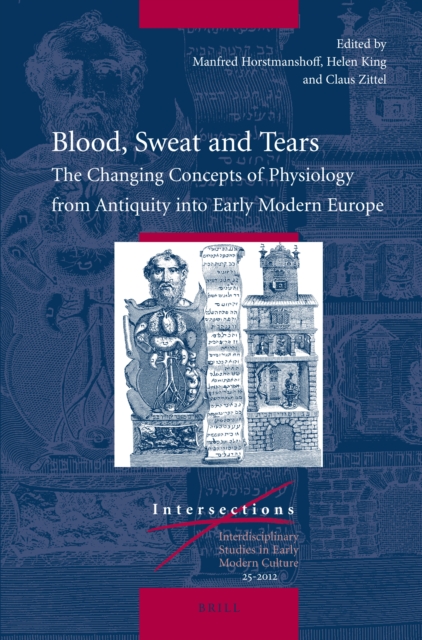
Blood, Sweat and Tears - The Changing Concepts of Physiology from Antiquity into Early Modern Europe
Drawing on the methods of a wide range of academic disciplines, this volume shifts the focus of the history of the body, exploring the many different ways in which its physiology and its fluids were understood in pre-modern European thought.
eBook

The man who touched his own heart : true tales of science, surgery, and mystery
Tells the raucous, gory, mesmerizing story of the heart, from the first \"explorers\" who dug up cadavers and plumbed their hearts' chambers, through the first heart surgeries-which had to be completed in three minutes before death arrived-to heart transplants and the latest medical efforts to prolong our hearts' lives, almost defying nature in the process. Thought of as the seat of our soul, then as a mysteriously animated object, the heart is still more a mystery than it is understood. Why do most animals only get one billion beats? (And how did modern humans get to over two billion-effectively letting us live out two lives?) Why are sufferers of gingivitis more likely to have heart attacks? Why do we often undergo expensive procedures when cheaper ones are just as effective? What do Da Vinci, Mary Shelley, and contemporary Egyptian archaeologists have in common? And what does it really feel like to touch your own heart, or to have someone else's beating inside your chest? Rob Dunn's fascinating history of our hearts brings us deep inside the science, history, and stories of the four chambers we depend on most.
Book

A century of exercise physiology: key concepts in neural control of the circulation
Early in the twentieth century, Walter B. Cannon (1871–1945) introduced his overarching hypothesis of “homeostasis” (Cannon 1932)—the ability to sustain physiological values within a narrow range necessary for life during periods of stress. Physical exercise represents a stress in which motor, respiratory and cardiovascular systems must be integrated across a range of metabolic stress to match oxygen delivery to oxygen need at the cellular level, together with appropriate thermoregulatory control, blood pressure adjustments and energy provision. Of these, blood pressure regulation is a complex but controlled variable, being the function of cardiac output and vascular resistance (or conductance). Key in understanding blood pressure control during exercise is the coordinating role of the autonomic nervous system. A long history outlines the development of these concepts and how they are integrated within the exercise context. This review focuses on the renaissance observations and thinking generated in the first three decades of the twentieth century that opened the doorway to new concepts of inquiry in cardiovascular regulation during exercise. The concepts addressed here include the following: (1) exercise and blood pressure, (2) central command, (3) neurovascular transduction with emphasis on the sympathetic nerve activity and the vascular end organ response, and (4) tonic neurovascular integration.
Journal Article

In oceans deep : courage, innovation, and adventure beneath the waves
In an age of unprecedented exploration and innovation, our oceans remain largely unknown, and endlessly fascinating. Streever celebrates the daring pioneers who tested the limits of what the human body can endure under water as he traces both the little-known history and exciting future of how we travel and study the depths. He covers seventeenth-century leather-hulled submarines, their nuclear-powered descendants, and robots capable of roving unsupervised between continents. Discover all the adventures our seas have to offer-- and why they are in such dire need of conservation. -- adapted from jacket
Book

The pace-of-life syndrome revisited: the role of ecological conditions and natural history on the slow-fast continuum
The pace-of-life syndrome (i.e., POLS) hypothesis posits that behavioral and physiological traits mediate the trade-off between current and future reproduction. This hypothesis predicts that life history, behavioral, and physiological traits will covary under clearly defined conditions. Empirical tests are equivocal and suggest that the conditions necessary for the POLS to emerge are not always met. We nuance and expand the POLS hypothesis to consider alternative relationships among behavior, physiology, and life history. These relationships will vary with the nature of predation risk, the challenges posed by resource acquisition, and the energy management strategies of organisms. We also discuss how the plastic response of behavior, physiology, and life history to changes in ecological conditions and variation in resource acquisition among individuals determine our ability to detect a fast-slow pace of life in the first place or associations among these traits. Future empirical studies will provide most insights on the coevolution among behavior, physiology, and life history by investigating these traits both at the genetic and phenotypic levels in varying types of predation regimes and levels of resource abundance.
Journal Article

History of anatomy : an international perspective
\"History of Anatomy: An International Perspective is unique in its global approach to studying the development of human anatomy. Though it references widely known anatomists, such as Aristotle, Galen, and Bell, the book also pay homage to less famous contributors to the field and explains their findings. This comprehensive history of the morphology of humans serves as a useful guide to anatomists, anthropologists, physicians, surgeons, and anyone interested in the early history of medicine and surgery\"-- Provided by publisher.
Book
Paceless life? A meta-analysis of the pace-of-life syndrome hypothesis
The pace-of-life syndrome hypothesis predicts that individual differences in behavior should integrate with morphological, physiological, and life-history traits along a slow to fast pace-of-life continuum. For example, individuals with a \"slow\" pace-of-life are expected to exhibit a slower growth rate, delayed reproduction, longer lifespans, have stronger immune responses, and are expected to avoid risky situations relative to \"fast\" individuals. If supported, this hypothesis would help resolve ecological and evolutionary questions regarding the origin and maintenance of phenotypic variation. Support for the pace-of-life syndrome hypothesis has, however, been mixed. Here, we conducted a meta-analysis of 42 articles and 179 estimates testing the pace-of-life syndrome hypothesis as it applies to the integration of behaviors with physiological or life-history traits. We found little overall support for the pace-of-life syndrome hypothesis with the mean support estimated as r = 0.06. Support for the pace-of-life syndrome hypothesis was significantly higher in invertebrates (r=0.23) than vertebrates (r=0.02) and significantly higher when based on phenotypic (r=0.10) versus genetic correlations (r=–0.09). We a lso found that females exhibited correlations between behavior and life-history and physiology that were opposite the predictions of the pace-of-life syndrome hypothesis (r=-0.16) and that these correlations significantly differed from those observed in males (r=0.01) or males and females pooled (r=0.12). It was also the case that there was little support for the hypothesis when life-history and physiological traits were independently analyzed (behavior × life-history: r=0.12; behavior × physiology: r=0.04). Exploratory post hoc analyses revealed that correlations of behavior with growth rate and hormone levels were more likely to show support for the predictions of the pace-of-life syndrome hypothesis. The lack of overall support found in our analyses suggests that general assertions regarding phenotypic integration due to \"pace-of-life\" should be re-evaluated.
Journal Article