
Catalogue Search | MBRL


Are you sure you want to remove the book from the shelf?

{{itemTitle}}
31
result(s) for
"Piano music 20th century History and criticism."
Sort by:

Reflections : the piano music of Maurice Ravel
From Reflections: The Piano Music of Maurice Ravel.
Book
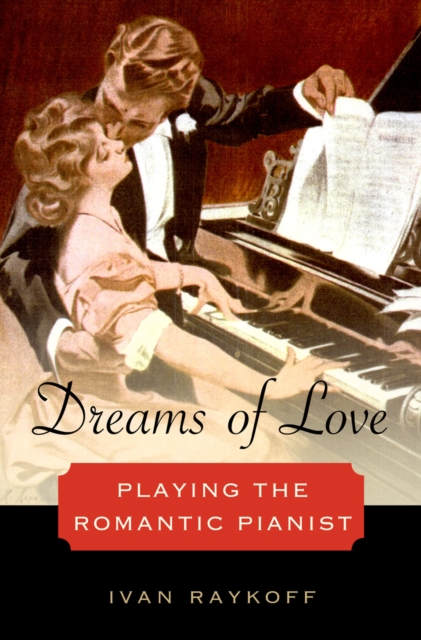
Dreams of love : playing the romantic pianist
The Romantic pianist—the solo pianist who plays nineteenth-century piano music—has become an attractive figure in the popular imagination, considering the innumerable artworks, literary works, and films representing this performer’s seductive allure. Dreams of Love pursues a wide-ranging interdisciplinary approach to understanding the “romantic” pianist as a cultural icon, focusing on the role of technology in producing and perpetuating this mythology over the past two centuries. Sound recording and cinema have shaped the pianist’s music and image since the early twentieth century, but these contemporary media technologies build upon practices established during the early nineteenth century: the influence of the piano keyboard on early telegraphs and typewriters, the invention of the solo recital alongside developments in photography, and the ways that piano design and the placement of the instrument on the stage structure our viewing-listening perspectives. The concept of technology can be broadened to include the performance of gender and sexuality as further ways of making the pianist an attractive cultural figure. The book’s three sections deal with the touch, sights, and sounds of the Romantic pianist’s playing as mediated through various forms of technology. Analyzing these persistent Liebesträume and exploring how they function can reveal their meaning for performers, audiences, and music lovers of the past and present too.
eBook

Debussy's Paris : piano portraits of the belle époque
Claude Debussy's exquisite piano works have captivated generations with their dreamlike atmosphere and mysterious soundscapes. Written in Paris at the height of the Belle âEpoque, Debussy's works reflect not only the most appealing and innocent aspects of Paris but also the more disquieting attitudes of the time such as racism, colonial domination, and nationalistic hostility. Pianist Catherine Kautsky reveals little-known elements of Parisian culture and weaves the music, the man, the city, and the era into an indissoluble portrait that will delight anyone who has ever been entranced by Debussy's music or the city that inspired it. -- from back cover.
BOOK

The Jazz Problem
The Jazz Problem shows how high schools and colleges were
the primary sites of this generational debate around jazz, the
century's first cultural war. Schools were crucial sites of dispute
between the worldviews of the late nineteenth century and the
emerging modern world, one synonymous with jazz. As a major site of
character formation where students came of age, high schools and
colleges were the places where jazz was simultaneously celebrated
and denigrated. Educators saw jazz as inseparable from other vices,
such as smoking, drinking, \"immodest dress\" (for women), and some
degree of sexual activity. Yet young people felt jazz was their
music and relished the sense of generational autonomy that came
with their affinity for jazz. This book offers a fresh and
compelling look at the jazz controversy and how it shaped not only
America.
eBook

Freedom Sounds
An insightful examination of the impact of the Civil Rights Movement and African Independence on jazz in the 1950s and 60s, this book traces the complex relationships among music, politics, aesthetics, and activism through the lens of the hot button racial and economic issues of the time. It illustrates how the contentious and soul-searching debates in the Civil Rights, African Independence, and Black Power movements shaped aesthetic debates and exerted a moral pressure on musicians to take action. Throughout, its arguments show how jazz musicians' quest for self-determination as artists and human beings also led to fascinating and far-reaching musical explorations and a lasting ethos of social critique and transcendence. Across a broad body of issues of cultural and political relevance, the book considers the discursive, structural, and practical aspects of life in the jazz world of the 1950s and 1960s. In domestic politics, the book explores the desegregation of the American Federation of Musicians, the politics of playing to segregated performance venues in the 1950s, the participation of jazz musicians in benefit concerts, and strategies of economic empowerment. Issues of transatlantic importance such as the effects of anticolonialism and African nationalism on the politics and aesthetics of the music are also examined, from Paul Robeson's interest in Africa, to the State Department jazz tours, to the interaction of jazz musicians such as Art Blakey and Randy Weston with African diasporic aesthetics. It explores musicians' aesthetic agency in synthesizing influential forms of musical expression from a multiplicity of stylistic and cultural influences—African American music, popular song, classical music, African diasporic aesthetics, and other world music—through examples from cool jazz, hard bop, modal jazz, and the avant-garde. By considering the differences between aesthetic and socio-economic mobility, it presents a fresh interpretation of debates over cultural ownership, racism, reverse racism, and authenticity.
eBook
Jazz Theory - Contemporary Improvisation, Transcription and Composition
This course is designed to present and develop jazz arranging and compositional principles. In preparation for successful improvisation, composing and transcription, a wide range of theoretical topics are presented.The stylistic considerations of jazz improvisation and composition require an extensive and working knowledge of jazz theory, and mastery of diatonic, bitonal, poly-tonal and atonal theoretical maximums and processes - including the refining of the [imitation] transcription process towards theoretical justification and conventional usage.
eBook

Blowin’ the Blues Away
New York City has always been a mecca in the history of jazz, and in many ways the city's jazz scene is more important now than ever before. Blowin' the Blues Away examines how jazz has thrived in New York following its popular resurgence in the 1980s. Using interviews, in-person observation, and analysis of live and recorded events, ethnomusicologist Travis A. Jackson explores both the ways in which various participants in the New York City jazz scene interpret and evaluate performance, and the criteria on which those interpretations and evaluations are based. Through the notes and words of its most accomplished performers and most ardent fans, jazz appears not simply as a musical style, but as a cultural form intimately influenced by and influential upon American concepts of race, place, and spirituality.
eBook

Jazz Diplomacy
Jazz as an instrument of global diplomacy transformed superpower relations in the Cold War era and reshaped democracy's image worldwide. Lisa E. Davenport tells the story of America's program of jazz diplomacy practiced in the Soviet Union and other regions of the world from 1954 to 1968. Jazz music and jazz musicians seemed an ideal card to play in diminishing the credibility and appeal of Soviet communism in the Eastern bloc and beyond. Government-funded musical junkets by such jazz masters as Louis Armstrong, Dave Brubeck, Duke Ellington, Dizzy Gillespie, and Benny Goodman dramatically influenced perceptions of the U.S. and its capitalist brand of democracy while easing political tensions in the midst of critical Cold War crises. This book shows how, when coping with foreign questions about desegregation, the dispute over the Berlin Wall, the Cuban missile crisis, Vietnam, and the Soviet invasion of Czechoslovakia, jazz players and their handlers wrestled with the inequalities of race and the emergence of class conflict while promoting America in a global context. And, as jazz musicians are wont to do, many of these ambassadors riffed off script when the opportunity arose.
Jazz Diplomacyargues that this musical method of winning hearts and minds often transcended economic and strategic priorities. Even so, the goal of containing communism remained paramount, and it prevailed over America's policy of redefining relations with emerging new nations in Africa, Asia, and Latin America.
eBook

The amazing Bud Powell
Bud Powell was not only one of the greatest bebop pianists of all time, he stands as one of the twentieth century’s most dynamic and fiercely adventurous musical minds. His expansive musicianship, riveting performances, and inventive compositions expanded the bebop idiom and pushed jazz musicians of all stripes to higher standards of performance. Yet Powell remains one of American music’s most misunderstood figures, and the story of his exceptional talent is often overshadowed by his history of alcohol abuse, mental instability, and brutalization at the hands of white authorities. In this first extended study of the social significance of Powell’s place in the American musical landscape, Guthrie P. Ramsey, Jr. shows how the pianist expanded his own artistic horizons and moved his chosen idiom into new realms. Illuminating and multi-layered, The Amazing Bud Powell centralizes Powell’s contributions as it details the collision of two vibrant political economies: the discourses of art and the practice of blackness.
eBook

Why jazz happened
Why Jazz Happened is the first comprehensive social history of jazz. It provides an intimate and compelling look at the many forces that shaped this most American of art forms and the many influences that gave rise to jazz's post-war styles. Rich with the voices of musicians, producers, promoters, and others on the scene during the decades following World War II, this book views jazz's evolution through the prism of technological advances, social transformations, changes in the law, economic trends, and much more. In an absorbing narrative enlivened by the commentary of key personalities, Marc Myers describes the myriad of events and trends that affected the music's evolution, among them, the American Federation of Musicians strike in the early 1940s, changes in radio and concert-promotion, the introduction of the long-playing record, the suburbanization of Los Angeles, the Civil Rights movement, the \"British invasion\" and the rise of electronic instruments. This groundbreaking book deepens our appreciation of this music by identifying many of the developments outside of jazz itself that contributed most to its texture, complexity, and growth.
eBook