
Catalogue Search | MBRL


Are you sure you want to remove the book from the shelf?

{{itemTitle}}
398,785
result(s) for
"Picture books."
Sort by:

A Comparison of Children's Reading on Paper Versus Screen: A Meta-Analysis
This meta-analysis examines the inconsistent findings across experimental studies that compared children's learning outcomes with digital and paper books. We quantitatively reviewed 39 studies reported in 30 articles (n = 1,812 children) and compared children's story comprehension and vocabulary learning in relation to medium (reading on paper versus on-screen), design enhancements in digital books, the presence of a dictionary, and adult support for children aged between 1 and 8 years. The comparison of digital versus paper books that only differed by digitization showed lower comprehension scores for digital books. Adults' mediation during print books' reading was more effective than the enhancements in digital books read by children independently. However, with story-congruent enhancements, digital books outperformed paper books. An embedded dictionary had no or negative effect on children's story comprehension but positively affected children's vocabulary learning. Findings are discussed in relation to the cognitive load theory and practical design implications.
Journal Article
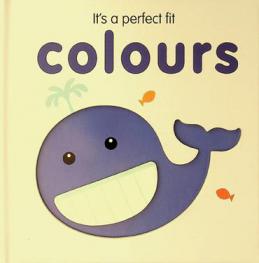
Colours
\"This tactile board book uses clear and bright pictures with simple captions to demonstrate colours.\"--Cataloguer.
Book

Shared Picture Book Reading Interventions for Child Language Development: A Systematic Review and Meta‐Analysis
Interventions that train parents to share picture books with children are seen as a strategy for supporting child language development. We conducted meta‐analyses using robust variance estimation modeling on results from 19 RCTs (Ntotal = 2,594; Mchildage = 1–6 years). Overall, book‐sharing interventions had a small sized effect on both expressive language (d = 0.41) and receptive language (d = 0.26). They had a large effect on caregiver book‐sharing competence (d = 1.01). The impact of the intervention on child language was moderated by intervention dosage, with lower dosage associated with a minimal impact. Child age and caregiver education level were unrelated to child outcome. This review and meta‐analysis confirms the promise of book‐sharing interventions for enhancing and accelerating child language development.
Journal Article

The cranky caterpillar
When little Ezra finds a sad and cranky caterpillar living in an old piano, she tries to cheer him up.
Book

The Words Children Hear: Picture Books and the Statistics for Language Learning
Young children learn language from the speech they hear. Previous work suggests that greater statistical diversity of words and of linguistic contexts is associated with better language outcomes. One potential source of lexical diversity is the text of picture books that caregivers read aloud to children. Many parents begin reading to their children shortly after birth, so this is potentially an important source of linguistic input for many children. We constructed a corpus of 100 children's picture books and compared word type and token counts in that sample and a matched sample of child-directed speech. Overall, the picture books contained more unique word types than the child-directed speech. Further, individual picture books generally contained more unique word types than length-matched, child-directed conversations. The text of picture books may be an important source of vocabulary for young children, and these findings suggest a mechanism that underlies the language benefits associated with reading to children.
Journal Article

I hate picture books!
Max hates his picture books and hes throwing them all away. But he soon learns just how invaluable imagination is and has a change of heart.
BOOK

The effect of picture book reading on young children’s use of an emotion regulation strategy
Picture book reading is an enjoyable everyday activity for many young children with well-known benefits for language development. The present study investigated whether picture book reading can support young children’s social-emotional development by providing a learning opportunity for the usage of emotion regulation strategies. Three-year-old children participated in two waiting situations designed to elicit negative affect. Between these waiting situations they read a picture book. In two experimental conditions, the book depicted how a protagonist (same-aged peer or young adult, respectively) waited for a desired object and distracted herself with toys while waiting. Children in an additional control condition read a picture book that was unrelated to waiting. Use of distraction did not differ between conditions. Parents often read picture book interactively with their children. Therefore, in an additional condition (Exp. 2), the experimenter read the picture book featuring the same-aged peer protagonist in an interactive way intended to facilitate transfer. Apart from the reading style, the design was identical to experiment 1. Experiment 2 intended to test whether changes in reading style lead to differences in three-year old children’s social-emotional learning from picture books. When controlling for the children’s picture book experience, children in the experimental conditions exhibited an increase in distraction in contrast to children in the control condition. In sum, results suggest that picture book reading could be an ecologically valid and versatile method for supporting 3-year-old children in their use of an age-appropriate adaptive emotion regulation strategies such as distraction.
Journal Article

An eye-tracking study on autistic children’s visual attention: The use of spatial-progression, time-sequence, colours and shape-patterns in picture book designs
Different from the visual attention of typically developing (TD) children, children with autism spectrum disorder (ASD) have the tendency to pay attention to parts rather than the whole of objects. Hence, the pictures in a typical story-based picture book, which usually contains various objects and elements, may appear distracting and discomforting for children with ASD. By recruiting 4–6-year-old ASD and TD children (N = 40) to participate in an eye-tracking experiment, this study examined participants’ visual attention on a typical children’s picture book and four other researcher-designed picture books that are simplified in composition and types of elements. Results from between-group comparisons indicated children with ASD had significantly fewer fixation counts and shorter total fixation durations when reading the story-based picture book than TD children. Significant within-group differences were also identified comparing the ASD participants’ reading of the story-based and the researcher-made picture books. However, the viewing behaviours of the ASD and TD groups when reading the researcher-designed books were much more similar. Discussion of the visual characteristics and practical implications for educators to effectively design picture books were offered.
Journal Article