
Catalogue Search | MBRL


Are you sure you want to remove the book from the shelf?

{{itemTitle}}
191
result(s) for
"Picture-writing."
Sort by:

Indigenous graphic communication systems : a theoretical approach
\"Challenges Western academic views on what writing is and explores how these concepts can be improved by analyzing the sophisticated graphic communication systems found in Central Mesoamerica and Andean South America. Exploring and rejecting the Western notion that writing exists only to record the chain of speech\"--Provided by publisher.
Book

Indigenous Graphic Communication Systems
Indigenous Graphic Communication Systems challenges the adequacy of Western academic views on what writing is and explores how they can be expanded by analyzing the sophisticated graphic communication systems found in Central Mesoamerica and Andean South America. By examining case studies from across the Americas, the authors pursue an enhanced understanding of Native American graphic communication systems and how the study of graphic expression can provide insight into ancient cultures and societies, expressed in indigenous words. Focusing on examples from Central Mexico and the Andes, the authors explore the overlap among writing, graphic expression, and orality in indigenous societies, inviting reevaluation of the Western notion that writing exists only to record language (the spoken chain of speech) as well as accepted beliefs of Western alphabetized societies about the accuracy, durability, and unambiguous nature of their own alphabetized texts. The volume also addresses the rapidly growing field of semasiography and relocates it more productively as one of several underlying operating principles in graphic communication systems. Indigenous Graphic Communication Systems reports new results and insights into the meaning of the rich and varied content of indigenous American graphic expression and culture as well as into the societies and cultures that produce them. It will be of great interest to Mesoamericanists, students, and scholars of anthropology, archaeology, art history, ancient writing systems, and comparative world history. The research for and publication of this book have been supported in part by the National Science Centre of Poland (decision no. NCN-KR-0011/122/13) and the Houston Museum of Natural Science. Contributors: Angélica Baena Ramírez, Christiane Clados, Danièle Dehouve, Stanisław Iwaniszewski, Michel R. Oudijk, Katarzyna Szoblik, Loïc Vauzelle, Gordon Whittaker, Janusz Z. Wołoszyn, David Charles Wright-Carr
eBook


Descendants of Aztec Pictography
In the aftermath of the sixteenth-century Spanish conquest of Mexico, Spanish friars and authorities partnered with indigenous rulers and savants to gather detailed information on Aztec history, religious beliefs, and culture. The pictorial books they created served the Spanish as aids to evangelization and governance, but their content came from the native intellectuals, painters, and writers who helped to create them. Examining the nine major surviving texts, preeminent Latin American art historian Elizabeth Hill Boone explores how indigenous artists and writers documented their ancestral culture. Analyzing the texts as one distinct corpus, Boone shows how they combined European and indigenous traditions of documentation and considers questions of motive, authorship, and audience. For Spanish authorities, she shows, the books revealed Aztec ideology and practice, while for the indigenous community, they preserved venerated ways of pictorial expression as well as rhetorical and linguistic features of ancient discourses. The first comparative analysis of these encyclopedias, Descendants of Aztec Pictography analyzes how the painted compilations embraced artistic traditions from both sides of the Atlantic.
eBook

The pleasures of structure : learning screenwriting through case studies
\"Helps develop a much deeper understanding of story structure, using case studies with short practical lessons which all emerge organically from the example at hand\"-- Provided by publisher.
Book

Sensorimotor and Social Grounding of Visual Symbol Representations: Examining Their Relationship with the Semantic Transparency of Japanese Industrial Standards Symbols
In this study, to examine the characteristics of visual symbol representation, we explored the effects of sensorimotor and social information on semantic transparency, a measure of the ease with which symbols are understood. We collected semantic transparency ratings for 313 Japanese Industrial Standard (JIS) symbols. Additionally, body-object interaction (BOI) and socialness were rated for linguistic stimuli represented by JIS symbols. BOI is a variable that represents the richness of an object's sensorimotor information, whereas socialness reflects the richness of an object's social nature. Hierarchical multiple regression analysis of the ratings and control variables revealed that BOI and socialness significantly accounted for the variance in the semantic transparency of visual symbols. These results suggest that sensorimotor and social information are essential in conceptualizing visual symbols. This study offers applied significance by identifying the factors that influence the understandability of visual symbols, and provides a theoretical contribution by conducting a cross-task investigation of the fundamental nature of semantic representations.
Journal Article

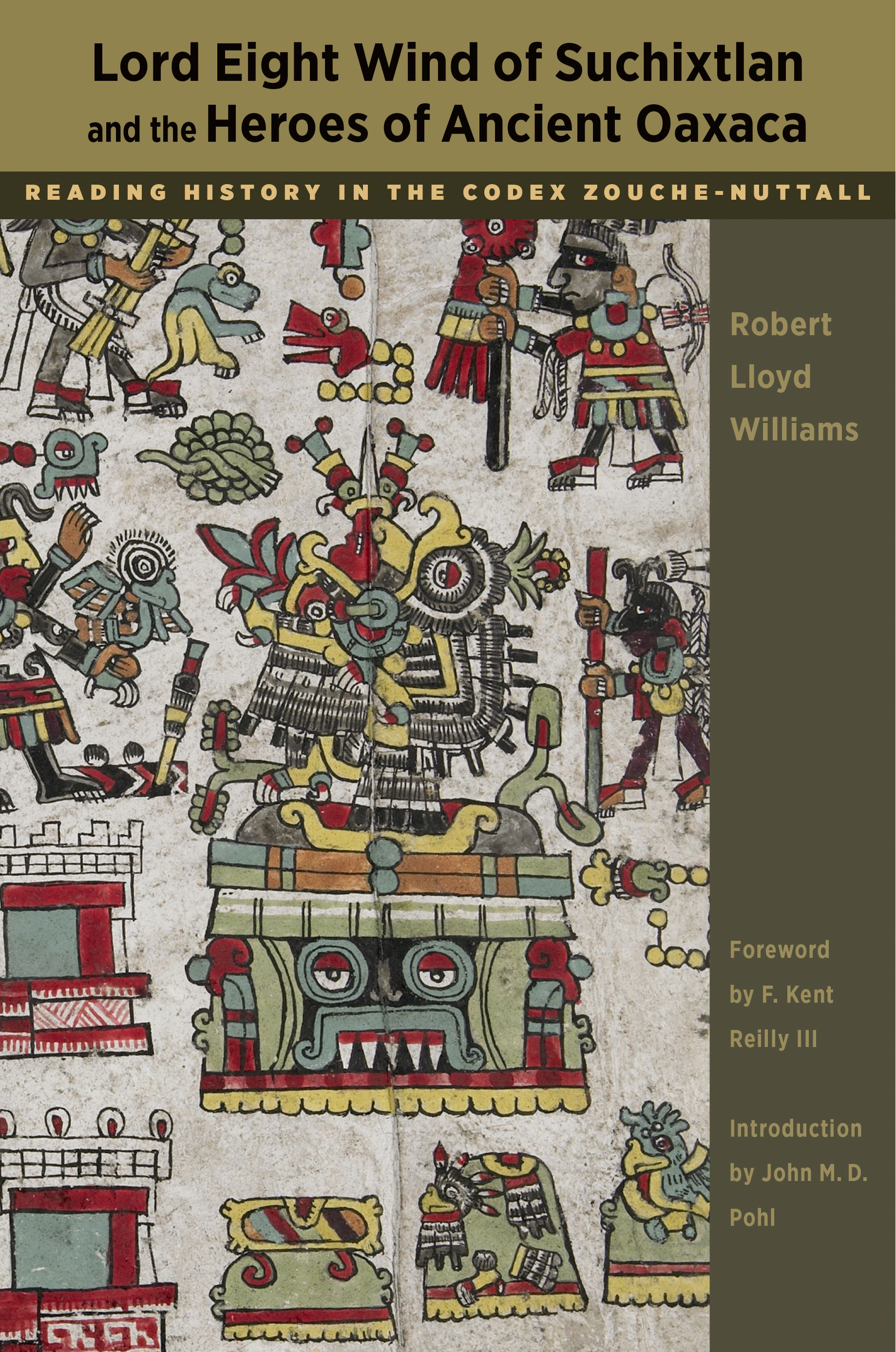
Lord Eight Wind of Suchixtlan and the Heroes of Ancient Oaxaca
In the pre-Hispanic Mesoamerican world, histories and collections of ritual knowledge were often presented in the form of painted and folded books now known as codices, and the knowledge itself was encoded into pictographs. Eight codices have survived from the Mixtec peoples of ancient Oaxaca, Mexico; a part of one of them, the Codex Zouche-Nuttall, is the subject of this book. As a group, the Mixtec codices contain the longest detailed histories and royal genealogies known for any indigenous people in the western hemisphere. The Codex Zouche-Nuttall offers a unique window into how the Mixtecs themselves viewed their social and political cosmos without the bias of western European interpretation. At the same time, however, the complex calendrical information recorded in the Zouche-Nuttall has made it resistant to historical, chronological analysis, thereby rendering its narrative obscure. In this pathfinding work, Robert Lloyd Williams presents a methodology for reading the Codex Zouche-Nuttall that unlocks its essentially linear historical chronology. Recognizing that the codex is a combination of history in the European sense and the timelessness of myth in the Native American sense, he brings to vivid life the history of Lord Eight Wind of Suchixtlan (AD 935–1027), a ruler with the attributes of both man and deity, as well as other heroic Oaxacan figures. Williams also provides context for the history of Lord Eight Wind through essays dealing with Mixtec ceremonial rites and social structure, drawn from information in five surviving Mixtec codices.
eBook

Lost in translation : an illustrated compendium of untranslatable words from around the world
\"An artistic collection of 50 drawings featuring unique, funny, and poignant foreign words that have no direct translation into English. Did you know that the Japanese have a word to express the way sunlight filters through the leaves of trees? Or that there's a Swedish word to describe the reflection of the moon across the water? The nuanced beauty of language is even more interesting and relevant in our highly communicative, globalized modern world. Lost in Translation brings this wonder to life with 50 ink illustrations featuring the foreign word, the language of origin, and a pithy definition. The words and definitions range from the lovely, such as goya, the Urdu word to describe the transporting suspension of belief that can occur in good storytelling, to the funny, like the Hawaiian pana po'o, which describes the act of scratching your head to remember something you've forgotten. Each beautiful, simple illustration adds just the right amount of visual intrigue to anchor the words and their meanings\"-- Provided by publisher.
Book
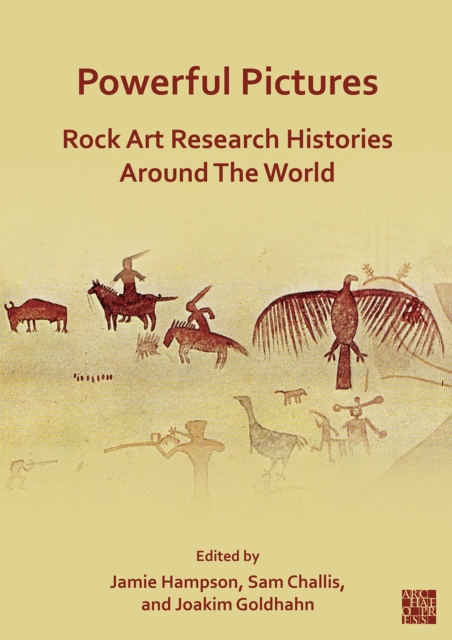
Powerful Pictures
Focusing on stunning paintings and engravings from around the world, Powerful Pictures interrogates the driving forces behind global rock art research. Many of the rock art motifs featured in the 16 chapters of this book were created by indigenous hunter-gatherer groups, and it sheds new light on non-Western rituals and worldviews, many of which are threatened or on the point of extinction. Stemming from a conference in Val Camonica in northern Italy, the book is arranged by continent, although it tackles how early research in some countries (e.g., Sweden, France, Spain, the USA, Canada, South Africa) influenced the trajectory of archaeological investigations in others (e.g., Australia, India, Mexico, Germany, Mongolia, Russia). All of the contributing authors have vast experience working with rock art and Indigenous communities, many of them holding posts in prestigious university departments around the world. The book will be of particular interest to professional historians, archaeologists, and anthropologists, and indeed anyone who is interested in art, symbolism, and the past.
eBook