
Catalogue Search | MBRL


Are you sure you want to remove the book from the shelf?

{{itemTitle}}
789
result(s) for
"Pinker, Steven"
Sort by:

On Steven Pinker’s Hobbesian Liberalism
The long-contested notion of a Hobbesian liberalism can make a crucial contribution to understanding the theory and practice of liberal politics, if it is understood in a specific way: namely, as identifying a particular psychology, or ethos, pioneered by Thomas Hobbes and carried over into liberalism. In this view, liberalism needs to be identified not only with institutional or legal structures (with regard to which Hobbes is no liberal), but also with Hobbesian practices of sociability, especially virtues of self-control. This Hobbesian view of liberalism is elaborated and defended by an influential recent work of political psychology, Steven Pinker’s The Better Angels of Our Nature: Why Violence Has Declined. This article shows how Pinker’s argument fits within, and helps to illuminate, the tradition of Hobbesian liberalism.
Journal Article
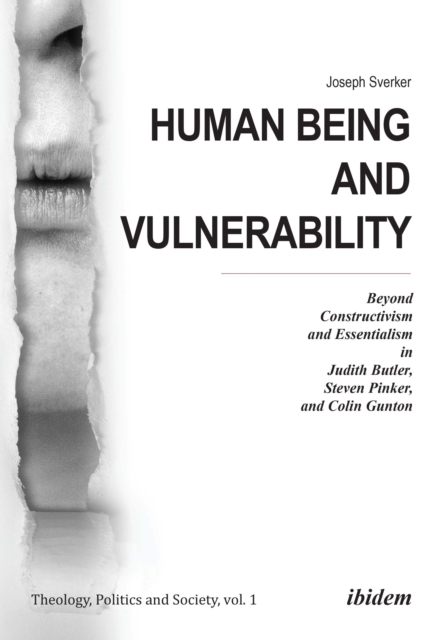
Human Being and Vulnerability
Joseph Sverker explores the division between social constructivism and a biologist essentialism by means of Christian theology.For this, Sverker uses a fascinating approach: He lets critical theorist Judith Butler, psycholinguist Steven Pinker, and systematic theologian Colin Gunton interact.
eBook


Ecclesiastes and Contemporary Argument
Abstract The book of Ecclesiastes is one of the least studied in the Bible. It should be more closely analysed for its critique of conventional, more ‘normative’ biblical books. Its relevance to contemporary thought has been unwittingly highlighted recently. Its argument against the normative view in the Bible mirrors arguments made in a recently published book by the British philosopher John Gray against the work of the Canadian psychologist and neuroscientist Steven Pinker. Ecclesiastes raises issues fundamental to contemporary discourse, such as whether we live in a world that progresses or whether the world is static and one where we are condemned to repeat the mistakes made by previous generations. This article demonstrates that current arguments, apparently deriving from Enlightenment thought, actually have origins going much further back. The author finally asks whether there really is nothing new under the sun. It is an article with a twist in the tail.
Journal Article

The Past as a Foreign Country
AbstractSteven Pinker’s thesis on the decline of violence since prehistory has resulted in many popular and scholarly debates on the topic that have ranged—at times even raged— across the disciplinary spectrum of evolution, psychology, philosophy, biology, history, and beyond. Those disciplines that made the most substantial contribution to the empirical data underpinning Pinker’s notion of a more violent prehistoric past, namely, archaeology and bioarchaeology/physical anthropology, have not featured as prominently in these discussions as may be expected. This article will focus on some of the issues resulting from Pinker’s oversimplified cross-disciplinary use of bioarchaeological data sets in support of his linear model of the past, a model that, incidentally, has yet to be incorporated into current accounts of violent practices in prehistory.
Journal Article

Techno-optimism: an Analysis, an Evaluation and a Modest Defence
What is techno-optimism and how can it be defended? Although techno-optimist views are widely espoused and critiqued, there have been few attempts to systematically analyse what it means to be a techno-optimist and how one might defend this view. This paper attempts to address this oversight by providing a comprehensive analysis and evaluation of techno-optimism. It is argued that techno-optimism is a pluralistic stance that comes in weak and strong forms. These vary along a number of key dimensions but each shares the view that technology plays a key role in ensuring that the good prevails over the bad. Whatever its strength, to defend this stance, one must flesh out an argument with four key premises. Each of these premises is highly controversial and can be subjected to a number of critiques. The paper discusses five such critiques in detail (the values critique, the treadmill critique, the sustainability critique, the irrationality critique and the insufficiency critique). The paper also considers possible responses from the techno-optimist. Finally, it is concluded that although strong forms of techno-optimism are not intellectually defensible, a modest, agency-based version of techno-optimism may be defensible.
Journal Article


Have wars and violence declined?
For over 150 years liberal optimism has dominated theories of war and violence. It has been repeatedly argued that war and violence either are declining or will shortly decline. There have been exceptions, especially in Germany and more generally in the first half of the twentieth century, but there has been a recent revival of such optimism, especially in the work of Azar Gat, John Mueller, Joshua Goldstein, and Steven Pinker who all perceive a long-term decline in war and violence through history, speeding up in the post-1945 period. Critiquing Pinker's statistics on war fatalities, I show that the overall pattern is not a decline in war, but substantial variation between periods and places. War has not declined and current trends are slightly in the opposite direction. The conventional view is that civil wars in the global South have largely replaced inter-state wars in the North, but this is misleading since there is major involvement in most civil wars by outside powers, including those of the North. There is more support for their view that homicide has declined in the long-term, at least in the North of the world (with the United States lagging somewhat). This is reinforced by technological improvements in long-distance weaponry and the two transformations have shifted war, especially in the North, from being \"ferocious\" to \"callous\" in character. This renders war less visible and less central to Northern culture, which has the deceptive appearance of being rather pacific. Viewed from the South the view has been bleaker both in the colonial period and today. Globally war and violence are not declining, but they are being transformed.
Journal Article

An Origin Story for Feminist Science Studies
Christa Kuljian’s Our Science, Ourselves chronicles the life histories of seven trailblazing women whose work, activism, and ferocity forms an originary node for feminist science studies. These figures formed a powerful network in the Boston area from the 1970s to the 1990s. Inspired by the women’s movement and organizations such as Science for the People and the Combahee River Collective, they led critical analyses of gender and racial biases in science. Their work famously challenged E.O. Wilson’s sociobiology in 1975 and Larry Summers’s comments about women in science in 2005. Drawing on extensive research, Kuljian celebrates how these women profoundly shaped our collective scientific knowledge and view of the world. I met Kuljian after she gave a talk at the STS colloquium series at Brown University in March 2025, and we subsequently connected for this interview.
Journal Article

King Jesus of Nazareth: An Evidential Inquiry
This article examines the ‘King Jesus Gospel’ concept proposed by Matthew Bates and Scott McKnight, which frames the biblical gospel as a proclamation of Jesus’ kingship. It addresses the ‘Failure Objection’ that Jesus was merely a failed apocalyptic prophet who died without fulfilling his predictions. Drawing on N.T. Wright’s work, this article constructs the ‘King Jesus Hypothesis’ and evaluates it using evidence from religious transformation, cultural values, and human progress. Employing the Criterion of Predictive Power, it argues that historical religious innovations (drawing on the work of Larry Hurtado), Western moral values (drawing on the work of Tom Holland), and measurable human flourishing (drawing on the work of Steven Pinker) are best explained by Jesus successfully inaugurating God’s Kingdom through cultural transformation rather than apocalyptic intervention. Through this analysis, the article demonstrates that compelling evidence supports Jesus’ kingship despite the Failure Objection.
Journal Article