
Catalogue Search | MBRL


Are you sure you want to remove the book from the shelf?

{{itemTitle}}
827
result(s) for
"Plague - prevention "
Sort by:

A phase I safety and immunogenicity dose escalation trial of plague vaccine, Flagellin/F1/V, in healthy adult volunteers (DMID 08-0066)
Intentional aerosolization of Yersinia pestis may result in pneumonic plague which is highly fatal if not treated early.
We conducted a phase 1 randomized, double blind (within each group), placebo controlled, dose escalation trial to evaluate a plague vaccine, Flagellin/F1/V, in healthy adults aged 8 through 45years. Vaccine was administered intramuscularly on Days 0 and 28 at a dose of 1, 3, 6 or 10mcg. Subjects were observed for 4h after vaccination for cytokine release syndrome. Reactogenicity and adverse events (AE) were collected for 14 and 28days, respectively, after each vaccination. Serious AE were collected for the entire study. ELISA antibody and cytokines were measured at multiple time points. Subject’s participation lasted 13months.
Sixty healthy subjects were enrolled; 52% males, 100% non-Hispanic, 91.7% white and mean age 30.8years. No severe reactogenicity events occurred; most AE were mild. No serious AE related to vaccine occurred. A dose response effect was observed to F1, V and flagellin. The peak ELISA IgG antibody titers (95% CI) after two 10mcg doses of vaccine were 260.0 (102.6–659.0) and 983.6 (317.3–3048.8), respectively, against F1 and V antigens. The 6mcg dose group provided similar titers. Titers were low for the placebo, 1mcg and 3mcg recipients. A positive antibody dose response was observed to F1, V and flagellin. Vaccine antigen specific serum IgE was not detected. There were no significant rises in serum or cellular cytokine responses and no significant IgG increase to flagellin after the second dose.
The Flagellin/F1/V vaccine exhibited a dose dependent increase in immunogenicity and was well tolerated at all doses. Antibody specific responses to F1, V and flagellin increased as dose increased. Given the results from this trial, testing higher doses of the vaccine may be merited.
Journal Article
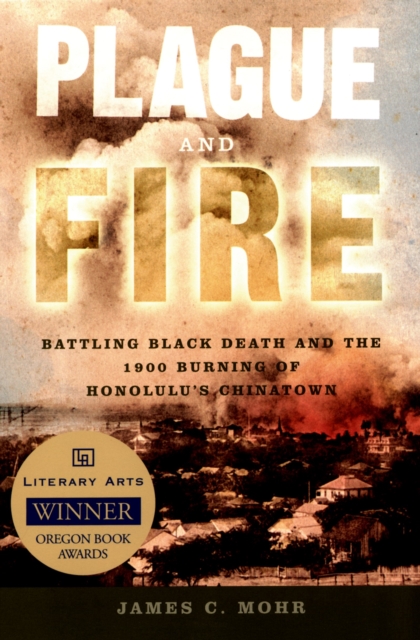
Plague and fire : battling black death and the 1900 burning of Honolulu's Chinatown
The bubonic plague reached Hawaii for the first time in 1899, just as the archipelago was being annexed by the US. To deal with the epidemic, governmental authorities granted absolute emergency powers to the Honolulu Board of Health. Committed to the new science of bacteriology, the Board physicians eventually decided to burn buildings where victims had died, hoping thereby to destroy any remaining plague bacilli. On January 20, 1900, one of those controlled burns burgeoned into a larger inferno that obliterated the Chinatown section of the city. In a few hours, over 5,000 people lost everything they had and were marched to detention camps where they were held under armed guard. Next to the bombing of Pearl Harbor, this remains the worst civic disaster in Hawaiian history, and probably the worst civic disaster ever to result from an American public health initiative. In the larger context of medical history, ethnic studies, and American imperialism, this book tells the story of how that catastrophe came about and how the principal racial and ethnic groups in Honolulu — Chinese, Japanese, Hawaiians, and whites — responded to the crisis.
eBook

Human plague: An old scourge that needs new answers
Yersinia pestis, the bacterial causative agent of plague, remains an important threat to human health. Plague is a rodent-borne disease that has historically shown an outstanding ability to colonize and persist across different species, habitats, and environments while provoking sporadic cases, outbreaks, and deadly global epidemics among humans. Between September and November 2017, an outbreak of urban pneumonic plague was declared in Madagascar, which refocused the attention of the scientific community on this ancient human scourge. Given recent trends and plague's resilience to control in the wild, its high fatality rate in humans without early treatment, and its capacity to disrupt social and healthcare systems, human plague should be considered as a neglected threat. A workshop was held in Paris in July 2018 to review current knowledge about plague and to identify the scientific research priorities to eradicate plague as a human threat. It was concluded that an urgent commitment is needed to develop and fund a strong research agenda aiming to fill the current knowledge gaps structured around 4 main axes: (i) an improved understanding of the ecological interactions among the reservoir, vector, pathogen, and environment; (ii) human and societal responses; (iii) improved diagnostic tools and case management; and (iv) vaccine development. These axes should be cross-cutting, translational, and focused on delivering context-specific strategies. Results of this research should feed a global control and prevention strategy within a \"One Health\" approach.
Journal Article

Protective outcomes of high-affinity monoclonal antibodies against drug-resistant plague strains
, a category A infectious organism, is known to cause bubonic, septicemic, and pneumonic plague. With the emergence of streptomycin-resistant strains, there is an urgent need for new therapeutic strategies that can protect populations from
infection. The main strategy for developing vaccines and therapeutic antibodies involves F1 antigen. Previous research has demonstrated that both human and murine monoclonal antibodies(mAbs) confer protective effects against
infection. While, no relevant studies were identified on mAbs against drug-resistance
.
Here, we constructed an antibody library from
vaccine strain EV76-immunized mice by phage display. The mAbs were baited by recombinant F1 antigen, and the biological functions of the obtained mAbs were assessed and evaluated in plague-challenged mice.
For the
strain 141 group, both Fm3 and Fm25 provided 100% protection at a dose of 100 µg. At 20 µg, only Fm3 conferred partial protection, with a survival rate of 25%, whereas all mice in the 4 µg treatment groups succumbed to infection within approximately 10 days. Against the drug-resistant
strain S19960127, Fm25 at 100 µg resulted in complete survival, whereas Fm3 at the same dose conferred 75% protection. Neither mAbs showed protective efficacy at 20 µg or 4 µg, and all animals dying within approximately 10 days post-infection.
These findings indicated that mAbs Fm3 and Fm25 confer protection against virulent and drug-resistant strains of
.
Journal Article

A multi-dimensional assessment of the 2021 mouse plague in New South Wales, Australia: Economic impacts and policy responses
Despite the periodic mouse plague outbreaks in Australia which largely occur due to favourable climatic conditions, their economic impacts remain understudied. To bridge this knowledge gap, the present study analysed the economic impacts of the 2021 mouse plague in New South Wales (Australia) among households, farms, and businesses/facilities. We further analysed the influence of selected cost parameters on mouse bait rebate claims by the farmers as well as the relative efficiency of the chemical mouse control options used by farmers to minimize avoidable crop yield losses. Our study found that the total direct cost of the 2021 mouse plague was A$ 100.62 million, with farmers bearing 67.10% of the total cost. It was also revealed that the type of farming influenced the likelihood of a farmer claiming or not claiming mouse bait rebate. The most efficient chemical mouse control option was the combination of anticoagulants used around buildings and zinc phosphide used in pastures and crops as it reduced avoidable crop yield losses more than each rodenticide when used independently. However, more research is required on how other variables may influence the efficiency of mouse control methods to forestall future outbreaks of mouse plagues and their associated economic impacts.
Journal Article
Sex differences in immune protection in mice conferred by heterologous vaccines for pneumonic plague
is the etiological agent of plague, which can manifest as bubonic, septicemic, and/or pneumonic disease. Plague is a severe and rapidly progressing illness that can only be successfully treated with antibiotics initiated early after infection. There are no FDA-approved vaccines for plague, and some vaccine candidates may be less effective against pneumonic plague than bubonic plague.
is not known to impact males and females differently in mechanisms of pathogenesis or severity of infection. However, one previous study reported sex-biased vaccine effectiveness after intranasal
challenge. As part of developing a safe and effective vaccine, it is essential that potential sex differences are characterized.
In this study we evaluated novel vaccines in male and female BALB/c mice using a heterologous prime-boost approach and monitored survival, bacterial load in organs, and immunological correlates. Our vaccine strategy consisted of two subcutaneous immunizations, followed by challenge with aerosolized virulent nonencapsulated
. Mice were immunized with a combination of live
pPst
Δ
, live
pPst
Δ
/Δ
, or recombinant F1-V (rF1-V) combined with adjuvants.
The most effective vaccine regimen was initial priming with rF1-V, followed by boost with either of the live attenuated strains. However, this and other strategies were more protective in female mice. Males had higher bacterial burden and differing patterns of cytokine expression and serum antibody titers. Male mice did not demonstrate synergy between vaccination and antibiotic treatment as repeatedly observed in female mice.
This study provides new knowledge about heterologous vaccine strategies, sex differences in plague-vaccine efficacy, and the immunological factors that differ between male and female mice.
Journal Article

Remodeling Yersinia pseudotuberculosis to generate a highly immunogenic outer membrane vesicle vaccine against pneumonic plague
A recombinant enteric Yersinia pseudotuberculosis PB1⁺ strain (Yptb) was designed to synthesize an adjuvant form of lipid A (monophosphoryl lipid A [MPLA]), and tailor an Asd⁺ plasmid pSMV13 for high synthesis of the Yersinia pestis LcrV antigen. The recombinant Yptb mutant harboring the pSMV13 dramatically increased the production of outer membrane vesicles (OMVs) enclosing high amounts of LcrV in comparison to its Y. pestis counterpart. Intramuscular (i.m.) immunization with 40 μg of OMVs from YptbS44(pSMV13) (termed OMVYptbS44-Bla-V) afforded complete protection to mice against medium (5 × 10³ colony-forming units [CFU], 50 median lethal dose [LD50]) and high (400 LD50) doses of pulmonary Y. pestis infection, as well as against subcutaneous (s.c.) infection with 5 × 10⁵ CFU (50,000 LD50) of Y. pestis. In addition, i.m. immunization with 40 μg of detoxified OMVs from YptbS45(pSMV13) (termed OMVYptbS45-Bla-V) afforded 90% protection against pulmonary challenge with 50 LD50 of Y. pestis and complete protection against s.c. challenge with 50,000 LD50 of Y. pestis. The protective efficacy was superior to that of vaccination with the F1V subunit vaccine or OMVs from a previous recombinant Y. pestis strain (termed OMVYp-Bla-V). Further, vaccination with OMVYptbS44-Bla-V induced robust humoral and cellular immune responses that were correlated with rapid bacterial clearance, unremarkable tissue damage, and low inflammatory cytokine production in the lungs during pulmonary Y. pestis challenge. Our results imply that the recombinant Yptb OMV delivering the Y. pestis protective antigen(s) merits further development as a next-generation plague vaccine candidate.
Journal Article

A Bacteriophage T4 Nanoparticle-Based Dual Vaccine against Anthrax and Plague
Following the deadly anthrax attacks of 2001, the Centers for Disease Control and Prevention (CDC) determined that Bacillus anthracis and Yersinia pestis that cause anthrax and plague, respectively, are two Tier 1 select agents that pose the greatest threat to the national security of the United States. Both cause rapid death, in 3 to 6 days, of exposed individuals. We engineered a virus nanoparticle vaccine using bacteriophage T4 by incorporating key antigens of both B. anthracis and Y. pestis into one formulation. Two doses of this vaccine provided complete protection against both inhalational anthrax and pneumonic plague in animal models. This dual anthrax-plague vaccine is a strong candidate for stockpiling against a potential bioterror attack involving either one or both of these biothreat agents. Further, our results establish the T4 nanoparticle as a novel platform to develop multivalent vaccines against pathogens of high public health significance. Bacillus anthracis and Yersinia pestis , the causative agents of anthrax and plague, respectively, are two of the deadliest pathogenic bacteria that have been used as biological warfare agents. Although Biothrax is a licensed vaccine against anthrax, no Food and Drug Administration-approved vaccine exists for plague. Here, we report the development of a dual anthrax-plague nanoparticle vaccine employing bacteriophage (phage) T4 as a platform. Using an in vitro assembly system, the 120- by 86-nm heads (capsids) of phage T4 were arrayed with anthrax and plague antigens fused to the small outer capsid protein Soc (9 kDa). The antigens included the anthrax protective antigen (PA) (83 kDa) and the mutated (mut) capsular antigen F1 and the low-calcium-response V antigen of the type 3 secretion system from Y. pestis (F1mutV) (56 kDa). These viral nanoparticles elicited robust anthrax- and plague-specific immune responses and provided complete protection against inhalational anthrax and/or pneumonic plague in three animal challenge models, namely, mice, rats, and rabbits. Protection was demonstrated even when the animals were simultaneously challenged with lethal doses of both anthrax lethal toxin and Y. pestis CO92 bacteria. Unlike the traditional subunit vaccines, the phage T4 vaccine uses a highly stable nanoparticle scaffold, provides multivalency, requires no adjuvant, and elicits broad T-helper 1 and 2 immune responses that are essential for complete clearance of bacteria during infection. Therefore, phage T4 is a unique nanoparticle platform to formulate multivalent vaccines against high-risk pathogens for national preparedness against potential bioterror attacks and emerging infections. IMPORTANCE Following the deadly anthrax attacks of 2001, the Centers for Disease Control and Prevention (CDC) determined that Bacillus anthracis and Yersinia pestis that cause anthrax and plague, respectively, are two Tier 1 select agents that pose the greatest threat to the national security of the United States. Both cause rapid death, in 3 to 6 days, of exposed individuals. We engineered a virus nanoparticle vaccine using bacteriophage T4 by incorporating key antigens of both B. anthracis and Y. pestis into one formulation. Two doses of this vaccine provided complete protection against both inhalational anthrax and pneumonic plague in animal models. This dual anthrax-plague vaccine is a strong candidate for stockpiling against a potential bioterror attack involving either one or both of these biothreat agents. Further, our results establish the T4 nanoparticle as a novel platform to develop multivalent vaccines against pathogens of high public health significance.
Journal Article

Development of a live-attenuated vaccine challenge model of Yersinia pestis in humans: Expert consultation on clinical trial considerations, January 2025
Yersinia pestis is the causative agent of plague – the archetypal bacterial pandemic disease. Plague remains endemic in several countries in Africa, South America, and Asia, posing high risks of zoonotic spill-over and epidemic spread or threat of deliberate release. Plague vaccine development remains a priority for pandemic preparedness initiatives but generating sufficient field data for vaccine licensure is challenging.
Controlled human infection studies have been deployed to test candidate vaccines against diseases with low and sporadic incidences of outbreaks where field trials are difficult. Typically, such studies use live attenuated or vaccine-type strains to measure clinical or microbiological end points of interest. To assess the feasibility of conducting a human vaccine-challenge study for Y. pestis, we hosted a one-day expert consultation workshop in January 2025. The aim was to discuss the practical, regulatory landscape and future use-case of such a model. We invited attendees from academia, industry, regulatory bodies, funders, and other stakeholders with expertise in Y. pestis biology and infection. The workshop combined presentations with breakout discussions and was divided into five sessions: i) Introduction to live attenuated Y. pestis vaccines; ii) Update of the contemporary plague vaccine landscape; iii) Assessment of biosafety and bio-security considerations; iv) Clinical and ethical considerations and v) public perceptions. Several challenges were identified, and potential strategies to address them were discussed.
This perspective builds on this workshop and lays the foundation for a collaborative consortium to develop a Y. pestis vaccine challenge model. Next steps include early-stage public engagement, strain characterization, and regulatory discussions to define how data from these studies could be used for assessing vaccine efficacy. Our vision is to establish a global network dedicated to advancing new vaccine technologies for an ancient disease.
Journal Article
