
Catalogue Search | MBRL


Are you sure you want to remove the book from the shelf?

{{itemTitle}}
20,437
result(s) for
"Planning Techniques"
Sort by:

Launching and Leading Change Initiatives in Health Care Organizations
Implement change that fosters sustainable growth and better patient care Health care projects depend on astute management of change. But more than anything else, they depend on leaders who pay attention, who understand the importance of starting right, and who know how to launch projects that succeed. If leaders can increase the percentage of successful projects, patients, and practitioners everywhere will be better off and so will the organizations that depend on these projects for innovation. In Launching and Leading Change Initiatives in Health Care Organizations: Managing Successful Projects. Author David A. Shore of the Harvard School of Public Health speaks directly to the health care leaders and managers who see the need for change, but keep encountering nearly insurmountable challenges. Through his research, Shore discovered that most implementation failures occur because of a poor launch, and that strengthening processes and operations during the early weeks of a new project is a key to continued success. The book covers issues like: The preliminary groundwork that cultivates a stronger launch Systematic and selective project selection Building the team that accomplishes change Skill-building and record-keeping systems that foster sustainable growth Launching and Leading Change Initiatives in Health Care Organizations gives leaders and managers the practical, easy-to-implement ideas and methodologies to start and manage projects successfully.
eBook

Museum resilience : adaptive planning for a new era
\"Focused on multiple-scenario planning method, Museum Resilience gets to the \"how\" for expanding inclusivity and decolonization efforts, as well as adapting in a time of visitation and financial challenges. Unique features of the book include explaining worldview differences, value-based planning techniques (adaptive and multiple-scenario), the specifics of expanding museum income through collaborations, and ways of developing learning programs that support cultural continuance. The author has field-tested these methods for 30 years (over 50 plans completed), blending her graduate degrees in Cultural Anthropology and Urban and Regional Planning to design methods for cross-cultural planning. Integral to the book are planning processes for museums to use with communities in addressing these issues. Each chapter contains an annotated \"Further Readings\" feature, useful for textbook readers. Another feature of the book is the integration of examples concerning potential roles museums can take in opening environmental awareness. The author is an experienced leader in culturally diverse issues, focusing on value-based planning and designing techniques that work across cultures\"-- Provided by publisher.
Book
Project management for the advanced practice nurse
Provides the basic project management for graduate-level nurses and students, with practical examples and tips. The text covers the skills and tools needed to better function in the management of a complex work environment. The concepts, tools, processes and terminology in this text are designed to be comprehensive.
eBook

Cultivating futures thinking in museums
\"Cultivating Futures Thinking in Museums provides examples of the active and diverse roles that museums are taking to expand futures thinking in communities, including developing capabilities to envision and enact more prosperous, equitable and sustainable futures. Presenting 21 examples that demonstrate how museums are cultivating futures capabilities in diverse global contexts, the volume acknowledges innovative practice, builds a foundation for growing futures work in the museum sector and inspires others in the field to adopt futures frameworks in their practices. This realm of thinking, including components of anticipating futures by exploring drivers of change; imagining immersive experiences of futures; creating tools and methods to enable futures capability; and participatory futures informing museum design practice provides important repsonses to the multitude of complex contemporary problems like climate change, technological development, and social inequity. The book prompts museums to think about their role in shaping alternative and novel narratives for our future. Cultivating Futures Thinking in Museums will primarily appeal to museum professionals, inspiring and informing them to adopt practices to further futures literacies. It will also appeal to academics, researchers, and students with an interest in museums, futures, design, contemporary art, curating and cultural studies\"-- Provided by publisher.
BOOK
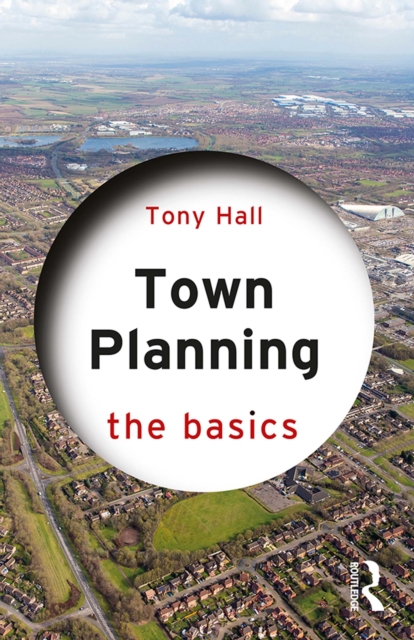
Town Planning
The planning of urban and rural areas requires thinking about where people will live, work, play, study, shop and how they will get about the place, and to devise strategies for long time periods. Town Planning: The Basics provides a general introduction to the components of urban areas, including housing, transportation and infrastructure, and health and environment, showing how appropriate policies can be developed. Explaining planning activity at different scales of operation, this book distinguishes between the \"big stuff\", the grand strategy for providing homes, jobs and infrastructure; the \"medium stuff\", the design and location of development; and the \"small stuff\" affecting mainly small sites and individual households.
Planning as an activity is part of a complex web stretching way beyond the planning office, and this book provides an overview of the many components needed to create a successful town. It is invaluable to anyone with an interest in planning, from students learning about the subject for the first time to graduates thinking about embarking on a career in planning, to local councillors on planning committees and community boards.
eBook


Habitual control of goal selection in humans
Humans choose actions based on both habit and planning. Habitual control is computationally frugal but adapts slowly to novel circumstances, whereas planning is computationally expensive but can adapt swiftly. Current research emphasizes the competition between habits and plans for behavioral control, yetmany complex tasks instead favor their integration. We consider a hierarchical architecture that exploits the computational efficiency of habitual control to select goals while preserving the flexibility of planning to achieve those goals. We formalize this mechanism in a reinforcement learning setting, illustrate its costs and benefits, and experimentally demonstrate its spontaneous application in a sequential decision-making task.
Journal Article

HBR's 10 must reads : on strategy
Is your company spending too much time on strategy development--with too little to show for it? If you read nothing else on strategy, read these 10 articles. We've combed through hundreds of Harvard Business Review articles and selected the most important ones to help you catalyze your organization's strategy development and execution. HBR's 10 Must Reads on Strategy will inspire you to: Distinguish your company from rivals; Clarify what your company will and won't do; Craft a vision for an uncertain future; Create blue oceans of uncontested market space; Use the Balanced Scorecard to measure your strategy; Capture your strategy in a memorable phrase; Make priorities explicit; Allocate resources early; Clarify decision rights for faster decision making. -- Publisher description.
Book

The Placemaker's Guide to Building Community
From the author of Small Change comes this engaging guide to placemaking, packed with practical skills and tools that architects, planners, urban designers and other built environment specialists need in order to engage effectively with development work in any context.
Drawing on four decades of practical and teaching experience, the author offers fresh insight into the complexities faced by practitioners when working to improve the communities, lives and livelihoods of people the world over. The book shows how these complexities are a context for, rather than a barrier to, creative work. The book also critiques the single vision top down approach to design and planning. Using examples of successful professional practice across Europe, the US, Africa, Latin America and post-tsunami Asia, the author demonstrates how good policy can derive from good practices when reasoned backwards, as well as how plans can emerge in practice without a preponderance of planning. Reasoning backwards is shown to be a more effective and inclusive way of planning forwards with significant improvements to the quality of process and place. The book also offers a variety of methods and tools for analyzing the issues, engaging with communities and other stakeholders for design and settlement planning and for improving the skills of all involved in placemaking.
Ultimately the book serves as an inspiring guide, and a distillation of decades of practical wisdom and experience. The resulting practical handbook is for all those involved in doing, learning and teaching placemaking and urban development world-wide.
eBook