
Catalogue Search | MBRL


Are you sure you want to remove the book from the shelf?

{{itemTitle}}
953
result(s) for
"Plant pattern formation."
Sort by:

Do plants know math? : unwinding the story of plant spirals, from Leonardo da Vinci to now
\"Charles Darwin was driven to distraction by plant spirals, growing so exasperated that he once begged a friend to explain the mystery \"if you wish to save me from a miserable death.\" The legendary naturalist was hardly alone in feeling tormented by these patterns. Plant spirals captured the gaze of Leonardo da Vinci and became Alan Turing's final obsession. This book tells the stories of the physicists, mathematicians, and biologists who found themselves magnetically drawn to Fibonacci spirals in plants, seeking an answer to why these beautiful and seductive patterns occur in botanical forms as diverse as pine cones, cabbages, and sunflowers. Do Plants Know Math? takes you down through the centuries to explore how great minds have been captivated and mystified by Fibonacci patterns in nature. It presents a powerful new geometrical solution, little known outside of scientific circles, that sheds light on why regular and irregular spiral patterns occur. Along the way, the book discusses related plant geometries such as fractals and the fascinating way that leaves are folded inside of buds. Your neurons will crackle as you begin to see the connections. The book will inspire you to look at botanical patterns-and the natural world itself-with new eyes. Featuring hundreds of gorgeous color images, Do Plants Know Math? includes a dozen creative hands-on activities and even spiral-plant recipes, encouraging readers to explore and celebrate these beguiling patterns for themselves\"--Publisher's description.
BOOK
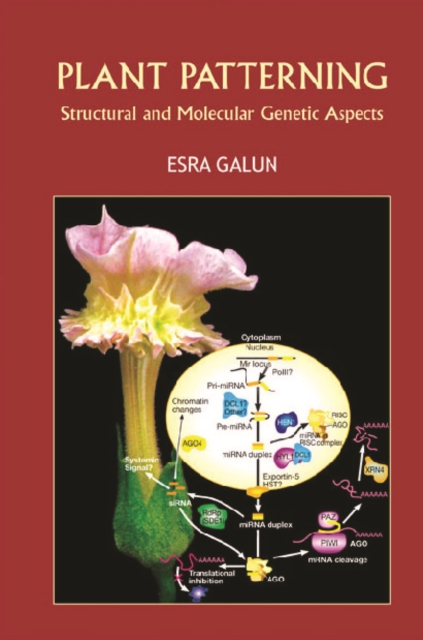
Plant patterning
This book provides a fascinating account of the accumulated knowledge of the mechanisms by which plants regulate their patterning. This is an exciting subject based on a novel endeavor, not least due to the rapid progress made in recent years in the diverse fields of genetics, molecular biology, microscopy, inter- and intracellular signaling, as well as our intimate knowledge of model plants (such as Arabidopsis).
eBook


Visualizing Nutrient Effects on Root Pattern Formation
This lab gives students hands-on experience with visualizing the root architecture of plants exposed to varying concentrations of the vital nutrient phosphorus. By maintaining Brassica sp. seedlings in the presence of different quantities of phosphate, students can quantify changes in the number of lateral roots as an example of how the environment influences plant pattern formation. Additional variables in the experimental design, such as the use of plant mutants altered in plant regulator action or the presence of plant regulators in the plant growth medium, allow for exploration of how plant growth regulators are involved in root development. The quantitative and qualitative nature of this nine-day activity provides instructors opportunities to introduce students to various data analyses in botanical study. Additional ties to plant anatomy and the agricultural use of plant growth regulators that alter root development make this activity a rich source of exploration for broadening student exposure to plants and their development.
Journal Article
Plant patterning : structural and molecular genetic aspects / Esra Galun
\"This book provides a fascinating account of the accumulated knowledge of the mechanisms by which plants regulate their patterning. This is an exciting subject based on a novel endeavor, not least due to the rapid progress made in recent years in the diverse fields of genetics, molecular biology, microscopy, inter- and intracellular signaling, as well as our intimate knowledge of model plants (such as Arabidopsis).\" \"This book is unique in that it provides, in one volume, comprehensive information on all the main organs of flowering plants. There is no other book similar to this, written by a single author, that has been published in the last 10 years.\" \"The book contains updated information on the differentiation of the plant organs with respect to structure and molecular genetics, and the methodologies employed to investigate plant patterning are described in detail. Extensively illustrated with numerous figures, many of which are in color, the book will appeal to three main groups of readers: novices interested in plant patterning; plant biologists requiring a comprehensive understanding of differentiation in flowering plants; and graduate students in advanced courses.\"--Jacket.
eBook

Rice with reduced stomatal density conserves water and has improved drought tolerance under future climate conditions
Much of humanity relies on rice (Oryza sativa) as a food source, but cultivation is water intensive and the crop is vulnerable to drought and high temperatures. Under climate change, periods of reduced water availability and high temperature are expected to become more frequent, leading to detrimental effects on rice yields.
We engineered the high-yielding rice cultivar ‘IR64’ to produce fewer stomata by manipulating the level of a developmental signal. We overexpressed the rice epidermal patterning factor OsEPF1, creating plants with substantially reduced stomatal density and correspondingly low stomatal conductance.
Low stomatal density rice lines were more able to conserve water, using c. 60% of the normal amount between weeks 4 and 5 post germination. When grown at elevated atmospheric CO2, rice plants with low stomatal density were able to maintain their stomatal conductance and survive drought and high temperature (40°C) for longer than control plants. Low stomatal density rice gave equivalent or even improved yields, despite a reduced rate of photosynthesis in some conditions.
Rice plants with fewer stomata are drought tolerant and more conservative in their water use, and they should perform better in the future when climate change is expected to threaten food security.
Journal Article

KNOTTED1 Cofactors, BLH12 and BLH14, Regulate Internode Patterning and Vein Anastomosis in Maize
Monocot stems lack the vascular cambium and instead have characteristic structures in which intercalary meristems generate internodes and veins remain separate and scattered. However, developmental processes of these unique structures have been poorly described. BELL1-like homeobox (BLH) transcription factors (TFs) are known to heterodimerize with KNOTTED1-like homeobox TFs to play crucial roles in shoot meristem maintenance, but their functions are elusive in monocots. We found that maize (Zea mays) BLH12 and BLH14 have redundant but important roles in stem development. BLH12/14 interact with KNOTTED1 (KN1) in vivo and accumulate in overlapping domains in shoot meristems, young stems, and provascular bundles. Similar to kn1 loss-of-function mutants, blh12 blh14 (blh12/14) double mutants fail to maintain axillary meristems. Unique to blh12/14 is an abnormal tassel branching and precocious internode differentiation that results in dwarfism and reduced veins in stems. Micro-computed tomography observation of vascular networks revealed that blh12/14 double mutants had reduced vein number due to fewer intermediate veins in leaves and precocious anastomosis in young stems. Based on these results, we propose two functions of BLH12/14 during stem development: (1) maintaining intercalary meristems that accumulate KN1 and prevent precocious internode differentiation and (2) preventing precocious anastomosis of provascular bundles in young stems to ensure the production of sufficient independent veins.
Journal Article

Novel epidermal–cortical pattern and root apical silencing of VcCPC promoter activity in Arabidopsis might suggest a joint contribution to hairless roots in blueberry
Background
Root hairs are specialized tubular extensions that play a pivotal role in nutrient absorption and plant–soil interactions. Typically, they originate from epidermal cells, which differentiate into either hair cells or non-hair cells. In blueberry (
Vaccinium
spp.), the roots are devoid of root hairs. To examine the mechanisms responsible for the hairless root phenotype, this study conducted anatomical and molecular biological investigations on the hairless roots of blueberry.
Results
The epidermal cells of blueberry roots exhibit uniformity in size and cross-sectional dimensions, with each cell interfacing with two neighboring cortical cells. This distinctive epidermal cell pattern, which differs from the three known patterns observed in other plant species, is classified as type IV. The
CAPRICE
(
CPC
) gene, which encodes an R3-type MYB transcription factor, is a positive regulator of hair cell differentiation in
Arabidopsis
. Functional analyses utilizing
Arabidopsis
demonstrated that the blueberry
VcCPC
homolog retained its capacity to promote root hair formation in wild-type and
cpc
mutant
Arabidopsis
plants. GUS histochemical analysis revealed that the
VcCPC
promoter is active in multiple organs of transgenic
Arabidopsis
, including leaves, flowers, fruit, and the root maturation zone, but not in regions associated with root hair cell fate determination, such as the root elongation zone and meristematic zone. Complementation of the
cpc
mutant with a chimeric VcCPCpro::VcCPC construct did not restore the root hair-deficient phenotype. Substitution of the
VcCPC
promoter sequence (nt − 709 to − 1) with the
AtCPC
promoter sequence (nt − 683 to − 1) effectively restored the root hair phenotype in the
cpc
mutant.
Conclusions
Blueberry roots exhibit a distinctive type IV epidermal cell patterning, which differs from previously identified epidermis–cortex cell patterns. Although
VcCPC
maintains its conserved role in promoting root hair differentiation in
Arabidopsis
, root apical silencing of
VcCPC
, in conjunction with the novel epidermal–cortical pattern, may contribute to the root hair-deficient phenotype in blueberry. Substituting the native
VcCPC
promoter with the
AtCPC
promoter restored root hair development in the
Arabidopsis cpc
mutant, indicating that regulatory elements present in the
AtCPC
promoter, but absent in the
VcCPC
promoter, might mediate the root phenotypic divergence.
Journal Article

BLADE-ON-PETIOLE genes temporally and developmentally regulate the sheath to blade ratio of rice leaves
Axis formation is a fundamental issue in developmental biology. Axis formation and patterning in plant leaves is crucial for morphology and crop productivity. Here, we reveal the basis of proximal-distal patterning in rice leaves, which consist of a proximal sheath, a distal blade, and boundary organs formed between these two regions. Analysis of the three rice homologs of the Arabidopsis
BLADE-ON-PETIOLE1
(
BOP1
) gene indicates that OsBOPs activate proximal sheath differentiation and suppress distal blade differentiation. Temporal expression changes of
OsBOPs
are responsible for the developmental changes in the sheath:blade ratio. We further identify that the change in the sheath:blade ratio during the juvenile phase is controlled by the miR156/SPL pathway, which modifies the level and pattern of expression of
OsBOPs
.
OsBOPs
are also essential for differentiation of the boundary organs. We propose that
OsBOPs
, the main regulators of proximal-distal patterning, control temporal changes in the sheath:blade ratio of rice leaves.
Despite the importance of proximal-distal patterning of leaves in cereal productivity, the underlying molecular mechanisms are poorly understood. Here, the authors find that the ratio of sheath to blade in rice leaf shifts depends on the expression levels of
BLADE-ON-PETIOLE
genes.
Journal Article

OsLC1, a transaldolase, regulates cell patterning and leaf morphology through modulation of secondary metabolism
Summary Leaf morphogenesis is a crucial process in plants that governs essential physiological functions such as photosynthesis and transpiration. Despite significant advances in understanding leaf development, the mechanism of intricate cellular patterning remains elusive. We characterize the OsLC1 mutant, which displays a curly leaf phenotype alongside reductions in plant height and tiller number, which are indicative of multiple morphological abnormalities. Through map‐based cloning, we identified OsLC1 as encoding a transaldolase (TA) protein, whose genetic variations in OsLC1 lead to the disruptions of cell patterning across the vasculature, bundle sheath cells, mesophyll, stomata, bulliform cells and sclerenchyma cells. OsLC1 exhibited TA activity and modulated metabolic flux to the shikimic pathway, thereby affecting phenylpropanoid metabolism. This regulation influenced lignin and flavonoid biosynthesis, ultimately modulating cellular pattern formation through perturbations to flavonoid‐mediated auxin or lignin homeostasis. Notably, loss of OsLC1 function led to a reduction in leaf water status, which, along with abnormal cellular patterns in oslc1, caused leaf curling. Overall, our findings provide insights into the regulatory mechanisms underlying cell patterning in the leaf and offer valuable perspectives on leaf morphogenesis in rice.
Journal Article