
Catalogue Search | MBRL


Are you sure you want to remove the book from the shelf?

{{itemTitle}}
223
result(s) for
"Plaster cast"
Sort by:

The Victoria and Albert Museum Plaster Casts by the Nineteenth-Century Workshops of the Notre-Dame Cathedral: Scientific Analysis and Conservation
Four nineteenth-century casts of the decoration on the north side of the exterior of the apse of the Notre-Dame Cathedral in Paris are held in the plaster casts collection at the Victoria and Albert Museum in London. The casts were manufactured by two different nineteenth-century workshops, one run by Jean Pouzadoux and the other by Auguste Malzieux. After an assessment of the condition of the casts, a scientific analysis allowed the characterization of the manufacturing materials and subsequent conservation treatments aimed at ensuring the stability of the casts and removing dirt and grime from the casts’ surfaces. Optical microscopy of the samples taken from the casts allowed the stratigraphy to be studied, which largely consisted of gypsum plaster and a coating layer (oxidized diterpenic resin or shellac) containing silicon and aluminium partially diffused in the porous substrate. These materials were identified by a range of techniques, including X-ray diffraction, scanning electron microscope–energy dispersive X-ray spectroscopy, Fourier transform infrared spectroscopy, and gas chromatography/mass spectrometry. The conservation works returned stability to the panels for redisplay in the galleries and achieved a closer comparative study between the two workshops. The two sets of panels showed numerous differences in manufacturing processes that corresponded to their observed deterioration.
Journal Article

CBCT and Intra-Oral Scanner: The Advantages of 3D Technologies in Orthodontic Treatment
Background: The aim is to demonstrate the validity of the monitoring through intraoral scanner of the dental movements and the real impact, advantages, and convenience, in terms of treatment time and efficiency gain, to frequently monitor a patient with the scanner application. Methods: A movement control of palatally impacted canines was performed, surgically treated with laser opercolectomy. Three-dimensional models of the patient’s dental arch were obtained with intraoral scanner during a monitoring time of 4 months. The STL (Standard Triangle Language) files were superimposed with the 3D models extrapolated from the pre-operative CT (Computerized Tomography). The measurements of eruption, exposed palatal and vestibular areas, and distances between the canines and the incisors were performed, using digital technologies and with a digital caliber. Results: Descriptive and inferential statistical analysis of the data obtained from both conventional and digital monitoring has been realized and performing the T Student Test for paired data. Conclusion: The advantages of digital monitoring are numerous, like the possibility to reduce the error of method caused by manual measurement on plaster casts and the possibility to compare the pattern and amount of eruption of the canine in the same patient overtime.
Journal Article

The Value of Radiographic Parameters to Predict Loss of Reduction in the Conservative Treatment of Distal Radius Fractures
ObjectiveDistal radius fractures are the most common fractures of the upper extremity. The aims of this study were to determine the radiologic parameters that could predict maintenance of reduction during conservative treatment of distal radius fractures and to present the functional outcomes at 6th month of treatment in individuals with and without loss of reduction.MethodsA total of 146 individuals that were treated conservatively (reduction and casting) were included. Radiographic parameters including radial inclination, radial height, articular step-off, three-point index (TPI), cast index, and padding index were examined. The clinical outcomes were assessed at the 6th month of reduction byvisual analog scale (VAS), QuickDASH and Mayo wrist score. Logistic regression analysis was performed to determine the predictive value of radiographic parameters in loss of reduction.ResultsThe mean age was 40.17±13.30. Loss of reduction was detected in 21.2%. Significant differences were found in the articular step-off, TPI and cast indices between individuals with and without loss of reduction (p<0.05). TPI and cast index were found to be highly predictive for loss of reduction in fractures with and without extension to the distal radius joint, respectively. There was no difference in functional parameters other than VAS between individuals with and without loss of reduction (p>0.05).ConclusionAmong the radiographic measures, TPI and cast indexes were the ones which had the higher predictive value for loss of reduction during conservative treatment in distal radius fractures.
Journal Article

Possibility of reconstruction of dental plaster cast from 3D digital study models
Objectives
To compare traditional plaster casts, digital models and 3D printed copies of dental plaster casts based on various criteria. To determine whether 3D printed copies obtained using open source system RepRap can replace traditional plaster casts in dental practice. To compare and contrast the qualities of two possible 3D printing options – open source system RepRap and commercially available 3D printing.
Design and settings
A method comparison study on 10 dental plaster casts from the Orthodontic department, Department of Stomatology, 2nd medical Faulty, Charles University Prague, Czech Republic.
Material and methods
Each of 10 plaster casts were scanned by inEos Blue scanner and the printed on 3D printer RepRap [10 models] and ProJet HD3000 3D printer [1 model]. Linear measurements between selected points on the dental arches of upper and lower jaws on plaster casts and its 3D copy were recorded and statistically analyzed.
Results
3D printed copies have many advantages over traditional plaster casts. The precision and accuracy of the RepRap 3D printed copies of plaster casts were confirmed based on the statistical analysis. Although the commercially available 3D printing enables to print more details than the RepRap system, it is expensive and for the purpose of clinical use can be replaced by the cheaper prints obtained from RepRap printed copies.
Conclusions
Scanning of the traditional plaster casts to obtain a digital model offers a pragmatic approach. The scans can subsequently be used as a template to print the plaster casts as required. Using 3D printers can replace traditional plaster casts primarily due to their accuracy and price.
Journal Article

Built Environment’s Sustainability: The Design of the Gypso|TechA of the University of Perugia
A multidisciplinary approach embedded with sustainability represents a pathway to design strategies applicable in different cultural contexts. Considering the emissions attributed to building processes, the design of conservation measures is evolving to create high performance both in terms of healthiness and safety. On this, heritage buildings in earthquake-prone cities proved their vulnerability during the recent seismic events. However, the most important aspect of restoration interventions is that the design process must respect the architectural peculiarities of the building. In this regard, the contribution presents the reuse of a heritage building, currently disused, in the novel role of University of Perugia’s plaster cast gallery, in line with the aims declared by the University with the adoption of the “Action Plan for University Sustainability 2021–2023”. Such architecture is part of Palazzo Murena, University of Perugia headquarters, a former monastery designed by Luigi Vanvitelli and completed in 1762 by Carlo Murena. A historical-iconographical investigation, together with a survey, revealed the building origin: a pre-existing architecture, anciently a hospice, included by Vanvitelli in their project. The purpose was the masonries’ reinforcement conceiving, at once, a flexible space according to the adaptive architecture principle: give to buildings configurations new, whole or in part, from the original ones in response to emerging threats. An integrated project was designed to restore the building in order to realize a contemporary museum in which full-height exhibition spaces alternate with the pre-existing ones. In this way, the new Gypso|TechA showcases the academic plasters, actually without a seat matching their cultural value, and through a peculiar layout encodes the collection’s message in a site-specific cognitive process.
Journal Article
Apostles of Good Taste? The use and perception of plaster casts in the Enlightenment
In his ‘Treatise on the Capacity for Sensitivity to the Beautiful in Art …’ Winckelmann compares the feeling of the beautiful in art with liquid plaster poured over the head of the Apollo. While this reference to plaster as a material is unusual, his view of casts as propagators of good taste was widely shared. By looking at reactions to casts and cast collections by authors such as Goethe, Christian Gottlob Heyne, John Flaxman and others, this article analyses the complex relationship of notions of good taste on the one side and the perception of plaster casts on the other.
Journal Article

Case study: Hybrid model for the customized wrist orthosis using 3D printing
The currently used plaster cast for wrist orthotic treatment is relatively heavy, non-removable, and unventilated. Because of this, wearing this cast can generate problems including a variety of skin diseases, pilosis, and joint and ligament injuries. This case study describes a hybrid manufacturing methodology that utilizes three-dimensional printing (3D printing) and injection molding technology to create a wrist orthosis that solves the problems of the plaster casts. Compared with the previously presented wrist orthosis using 3D printing and three-dimensional scanning (3D scanning) technology, the proposed hybrid model significantly reduces the manufacturing time and cost. The core concept of the hybrid model is to separate the plastic cast into two parts: an inner structure produced by 3D printing that surrounds the skin and an outer cover that is fastened to the inner structure that protects the injured part from external forces. The outer cover is produced in advance using an injection molding method with three sizes based on the sizes of the wrist. From the result of wearing the prototype, it was confirmed that the new wrist orthosis has proper strength, good ventilation, and light weight. The time cost for manufacturing also was estimated as 1/3 of that of other methods. We anticipate that the hybrid method for customized 3D printed plastic orthosis can become a balanced solution that can be applied in the current additive manufacturing field in terms of manufacturing time and cost.
Journal Article

Exercise handout and one-on-one hand therapy for management of stiffness after plaster cast immobilization of simple phalangeal and metacarpal fractures in children: A randomized, noninferiority trial
This is a noninferior, single-blind, randomized controlled trial.
Joint stiffness is common after plaster cast immobilization for simple phalanx and metacarpal fractures in children. The limited literature suggests this joint stiffness in children resolves without one-on-one therapy; however, without robust studies confirming that there is no detrimental effect from withdrawing treatment, many children are still referred.
The purpose of this study was to determine if an educational handout for self-management of stiffness is noninferior to one-on-one hand therapy for achieving full range of motion (ROM).
Participants were randomly assigned to group one who received the handout or group two who received hand therapy in addition to the handout. The ROM was measured by composite flexion and total active motion (TAM). The noninferiority margin was 10% difference between the two groups in the proportion of participants who achieved full ROM at two weeks after cast removal.
Sixty participants in each group completed the study. Group difference for composite flexion was 1.7% (95% CI: −3.9% to 7.2%), demonstrating noninferiority. Group difference for TAM was inconclusive at 8.3% (95% CI: −2.1% to 18.7%). Sensitivity analysis adjusting for participants with full composite flexion at the baseline resulted in the group difference for composite flexion of 3.1% (95% CI: −3.6% to 9.8%), maintaining noninferiority, but group difference for TAM at 10.4% (95% CI: 0.0% to 20.9%), was inconclusive with the handout group significantly worse.
An educational handout is noninferior to hand therapy for achieving full ROM in composite flexion but not TAM. This needs to be taken into consideration for changing clinical practise.
Journal Article

3D imaging of the Parthenon sculptures: an assessment of the archaeological value of nineteenth-century plaster casts
Intent on recording in situ ancient sculptures at risk of deterioration, nineteenth-century archaeologists were at the forefront of an ambitious campaign of plaster-casting. Today, these surrogates preserve details now lost from the originals, but evaluation of their accuracy is of vital importance. Some of the earliest such casts are those held by the British Museum. This article investigates the efficacy of three-dimensional imaging for determining the accuracy of these casts, assessing whether they preserve lost information and whether they can be employed as reliable surrogates for the originals.
Journal Article
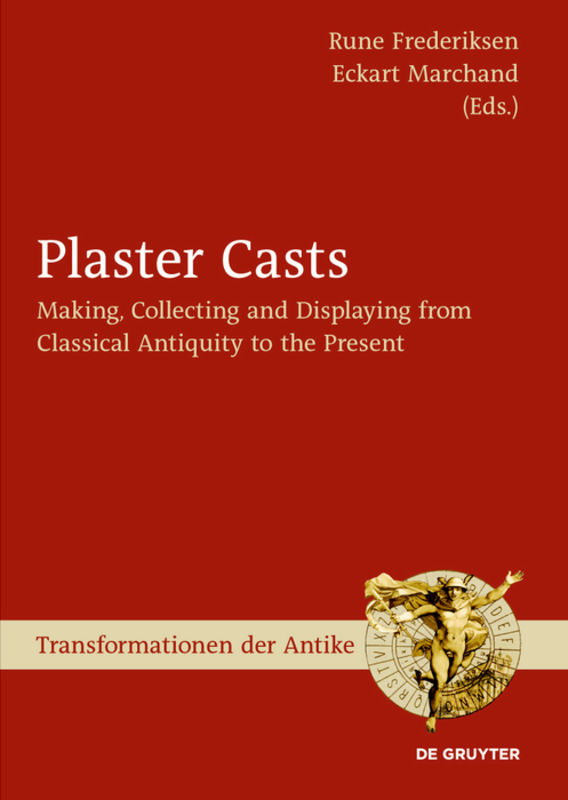
Plaster Casts
This volume originates from an international conference (Oxford University, 2007). Texts address plaster casts and related themes from antiquity to the present day, and from Egypt to America, Mexico and New Zealand. They are of interest to classical archaeologists, art historians, the history of collecting, curators, conservators, collectors and artists. Articles explore the functions, status and reception of plaster casts in artists' workshops and in private and public collections, as well as hands-on issues, such as the making, trading, display and conservation of plaster casts. Case-studies on artists' use of material and technique include ancient Roman copyists, Renaissance sculptors and painters, Dutch 17th-century workshops, Canova, Boccioni and others. A second theme is the role of plaster casts in the history of collecting from the Renaissance to the present day.
Several papers address the dissemination of visual ideas, models and ideals through the medium. Papers on modern and contemporary art illuminate the changing uses and semantic values of plaster casts in this period. Amongst the types of casts discussed are artists' models and final works as well as casts after antiquities, including sculpture, architecture and gems (dactyliothecae). The volume demonstrates the richness of the field, both in terms of the material itself and modern scholarship concerned with it. Conceived as a handbook for students, academics, curators and collectors, the text will form a standard work on the role of plaster casts in the history of Western sculpture.
eBook