
Catalogue Search | MBRL


Are you sure you want to remove the book from the shelf?

{{itemTitle}}
36,305
result(s) for
"Plastics Properties."
Sort by:


The Physics of Deformation and Fracture of Polymers
Demonstrating through examples, this book presents a mechanism-based perspective on the broad range of deformation and fracture response of solid polymers. It draws on the results of probing experiments and considers the similar mechanical responses of amorphous metals and inorganic compounds to develop advanced methodology for generating more precise forms of modelling. This, in turn, provides a better fundamental understanding of deformation and fracture phenomena in solid polymers. Such mechanism-based constitutive response forms have far-reaching application potential in the prediction of structural responses and in tailoring special microstructures for tough behaviour. Moreover, they can guide the development of computational codes for deformation processing of polymers at any level. Applications are wide-ranging, from large strain industrial deformation texturing to production of precision micro-fluidic devices, making this book of interest to both advanced graduate students and to practising professionals.
eBook

Damage Mechanics in Metal Forming
The aim of this book is to summarize the current most effective methods for modeling, simulating, and optimizing metal forming processes, and to present the main features of new, innovative methods currently being developed which will no doubt be the industrial tools of tomorrow. It discusses damage (or defect) prediction in virtual metal forming, using advanced multiphysical and multiscale fully coupled constitutive equations. Theoretical formulation, numerical aspects as well as application to various sheet and bulk metal forming are presented in detail.
Virtual metal forming is nowadays inescapable when looking to optimize numerically various metal forming processes in order to design advanced mechanical components. To do this, highly predictive constitutive equations accounting for the full coupling between various physical phenomena at various scales under large deformation including the ductile damage occurrence are required. In addition, fully 3D adaptive numerical methods related to time and space discretization are required in order to solve accurately the associated initial and boundary value problems. This book focuses on these two main and complementary aspects with application to a wide range of metal forming and machining processes.
eBook

A modeling method for elastic-viscous-plastic material with fractal structure and its solution
A modeling method with the fractal structure to describe the elastic-viscous-plastic properties of materials is proposed in this paper. Moreover, the solution can be obtained without solving the corresponding infinite order differential equation. Then, a model (L-R model) to characterize the elastic-viscous-plastic properties of materials with complex infinite order fractal structure was established based on this modeling method. The mechanical properties are described by the constitutive relationship of spring (elasticity), adhesive pot (viscosity), and plastic body (plasticity) elements by MATLAB/Simulink. The three-element model is connected in series and parallel according to the rules of the Bingham model. Then, the Bingham model is used as the original model to set and iterate according to the fractal theory. And the solution of the corresponding infinite order differential equation for describing elastic-viscous-plastic of materials can be obtained directly without solving the complex differential equation of the model. To verify the reliability of this modeling method and its solution results, cyclic load experiments were carried out on five materials with different fractal structures, steel, slate, coal, red sandstone, and salt rock. Comparing the experimental results with the solution results, it indicated that the established model can effectively describe the material’s performance of the elastic-viscous-plastic properties.
Journal Article

PLASTIC MATERIALS IN EUROPEAN AGRICULTURE: ACTUAL USE AND PERSPECTIVES
The world consumption of plastics in agriculture amounts yearly to 6.5 million tons. In addition to conventional polymers used in agriculture for greenhouses and mulches such as PE, PVC, EVA, photo-selective and luminescent polymers have been used, in order to improve the quality of crops. For the same reason plastic nets are used mainly in countries with tropical and Mediterranean climates. For an environmentally friendly agricultural activity, an alternative strategy can be represented by bio-based agricultural raw materials. For low environmental impact applications, biodegradable materials for agricultural films are nowadays produced. An overview of the main methods for the disposal and recycling of plastic materials are presented with the results of mechanical and radiometric tests on recycled plastics. The strategies to reduce the burden of plastics in agriculture are: a correct procedure for the collection, disposal and recycling of post-consumption plastics; the increase of lifetime duration and performance; and the introduction and promotion of bio-based materials.
Journal Article

Investigation of Viscoelastic-Plastic Properties of Fresh Cemented Gangue Fly Ash Backfill Slurries
In underground filling mining, freshly prepared cemented gangue-fly ash backfill (CGFB) slurries are typically piped into the gobs. The rheological properties of backfill slurry during pipeline transportation have a direct impact on the transportation characteristics, which in turn affect pipeline blockage and wear. In this paper, the rheological behavior and viscoelastic-plastic properties of CGFB during pipeline transportation are investigated. The effects of different solid content and cement content on resistivity were tested experimentally, and their viscoelasticity and plasticity were analyzed. The results show that with the increase in solid phase content and cement content, the viscosity, yield stress, and energy storage modulus of the materials showed an increasing trend. The viscosity and yield stress of the material both increased, reaching 32.77% and 51.22%, respectively. It was found by the dynamic shear test that in the low-strain region, the material showed a more significant elastic nature of the solid, while in the high-strain region, the viscosity of the material gradually increased. Cement has a substantially lower resistivity than fly ash and gangue, and with the increase in solid concentration, the resistivity of the material shows an increasing trend. With the increase in cement content, the resistivity generally shows a decreasing trend, but it should be noted that the resistivity change trend may tend to stabilize after the cement content exceeds 12%. The study’s findings can aid in understanding the rheological properties of CGFB and its viscoelastic-plastic behavior during the underground filling and conveying process, which can provide a reference basis for research and application in related fields.
Journal Article

Buckling and Ultimate Strength of Ship and Ship-Like Floating Structures
This book provides an integrated state-of-the-art evaluation of ship structure mechanics including buckling, plastic failure, ultimate strength, and ultimate bending moments. For the design of any industrial product, it is necessary to understand the fundamentals in the failure behavior of structures under extreme loads. Significant developments have been made in understanding the analysis method of plastic collapse and behavior and strength of structures accompanied by buckling. Written by two of the foremost experts in international ship design and ocean engineering, this book introduces fundamental theories and methods as well as new content on the behavior of buckling/plastic collapse that help explain analysis like the initial imperfections produced by welding and the ultimate strength of plates, double bottom structures of bulk carriers, and ship and FPSO hull girders in longitudinal bending.
eBook

Multi-Dimensional Iterative Constitutive Model of Concrete under Complex Stress Conditions in Composite Structures
In composite structures or complex concrete members, some concrete bears multiple forces, called core concrete. The properties of the core concrete are variable under complex stress conditions, which will influence the structure performance analysis. Therefore, it is necessary to establish an accurate and theoretical constitutive model of concrete under complex stress conditions. The elastic–plastic properties of concrete in complex stress conditions were analyzed first. Then, the failure criterion of concrete in complex stress conditions was discussed to identify the key parameters. And the relationship between the stress–strain curve and failure criterion was analyzed through mathematical derivation. Finally, the multi-dimensional iterative constitutive model of concrete under complex stress conditions was established and verified. Based on the analysis results, the concrete under multi-axial stress conditions shows a spindle-shape stress envelope diagram. The failure criterion should be established by the analysis of concrete under high multi-axial compression conditions, tension–compression conditions, and shear–compression conditions. The plastic modulus is the key to reflecting the plastic strain development trend and the stress–strain relationship.
Journal Article
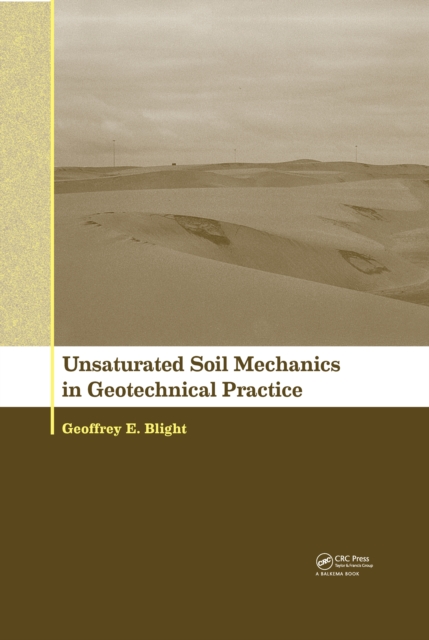
Unsaturated Soil Mechanics in Geotechnical Practice
There are other books on unsaturated soil mechanics, but this book is different. Unsaturated soil mechanics is only one aspect of a continuous range of soil mechanics studies that extends from the rheology of high water content soil slurries to the mechanics of soft soils, to stiff saturated soils, to unsaturated soils, and, at the far end of the range, to dry soils. In reality, the water content of all soils, that are not permanently submerged, varies seasonally. In most climatic zones, rainfall varies during the year and the depth of the water table varies sympathetically. In applying unsaturated soil mechanics in practice, it is therefore important to realise and allow for the probability that soil will, either seasonally or occasionally, pass from the unsaturated to the saturated state and even from unsaturation to dryness. This is the only book that looks specifically at this essential practical aspect. The theory of unsaturated soils is fully dealt with in all of its aspects, including its application to natural undisturbed soils and compacted soils. Application of the theory to soil-like materials such as mine waste and municipal solid waste is also covered. Application of the theory to practice is illustrated by a number of detailed case histories. Unsaturated soil mechanics principles can also successfully and usefully be applied in related fields such as the bulk storage of particulate materials, underground mine support, solution mining and concrete structures. Several case histories are given that illustrate these practical applications.
eBook
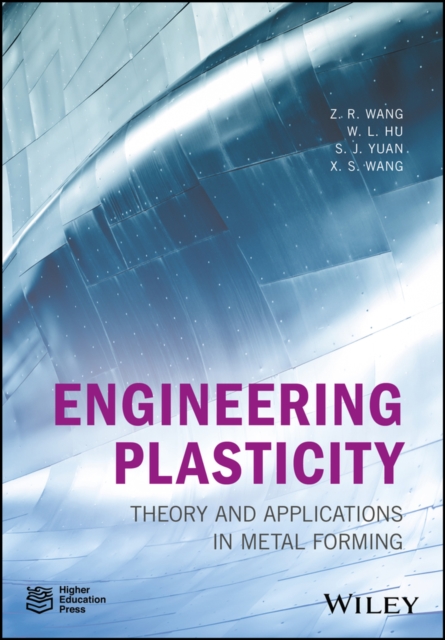
Engineering Plasticity
An all-in-one guide to the theory and applications of plasticity in metal forming, featuring examples from the automobile and aerospace industries
* Provides a solid grounding in plasticity fundamentals and material properties
* Features models, theorems and analysis of processes and relationships related to plasticity, supported by extensive experimental data
* Offers a detailed discussion of recent advances and applications in metal forming
eBook