
Catalogue Search | MBRL


Are you sure you want to remove the book from the shelf?

{{itemTitle}}
510
result(s) for
"Playgrounds Design and construction."
Sort by:


The Science of Play
Poor design and wasted funding characterize today's American playgrounds. A range of factors-including a litigious culture, overzealous safety guidelines, and an ethos of risk aversion-have created uniform and unimaginative playgrounds. These spaces fail to nurture the development of children or promote playgrounds as an active component in enlivening community space. Solomon's book demonstrates how to alter the status quo by allying data with design. Recent information from the behavioral sciences indicates that kids need to take risks; experience failure but also have a chance to succeed and master difficult tasks; learn to plan and solve problems; exercise self-control; and develop friendships. Solomon illustrates how architects and landscape architects (most of whom work in Europe and Japan) have already addressed these needs with strong, successful playground designs. These innovative spaces, many of which are more multifunctional and cost effective than traditional playgrounds, are both sustainable and welcoming. Having become vibrant hubs within their neighborhoods, these play sites are models for anyone designing or commissioning an urban area for children and their families. The Science of Play, a clarion call to use playground design to deepen the American commitment to public space, will interest architects, landscape architects, urban policy makers, city managers, local politicians, and parents.
eBook


Risk and Safety in Play
Produced by PLAYLINK, a registered charity which assists local communities to create adventure playgrounds for children. Established in 1962, PLAYLINK is recognised as the national authority on good practice for play provision of this type. This essential handbook draws on PLAYLINK's 35 years experience with adventure playgrounds, introduces recent changes to legislation and gives guidance on the interpretation of legal responsibilities. It is intende for all those working as play officers, playworkers, playground designers or consultants in supervised play provision, legal advisers and regulatory authorities. It will also be of interst to anyone involved in leisure and recreation management and the design and construction of sports facilities.
eBook


Exploring Spatial Expectations in a Natural Playground Designed by Children for Kindergartens
Natural playgrounds in early childhood education support children’s development and environmental awareness by offering various experiences. However, in many kindergartens, natural playgrounds are insufficient, and it is emphasized that playgrounds should be improved through participatory design processes carried out with children. The aim of this study is to identify the spatial expectations of five-year-old children regarding natural playgrounds by involving them in a participatory design process at a kindergarten in Bursa, Türkiye. A multi-method approach was developed by combining age-appropriate techniques for children within participatory design workshops. Children’s explanations of their designs were evaluated through reflexive thematic analysis, resulting in the emergence of eight themes that reflect their spatial expectations for the design of natural playgrounds. The study revealed the play actions children wish to perform, the experiences they desire, and the natural spaces and spatial elements they designed. The findings show that five-year-old children were able to collaboratively design a natural playground through a participatory process. This research highlights the need to increase participatory design practices with children in order to create natural playgrounds that support children’s holistic development in kindergartens.
Journal Article
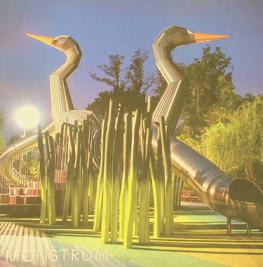

Child Play Activity Modeling for Playground Space Design Using the Context-Based Activity Modeling Method
Extensive attention has been given to children’s play spaces in public environments. Still, there exists a research need to devise a more comprehensive and structured design framework for space design addressing more comprehensive and structured activity modeling capabilities. The Context-Based Activity Modeling (CBAM) has been proposed as a framework for service design where activities are represented by elements like action verb, actors, object, tool, and contexts, where context is further represented by goal, relevant structure, physical, and psychological contexts. In this paper, children’s play activities such as throw, run, chase, hide, seek, and seize as observed in a community courtyard setting have been represented and interrogated using the CBAM method. Then, six specific design strategies have been derived for enhancing children’s play space design. As demonstrated in this way, CBAM is proposed as a framework for activity-centered space design for child playground. Experiential sustainability of children’s play activities are supported by play space design fully addressing detailed context elements of CBAM.
Journal Article


Empowering Children and Revitalising Architecture through Participatory Art: The IWhat Animal Is It?/I Project by Iza Rutkowska
This article explores how a holistic combination of three components, society, art, and architecture, can contribute to the successful revitalisation of derelict buildings and, at the same time, improve the well-being of the users of reclaimed spaces. The author uses a case study of a playground designed by the artist Iza Rutkowska in cooperation with children in a specific location at the Intermediae Matadero centre in Madrid. The centre is located in a revitalised warehouse in the complex of former municipal slaughterhouses, built at the beginning of the 20th century. The analysis of Iza Rutkowska's work is conducted against the background of broader analyses of the elements of the triad and the conditions required for them to enter into dialogue with each other. Their synergic combination is one of the factors that can have a positive impact on the regeneration of even such alien spaces as former industrial buildings. The users' creative activities fill space with new meanings and turn it into a place perceived as good. At the same time, the effects go beyond the walls of the redeveloped buildings, positively influencing the well-being of the users and creating social relationships.
Journal Article