
Catalogue Search | MBRL


Are you sure you want to remove the book from the shelf?

{{itemTitle}}
7,816
result(s) for
"Playwriting"
Sort by:

New playwriting strategies: a language-based approach to playwriting
New Playwriting Strategies has become a canonical text in the study and teaching of playwriting, offering a fresh and dynamic insight into the subject. This thoroughly revised and expanded second edition explores and highlights the wide spread of new techniques that form contemporary theatre writing, as well as their influence on other dramatic forms. Paul Castagno builds on the innovative plays of Len Jenkin, Mac Wellman, and the theories of Mikhail Bakhtin to investigate groundbreaking new techniques from a broad range of contemporary dramatists, including Sarah Ruhl, Suzan Lori-Parks and Young Jean Lee. New features in this edition include an in-depth study of the adaptation of classical texts in contemporary playwright and the utilizing new technologies, such as YouTube, Wikipedia and blogs to create alternative dramatic forms. The author's step-by-step approach offers the reader new models for: narrative dialogue character monologue hybrid plays This is a working text for playwrights, presenting a range of illuminating new exercises suitable for everyone from the workshop student to the established writer. New Playwriting Strategies is an essential resource for anyone studying and writing drama today.
eBook

Playwriting : a writers' and artists' companion
\"Playwriting: A Writers' & Artists' Companion is a comprehensive companion to writing for the stage. Part 1 includes reflections on the art and the craft of playwriting, guidance on writing for a full range of genres and spaces and a brief history of playwriting itself. Part 2 contains inspiring advice and reflections from leading playwrights. Part 3 offers practical exercises and advice on planning and conducting research, working out plots and characters, mastering authentic but accessible dialogue, navigating the industry and the rehearsal and production process\"-- provided by publisher.
Book

Grinning at the Edge
One of Britain's most popular playwrights, Alan Ayckbourn is also the most private. This book is a portrait of the man who - from \"Relatively Speaking\" in 1965 to his double play \"House\" and \"Garden\" at the National Theatre in 2000 - has chronicled human behaviour, aspirations and insecurities.
eBook


'It was a circular thing, you know?': Six Australian performance writers discuss working with AI
Is Artificial Intelligence (AI) a threat to playwriting? The Australian Writers' Guild certainly believes so. In its October 2025 submission to the Australian Senate Inquiry into the National Cultural Policy, the Guild described AI as 'antithetical' to the welfare of the creative sector, arguing that 'the unregulated use of AI is a clear and present danger to Australian writing'. The Guild's position was framed in response to the widespread training of Large Language Models (LLMs) and image, audio and video generators on human-authored materials without author consent or compensation. This position was seemingly vindicated by the subsequent response of the Attorney-General, who committed the Government to protecting the rights of local authors against AI companies. At face value, this is a moral victory: 'art' versus the capitalist data mining machine. Yet the impact of the policy in practice is more difficult to predict, as intellectual property rights collide with the insatiable appetite of the AI 'Empire'.
Journal Article

Playwriting for dummies
From crystallizing story ideas to marketing and financing your project, there are plenty of ins and outs that every aspiring playwright needs to know.
Book
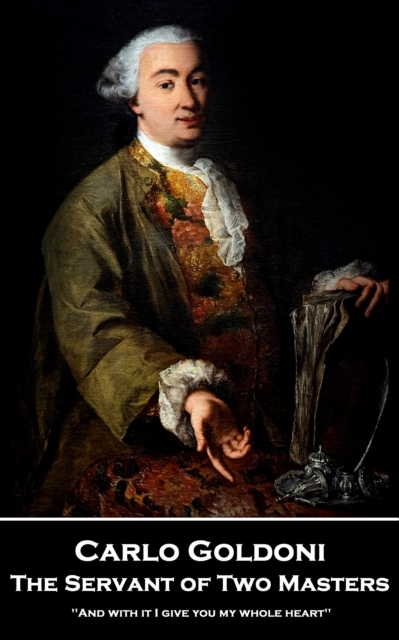
The Servant of Two Masters
Carlo Osvaldo Goldoni was born on the 25th February, 1707, in Venice, Italy in what was then known as the Republic of Venice. His father sent him to study in Rimini, but the precocious theatre fanatic ran away to join a company of strolling players. His father then enrolled him in a strict papal college in Pavia to study. Whilst there Goldoni related that he spent most of his time reading plays in Greek and Latin and had already started on his prolific literary career. In 1725 he was expelled in his third year and forced to leave the city but did continue his studies and graduated in law. He thereafter practiced for several years and established a lucrative income. However, Goldoni's overriding passion was always in the theatre. He wrote his first play, 'Amalasunta,' which premiered in 1733. It was a failure and he threw the manuscript into the fire. He continued to write but until 1738, they were always tragedies. Goldoni, inspired by Moliere, began to realise that he had a flair for comedy. His talents created many innovative comic plays that had elements of the largely improvised Commedia dell'arte of the day but integrated social commentary and realism with a tighter plot structure and convincing characters. This became the 'commedia nuova'-'new comedy' which is one of Goldoni's most enduring achievements. Among his most famous works is 'The Servant of Two Masters,' (1746), a masterpiece of comedy that has been adapted and performed countless times across the globe to this very day. This play exemplifies Goldoni's skill in blending farce with astute observations of human nature, making it a timeless classic.Goldoni's dedication in revitalizing Italian theater ultimately earned him widespread acclaim and recognition. Of course, to mirror this he also faced criticism and controversy, particularly from traditionalists who viewed his reforms as an unwelcome departure from the established Commedia dell'arte. Rivalries and disputes with fellow playwrights and their limited vision meant that, in 1761, Goldoni left Venice for Paris. There he was well received with a position at court. He wrote his memoirs in French as well as many much-admired new plays. Goldoni retired with a pension from the king, but this was revoked after the French Revolution. Tragically he then lived his last years in near-poverty. Across his career Goldoni wrote in the region of 150 plays. He also wrote many librettos for the opera and was associated with Venice's most prestigious opera house, San Giovanni Grisostomo.Carlo Goldoni died in Paris on the 6th of February 1793. He was 85.
eBook

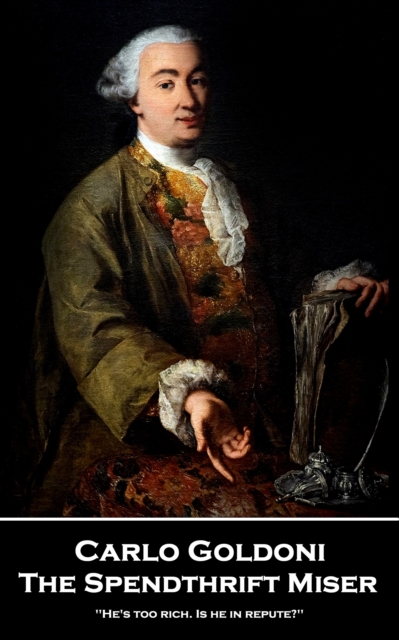
The Spendthrift Miser
Carlo Osvaldo Goldoni was born on the 25th February, 1707, in Venice, Italy in what was then known as the Republic of Venice. His father sent him to study in Rimini, but the precocious theatre fanatic ran away to join a company of strolling players. His father then enrolled him in a strict papal college in Pavia to study. Whilst there Goldoni related that he spent most of his time reading plays in Greek and Latin and had already started on his prolific literary career. In 1725 he was expelled in his third year and forced to leave the city but did continue his studies and graduated in law. He thereafter practiced for several years and established a lucrative income. However, Goldoni's overriding passion was always in the theatre. He wrote his first play, 'Amalasunta,' which premiered in 1733. It was a failure and he threw the manuscript into the fire. He continued to write but until 1738, they were always tragedies. Goldoni, inspired by Moliere, began to realise that he had a flair for comedy. His talents created many innovative comic plays that had elements of the largely improvised Commedia dell'arte of the day but integrated social commentary and realism with a tighter plot structure and convincing characters. This became the 'commedia nuova'-'new comedy' which is one of Goldoni's most enduring achievements. Among his most famous works is 'The Servant of Two Masters,' (1746), a masterpiece of comedy that has been adapted and performed countless times across the globe to this very day. This play exemplifies Goldoni's skill in blending farce with astute observations of human nature, making it a timeless classic.Goldoni's dedication in revitalizing Italian theater ultimately earned him widespread acclaim and recognition. Of course, to mirror this he also faced criticism and controversy, particularly from traditionalists who viewed his reforms as an unwelcome departure from the established Commedia dell'arte. Rivalries and disputes with fellow playwrights and their limited vision meant that, in 1761, Goldoni left Venice for Paris. There he was well received with a position at court. He wrote his memoirs in French as well as many much-admired new plays. Goldoni retired with a pension from the king, but this was revoked after the French Revolution. Tragically he then lived his last years in near-poverty. Across his career Goldoni wrote in the region of 150 plays. He also wrote many librettos for the opera and was associated with Venice's most prestigious opera house, San Giovanni Grisostomo.Carlo Goldoni died in Paris on the 6th of February 1793. He was 85.
eBook