
Catalogue Search | MBRL


Are you sure you want to remove the book from the shelf?

{{itemTitle}}
1,828
result(s) for
"Plotinus"
Sort by:


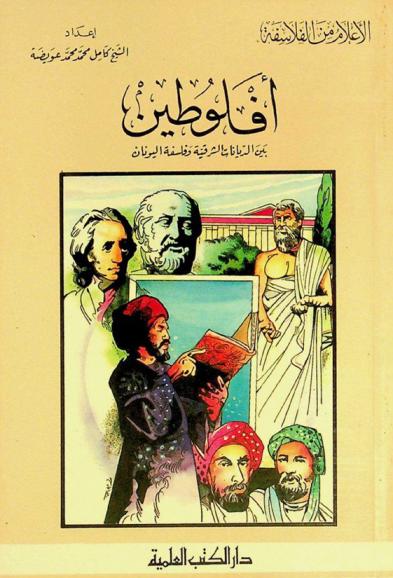
أفلوطين بين الديانات الشرقية وفلسفة اليونان
لم يكن أفلطين فيلسوفا عقليا على نمط الأغريق، ولا صوفيا على النمط الديني، الفنوصي أو المسيحي، إنما هو فيلسوف مثالي وميتافيزيقيا، تراءت له الحقيقة في وحدتها الكاملة وفي واحديتها وإشراقها. عاش أفلطين في القرن الثالث الميلادي الذي شهد نهاية الحضارة الوثنية القديمة. وهو يوناني الأصل ومصري المولد. ولد في سنة 204 م في مدينة أسيوط أو ليقوبوليس في صعيد مصر، وتعلم فيها، حتى بلغ الثامنة والعشرين من عمره، فانتقل إلى مدينة الإسكندرية التي كانت في ذلك الوقت امتدادا لبلاد اليونان عبر البحر الأبيض المتوسط، ولقد تعلم على يد معلم من أصل مصري من مدرسة الإسكندرية هو أدونيوس سكاس. ثم انتقل إلى روما وهو في الأربعين من عمره، وأسس فيها مدرسته وظل بها حتى آخر أيامه وتوفي في سنة 270 في مدينة كمبانيا. وفي هذا الكتاب المزيد من المعلومات عن حياة هذا الفيلسوف وأعماله وفلسفته التي أخذت منحنى مغايرا لسابقيه متأثرا بالديانات الشرقية وبفلسفة اليونان.
Book

Self and selfishness in Late Antiquity: Plotinus on oikeiōsis
Plotinus’ understanding of self is formulated largely in dialogue with the Stoics. In early works he categorically rejects the Stoic notion of the hēgemonikon (‘leading part’ or ‘commanding faculty’) of the soul. In this paper, I show how, in light of a general dissatisfaction with the Stoic account of self articulated in his early work, Plotinus deals with the Stoic notion of oikeiōsis (‘appropriation’). I argue that Plotinus’ understanding of oikeiōsis develops across the period during which he uses it. In his middle writings, Plotinus engages with Stoic oikeiōsis by exploring how it functions in contexts related to selfhood. In his later writings, he shows, on the one hand, how the concept of oikeiōsis can be Platonized, such as to account for the relation of the self to the Good, and, on the other, how the Stoic understanding of oikeiōsis is untenable for many of the same reasons that he rejects the Stoic notion of the hēgemonikon. Ultimately, Plotinus thinks that Stoic understandings of the hēgemonikon and oikeiōsis are untenable because they lead to something that could be characterized as ‘selfishness’.
Journal Article

The new Cambridge companion to Plotinus
\"The present volume is the 'successor' to The Cambridge Companion to Plotinus (1996). Over the last 25 years, there has been an enormous increase in published work on Plotinus and on late ancient Platonism generally. In addition, many scholars who had not even begun their careers 25 years ago are now working intensely in this area. This fact is reflected in the list of authors of this volume, none of whom appeared in the previous work and most of whom had not yet even begun their careers when the original Companion appeared\"-- Provided by publisher.
BOOK

The Ascent of the Soul as Spiritual Exercise in Plotinus' Enneads
Abstract
The purpose of the article is to demonstrate that the ascent of the soul as one of the fundamental spiritual exercises in Plotinus' philosophy can be approached from three perspectives: anabatic proper, aphaeretic and agnoetic. All of them are based on the hierarchical structure of knowledge and being in Plotinus' philosophy, but they differ in details. The methods are reconstructed on the basis of the analysis of selected passages from the Enneads.
Journal Article

Marsilio Ficino and the Soul: Doctrinal and Argumentative Remarks Regarding His Use of the Elements of Physics and the Elements of Theology
The depth and extent of Ficino’s reception and use of Proclus has already attracted much scholarly attention. The present paper builds on and tries to enrich these results, focusing specifically on Ficino’s reception of Proclus’ Elements of Physics and Elements of Theology. In the first part I discuss a marginal annotation of Ficino, in which he makes use of arguments about the circular motion of the soul from the Elements of Physics. I provide some clarifications about the annotated text (of Plotinus) and propose one additional possible echo of the Elements of Physics in Ficino’s Platonic Theology and its arguments about the immortality of the soul. The second part of the paper turns to the link between the Elements of Theology and Ficino’s Platonic Theology. Together with some further doctrinal borrowings I suggest that also the structure of the two works bears important affinities. The soul is a central case in point. To ground this claim, I compare specific sections of the two texts. Also, I selectively examine Ficino’s commentary on the Philebus, which is prior to the Platonic Theology and is strongly influenced by the early theorems of the Elements of Theology. Overall, the paper wishes to shed further light on Ficino’s multiform (and not yet fully unveiled) appropriation of Proclus.
Journal Article

A Restless Nature
During the Spanish Renaissance, curiosity was the catalyst for change and creativity. Earlier philosophical stories regarding the perils and pitfalls of curiosity, written by Plotinus and Hermes Trismegistus, were adapted to a quite positive end: human creativity in letters.
Journal Article

Geluk ligt in jezelf
Dit komt pas ten volle aan het licht wanneer je het citaat leest in de context van de latere traditie en tegelijk als een vooruitlopen daarop. Hij spoort ons aan om naar onszelf te kijken en indien we onszelf nog niet mooi genoeg vinden, om dan de beitel ter hand te nemen en als een beeldhouwer het overtollige weg te hakken, hier iets te polijsten, en daar iets recht te maken wat krom is. Cambridge University Press.
Journal Article