
Catalogue Search | MBRL


Are you sure you want to remove the book from the shelf?

{{itemTitle}}
635
result(s) for
"Pluralism (Social sciences) -- Civilization"
Sort by:

Greece and the Augustan Cultural Revolution
This book examines the impact of the Roman cultural revolution under Augustus on the Roman province of Greece. It argues that the transformation of Roman Greece into a classicizing 'museum' was a specific response of the provincial Greek elites to the cultural politics of the Roman imperial monarchy. Against a background of Roman debates about Greek culture and Roman decadence, Augustus promoted the ideal of a Roman debt to a 'classical' Greece rooted in Europe and morally opposed to a stereotyped Asia. In Greece the regime signalled its admiration for Athens, Sparta, Olympia and Plataea as symbols of these past Greek glories. Cued by the Augustan monarchy, provincial Greek notables expressed their Roman orientation by competitive cultural work (revival of ritual; restoration of buildings) aimed at further emphasising Greece's 'classical' legacy. Reprised by Hadrian, the Augustan construction of 'classical' Greece helped to promote the archaism typifying Greek culture under the principate.
eBook

Race in Translation
While the term \"culture wars\" often designates the heated
arguments in the English-speaking world spiraling around race, the
canon, and affirmative action, in fact these discussions have raged
in diverse sites and languages. Race in Translation charts the
transatlantic traffic of the debates within and between three
zones-the U.S., France, and Brazil. Stam and Shohat trace the
literal and figurative translation of these multidirectional
intellectual debates, seen most recently in the emergence of
postcolonial studies in France, and whiteness studies in Brazil.
The authors also interrogate an ironic convergence whereby rightist
politicians like Sarkozy and Cameron join hands with some leftist
intellectuals like Benn Michaels, Žižek, and Bourdieu in condemning
\"multiculturalism\" and \"identity politics.\" At once a report from
various \"fronts\" in the culture wars, a mapping of the germane
literatures, and an argument about methods of reading the
cross-border movement of ideas, the book constitutes a major
contribution to our understanding of the Diasporic and the
Transnational.
eBook
The Many Altars of Modernity
This book is the summation of many decades of work by Peter L. Berger, an internationally renowned sociologist of religion. Secularization theory—which saw modernity as leading to a decline of religion—has been empirically falsified. It should be replaced by a nuanced theory of pluralism. In this new book, Berger outlines the possible foundations for such a theory, addressing a wide range of issues spanning individual faith, interreligious societies, and the political order. He proposes a conversation around a new paradigm for religion and pluralism in an age of multiple modernities. The book also includes responses from three eminent scholars of religion: Nancy Ammerman, Detlef Pollack, and Fenggang Yang.
eBook

The Eastern Archaic, historicized
The Eastern Archaic, Historicized offers an alternative perspective on the genesis and transformation of cultural diversity over eight millennia of hunter-gatherer dwelling in eastern North America. For many decades, archaeological understanding of Archaic diversity has been dominated by perspectives that emphasize localized relationships between humans and environment. The evidence, shows, however that Archaic people routinely associated with other groups throughout eastern North America and expressed themselves materially in ways that reveal historical links to other places and times. Starting with the colonization of eastern North America by two distinct ancestral lines, the Eastern Archaic was an era of migrations, ethnogenesis, and coalescence—an 8,200-year era of making histories through interactions and expressing them culturally in ritual and performance.
eBook
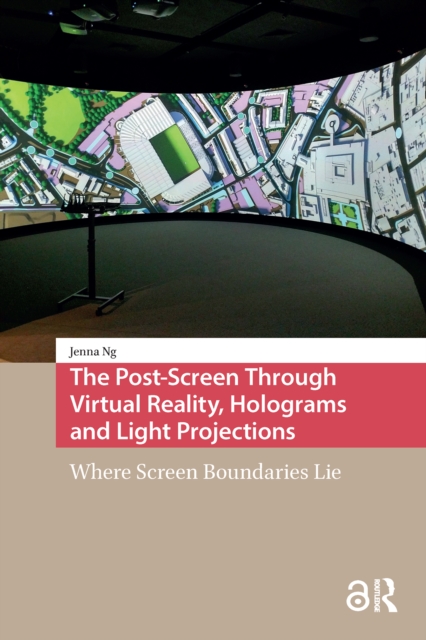
The Post-Screen Through Virtual Reality, Holograms and Light Projections
Screens are ubiquitous today. They display information; present image worlds; are portable; connect to mobile networks; mesmerize. However, contemporary screen media also seek to eliminate the presence of the screen and the visibilities of its boundaries. As what is image becomes increasingly indistinguishable against the viewer’s actual surroundings, this unsettling prompts re-examination about not only what is the screen, but also how the screen demarcates and what it stands for in relation to our understanding of our realities in, outside and against images. Through case studies drawn from three media technologies – Virtual Reality; holograms; and light projections – this book develops new theories of the surfaces on and spaces in which images are displayed today, interrogating critical lines between art and life; virtuality and actuality; truth and lies. What we have today is not just the contestation of the real against illusion or the unreal, but the disappearance itself of difference and a gluttony of the unreal which both connect up to current politics of distorted truth values and corrupted terms of information. The Post-Screen Through Virtual Reality, Holograms and Light Projections: Where Screen Boundaries Lie is thus about not only where the image’s borders and demarcations are established, but also the screen boundary as the instrumentation of today’s intense virtualizations that do not tell the truth. In all this, a new imagination for images emerges, with a new space for cultures of presence and absence, definitions of object and representation, and understandings of dis- and re-placement – the post-screen.
eBook

Configuring the Older Non-User: Between Research, Policy and Practice of Digital Exclusion
Older adults face significant barriers when accessing the Internet. What can be done to address these barriers? This article analyses existing strategies to tackle the age-related digital divide on three different levels: research, policy and practice. It analyses (1) scientific conceptualisations that are used when studying Internet use and non-use in later life, (2) policies that address older adults’ Internet (non-)use in Austria and (3) characteristics of older Austrian non-users of the Internet based on the Survey of Health, Ageing and Retirement in Europe (SHARE, wave 6). Analysis shows that Austrian policy tends to emphasise the individual responsibility to learn digital technologies, while placing a lower priority on structural issues, such as investments in infrastructure. However, SHARE data shows that only a small percentage of older non-users of the Internet is in fact reached with such interventions. Thus, this article suggests that policy needs to base its strategies on more refined understandings of Internet use and non-use in later life as well as a more nuanced image of the older non-user. A perspective of critical-cultural gerontology, as laid out in this article, highlights that technology adoption is a domestication process that takes place in the everyday lives of older adults, and it is these processes that interventions that tackle the age-related digital divide should take as a starting point.
Journal Article

Exquisite Mixture
The culture of late seventeenth- and early eighteenth-century Britain is rarely credited with tolerance of diversity; this period saw a rising pride in national identity, the expansion of colonialism, and glorification of the Anglo-Saxon roots of the country. Yet at the same time, Wolfram Schmidgen observes, the concept of mixture became a critical element of Britons' belief in their own superiority. While the scientific, political, and religious establishment of the early 1600s could not imagine that anything truly formed, virtuous, or durable could be produced by mixing unlike kinds or merging absolute forms, intellectuals at the end of the century asserted that mixture could produce superior languages, new species, flawless ideas, and resilient civil societies.Exquisite Mixtureexamines the writing of Robert Boyle, John Locke, Daniel Defoe, and others who challenged the primacy of the one over the many, the whole over the parts, and form over matter. Schmidgen traces the emergence of the valuation of mixture to the political and scientific revolutions of the seventeenth century. The recurrent threat of absolutism in this period helped foster alliances within a broad range of writers and fields of inquiry, from geography, embryology, and chemistry to political science and philosophy. By retrieving early modern arguments for the civilizing effects of mixture, Schmidgen invites us to rethink the stories we tell about the development of modern society. Not merely the fruit of postmodernism, the theorization and valuation of hybridity have their roots in centuries past.
eBook

The Myth of the “Civilization State”: Rising Powers and the Cultural Challenge to World Order
“Civilization” is back at the forefront of global policy debates. The leaders of rising powers such as China, India, Turkey, and Russia have stressed their civilizational identity in framing their domestic and foreign policy platforms. An emphasis on civilizational identity is also evident in U.S. president Donald Trump's domestic and foreign policy. Some analysts argue that the twenty-first century might belong to the civilization state, just as the past few centuries were dominated by the nation-state. But is the rise of civilization state inevitable? Will it further undermine the liberal international order and fuel a clash of civilizations, as predicted by the late Samuel Huntington? Or might ideas from East Asian and other non-Western civilizations contribute to greater pluralism in our thinking about world order and the study of international relations?
Journal Article

Foreign Modernism
At the beginning of the twentieth century, Paris was the cosmopolitan hub of Europe and home to a vast number of foreigners – including the writers, painters, sculptors, and musicians who were creating works now synonymous with modernism itself, such as Les Desmoiselles d’Avignon , The Rite of Spring , and Ulysses . The situation at the end of the period, however, could not have been more different: even before the violence of the Second World War, the cosmopolitan avant-garde had largely abandoned Paris, driven out by nationalism, xenophobia, and intolerance.
Foreign Modernism investigates this tense and transitional moment for both modernism and European multiculturalism by looking at the role of foreigners in Paris’s artistic scene. Examining works of literature, sculpture, ballet and performing arts, music, and architecture, Ihor Junyk combines cultural history with contemporary work in transnationalism and diaspora studies. Junyk emphasizes how émigré artists used radical new forms of art to resist the culture of virulent nationalism taking root in France, and to articulate new forms of cosmopolitan identity.
eBook

Diversity, Social Capital, and Cohesion
We review the bourgeoning literature on ethno-racial diversity and its alleged effects on public trust and cohesion in the context of the evolution of the concept of social capital and earlier claims about its manifold positive effects. We present evidence that questions such claims and points to the roots of civicness and trust in deep historical processes associated with race and immigration. We examine the claims that immigration reduces social cohesion by drawing on the sociological classics to show the forms of cohesion that actually keep modern societies together. This leads to a typology that shows \"communitarianism\" to be just one such form and one not required, and not necessarily ideal, for the smooth operation of complex organizations and institutions. Implications of our conclusions for future research and immigration policy are discussed.
Journal Article