
Catalogue Search | MBRL


Are you sure you want to remove the book from the shelf?

{{itemTitle}}
126
result(s) for
"Poetics -- History -- 18th century"
Sort by:

Modernity's Mist: British Romanticism and the Poetics of Anticipation
Modernity's Mist explores an understudied aspect of Romanticism: its future-oriented poetics. Whereas Romanticism is well known for its relation to the past, Emily Rohrbach situates Romantic epistemological uncertainties in relation to historiographical debates that opened up a radically unpredictable and fast- approaching future. As the rise of periodization made the project of defining the \"spirit of the age\" increasingly urgent, the changing sense of futurity rendered the historical dimensions of the present deeply elusive. While historicist critics often are interested in what Romantic writers and their readers would have known, Rohrbach draws attention to moments when these writers felt they could not know the historical dimensions of their own age. Illuminating the poetic strategies Keats, Austen, Byron, and Hazlitt used to convey that sense of mystery, Rohrbach describes a poetic grammar of future anteriority--of uncertainty concerning what will have been. Romantic writers, she shows, do not simply reflect the history of their time; their works make imaginable a new way of thinking the historical present when faced with the temporalities of modernity.
eBook

The Imperial Sublime
The Imperial Sublime examines the rise of the Russian empire as a literary theme simultaneous with the evolution of Russian poetry between the 1730s and 1840—the century during which poets defined the main questions facing Russian literature and society. Harsha Ram shows how imperial ideology became implicated in an unexpectedly wide range of issues, from formal problems of genre, style, and lyric voice to the vexed relationship between the poet and the ruling monarch.
eBook

Blotted Lines
Blotted Lines rebuffs
centuries of mythologization about the creative process-the idea
that William Shakespeare \"never blotted out line\"-to argue that by
studying how early modern writers faced the challenges of writing
poetry, instructors today can empower their students' approaches to
critical writing. Adhaar Noor Desai offers deeply
researched accounts of how poetic labor intersected with early
modern rhetorical theory, material culture, and social
networks.
Tracing the productive struggles of such writers as George
Gascoigne, Philip Sidney, John Davies of Hereford, Lady Anne
Southwell, and Shakespeare across their manuscripts, Desai
identifies in their work instances of discomposition: frustration,
hesitation, self-doubt, and insecurity. Inspired to unmake their
poems so that they might remake them, these poets welcomed
discomposition because it catalyzed ongoing thinking and learning.
Blotted Lines brings literary scholarship into
conversation with modern composition studies, challenging early
modern literary studies to treat writing as both noun and verb and
foregrounding the ways poetry and criticism alike can model for
students the cultivation of patience, collaboration, and risk in
their writing.
eBook


Flexible Design
Using the idea of a \"flexible design,\" John Pierce examines the ways in which Blake's mythology and his poem possess a flexibility that allows for significant change to characters, symbols, and poetic techniques within a previously constructed framework. Pierce traces how, in the process of revision, Blake experimented with characterization, increased the importance of Christian symbolism, and developed a mode of narrative presentation controlled less by chronological sequence than by the use of thematic juxtaposition and typology.
eBook

Who Has Fiction? Modernity, Fictionality, and the Middle Ages
This essay advances several overlapping claims about how to conceptualize fiction within the density of historical time. First, I show that fictionality is entangled with ideologies of disenchantment and secularization. There is a long tradition in the West of both distinguishing and deriving fictionality from categories of bad belief; within the framework of the secularization thesis, possessing fiction—which is to say, having the literary infrastructure for a \"willing suspension of disbelief\"—becomes the mark of an achieved secular modernity. That history suggests the need to reconsider, in turn, what Catherine Gallagher excludes from her well-known account in \"The Rise of Fictionality.\" The present essay seeks to theorize fictionality otherwise, in a manner that is hermeneutic and comparative. To do so, the second section addresses the archive of medieval literature and advocates for a shift in analytic focus, away from contemporary theorizations of literature and toward literary practice. \"Commonplaces\" of fictionality—or the shared motifs, genres, and contexts for semantic unearnestness—offer one strategy for doing so. The essay's final section then contends that these arguments are related to an important trend in medieval studies, a trend of arguably anachronistic scholarship on topics like medieval disability and medieval race, which deploys modern constructs in nonmodern archives. On the model of such undertakings, a comparative poetics of fiction stands to pluralize the literary-critical concept by returning it to its volatile interface with language's capacity to depict what is nonactual and the reinventions that result.
Journal Article

The Poetics of Natural History
Winner of the 2000 American Studies Network Prize and the Literature and Language Award from the Association of American Publishers, Inc.Early American naturalists assembled dazzling collections of native flora and fauna, from John Bartram's botanical garden in Philadelphia and the artful display of animals in Charles Willson Peale's museum to P.
eBook
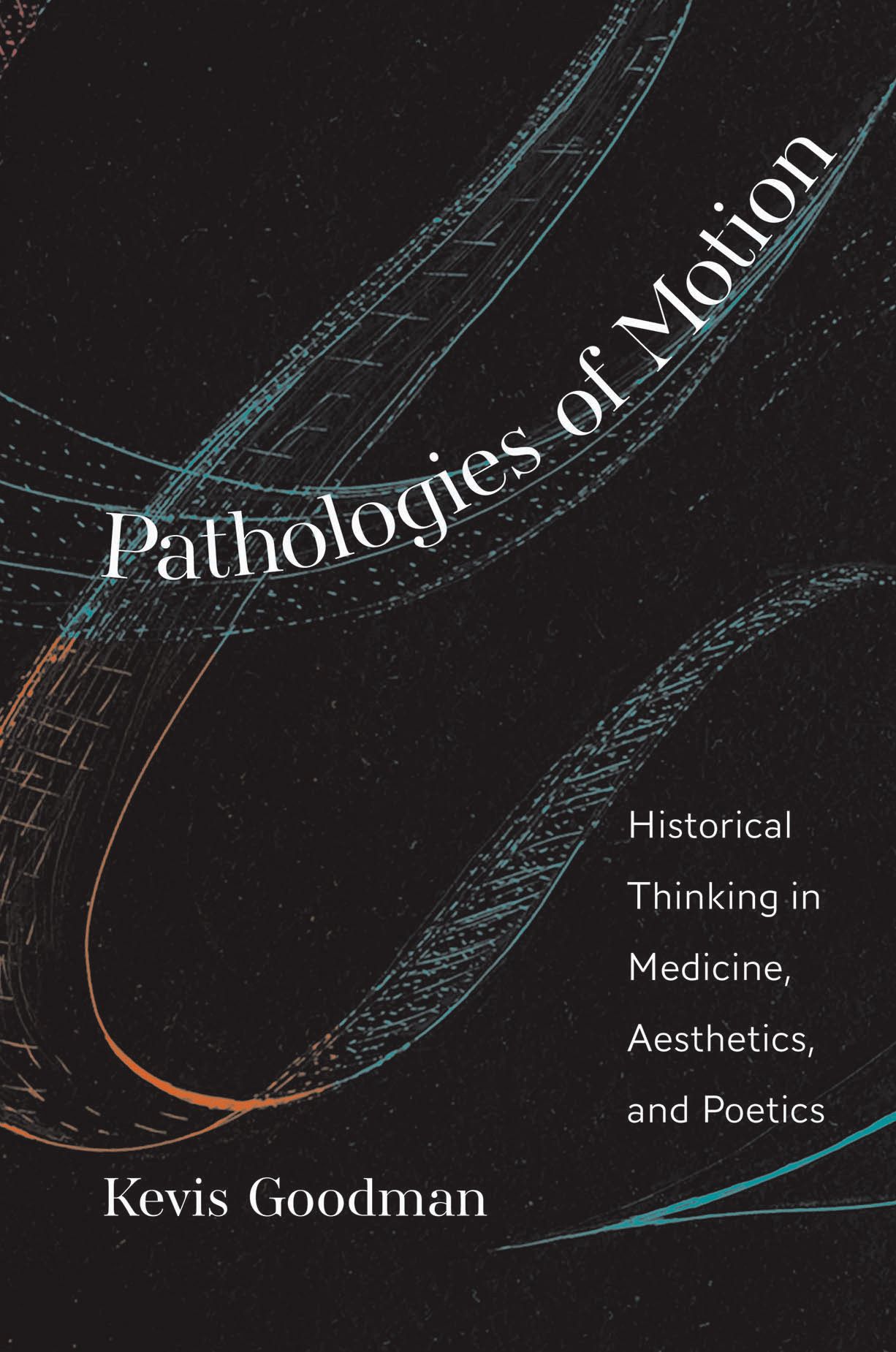
Pathologies of Motion
An original study of late Enlightenment aesthetics, poetics, and environmental medicine as overlapping ways of comprehending the dislocations of historical existence lodged in the movements of bodies and minds.
eBook


Literary Authority
This book is the cultural history of an idea which now seems so self-evident as barely to be worth stating: through writing imaginative literature, an author can accrue significant and lasting economic and cultural power. We take for granted, now, that authority dwells in literature and in being its author. This state of affairs was not naturally occurring, but deliberately invented. This book tells the story of that invention. The story's central figures are Alexander Pope and Samuel Johnson. But its narrative begins in the 1680s, with the last gasp of the bond linking literary to political authority. While Jacobite poets celebrated (and mourned) the Stuart dynasty, Whig writers traced the philosophical and aesthetic consequences of the accession of William of Orange. Both groups left behind sets of literary devices ready-made to confer and validate authority. Claude Willan challenges the continued reign of the \"Scriblerian\" model of the period and shows how that reign was engineered. In so doing he historicizes the relationship between \"good\" and \"bad\" writing, and suggests how we might think about literature and beauty had Pope and Johnson not taken literary authority for themselves. What might literature have looked like, and what could we use it for, he provocatively asks.
eBook