
Catalogue Search | MBRL


Are you sure you want to remove the book from the shelf?

{{itemTitle}}
2,972
result(s) for
"Poetry 21st century."
Sort by:
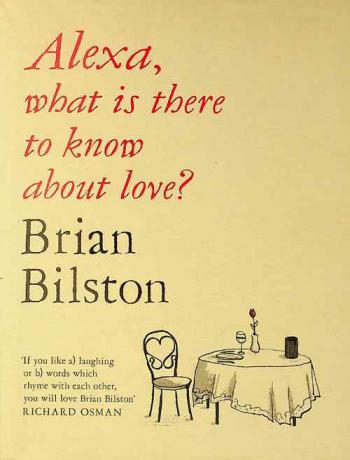

Women's Experimental Poetry in Britain 1970–2010
Women’s Experimental Poetry in Britain 1970–2010: Body, Time and Locale presents the history and current state of a critically neglected, significant body of contemporary writing and places it within the wider social and political contexts of the period. Ranging from Geraldine Monk’s ventriloquizing of the Pendle witches to Denise Riley’s fiercely self-critical lyric poems, from the multi-media experiments of Maggie O’Sullivan to the globally aware, politicised sequences of Andrea Brady and Jennifer Cooke, David Kennedy and Christine Kennedy theorise women’s alternative poetries in terms of Julia Kristeva’s idea of ‘women’s time’ and in terms of the female poetic voice constantly negotiating with dominant systems of representation. They also offer a much-needed re-theorising of the value of avant garde practices.
eBook

The crying book
\"Award-winning poet Heather Christle has just lost a dear friend to suicide and must reckon with her own struggles with depression and the birth of her first child. How she faces her joy, grief, anxiety, impending motherhood, and conflicted truce with the world results in a moving meditation on the nature, rapture, and perils of crying--from the history of tear-catching gadgets (including the woman who designed a gun that shoots tears) to the science behind animal tears (including moths who drink them) to the fraught role of white women's tears in racist violence.\"--Provided by publisher.
BOOK


The Edinburgh Companion to Contemporary Scottish Poetry
The last three decades have seen unprecedented flourishing of creativity across the Scottish literary landscape, so that contemporary Scottish poetry constitutes an internationally renowned, award-winning body of work. At the heart of this has been the work of poets. As this poetry makes space for its own innovative concerns, it renegotiates the poetic inheritance of preceding generations. At the same time, Scottish poetry continues to be animated by writing from other places.
The Edinburgh Companion to Contemporary Scottish Poetryis the definitive guide to this flourishing poetic scene. Its chapters examine Scottish poetry in all three of the nation's languages. It analyses many thematic preoccupations: tradition and innovation; revolutions in gender; the importance of place; the aesthetic politics of devolution. These chapters are complemented by extended close readings of the work of key poets that have defined this era, including Edwin Morgan, Kathleen Jamie, Don Paterson, Aonghas MacNeacail and John Burnside.
Key Features
A thorough guide to contemporary Scottish poetry and poets, making the book an ideal course textReflects the ways in which the work of Scottish poets reflects a radical cultural independence following DevolutionProvides authoritative essays by the leading experts in the fieldIncludes a valuable synoptic bibliography
eBook

The wind blows through the doors of my heart : poems
This breathtaking collection of poems by Deborah Digges, published posthumously, brings us rich stories of family life, nature's bounty, love, and loss ... the overflowing of a heart burdened by grief and moved by beauty.
Book

Gray Matter
Simultaneously restless and enchanted, the primary speaker of these poems is a tourist in the truest sense. She finds herself on trains, in the backcountry of the American wilderness, in crowded European hostels, and in Vietnam, eating a partially fertilized egg. All the while, Michigan, the landscape of childhood, serves as her reference point (\"A rustic sort of place I can't back away from\"). Inspired by the Buddhist concept of anatta, or \"no-self,\" the speaker navigates unfamiliar terrain, sparking the question of identity and the agent of its construction. The poems ask how through perception the body metabolizes experience. From this intersection the passionate investigation of consciousness takes flight, framing the slippage between thinking and being, the feast of the subconscious and the seeds planted from waking life, the impermanence of a given moment, versus the materialism of memory, the reality of isolation despite the presence of a crowd, the influence of culture versus biology's common baseline. Drawing from contemporary neuroscience and rare case studies, the poems illuminate the peculiar, interrelated aspects of the mechanisms of the brain and personality. But there is nothing clinical about these poems, culled from dreams and memory fragments. The question of consciousness gives rise to the distinct human ability to reflect, to invent. Which is what the poems-poignant, strange, radiating musicality-enact: someone gropes for the deer mount its goofy snarl and patchwork hide a ruse underway laughter in the pantry the deer lifted into someone's sleep (from \"Staff After Hours\") Not the love a mile underground on a train that slows into the station like a sore arm bending, but the kind boarded on a ship and sailed hard into the storm we've made of ourselves. (from \"Please do Not Touch\") Gray Matter: 1. the material of the brain. 2. an expression naming an idea or situation held in shadow. This book tangles with the unknown, but also celebrates the seductive curiosity its mystery provokes. It is a love letter from the imagination to the scientists and philosophers who, despite remarkable attempts, still cannot locate its source.
eBook
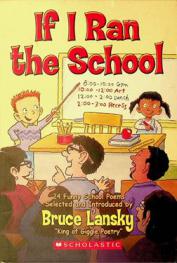
If I ran the school
Bruce Lansky has written five new poems for this book and selected nineteen others from some of his favorite poets, including Jack Prelutsky, Kenn Nesbitt, Ted Scheu, and Robert Pottle.
Book
