
Catalogue Search | MBRL


Are you sure you want to remove the book from the shelf?

{{itemTitle}}
587
result(s) for
"Poetry Translating."
Sort by:

Sociologies of poetry translation : emerging perspectives
\"While the sociology of literary translation is by now well-established, and even flourishing, the same cannot be said specifically for the sociology of poetry translation. This volume, the first to address poetry translation using a variety of sociological and socio-political approaches, showcases poetry translation looked at from the distinctive perspectives offered by theorists like Pierre Bourdieu and Niklas Luhmann. Discussing poetry translated from and/or into a variety of languages, such as Catalan, Czech, English, Irish, Italian, Russian, Slovakian, Spanish, Swahili, Swedish, and Ukrainian, Sociologies of Poetry Translation addresses poetry translation from sociological perspectives in order to catalyse new methods of investigating poetry translation and features new research on how ideological stances and historical movements affect it. Making the case for a move from the singular 'sociology of poetry translation' to the pluralist 'sociologies', this book accounts for the rich variety of approaches that are currently emerging to deal with poetry translation\"-- Provided by publisher.
Book

Sociologies of poetry translation : emerging perspectives
While the sociology of literary translation is well-established, and even flourishing, the same cannot be said for the sociology of poetry translation.Sociologies of Poetry Translation features scholars who address poetry translation from sociological perspectives in order to catalyze new methods of investigating poetry translation.
eBook


After Translation
Translation--from both a theoretical and practical point of view--articulates differing but interconnected modes of circulation in the work of writers originally from different geographical areas of transatlantic encounter, such as Europe, Latin America, North America, and the Caribbean. After Translation examines from a transnational perspective the various ways in which translation facilitates the circulation of modern poetry and poetics across the Atlantic. It rethinks the theoretical paradigm of Anglo-American \"modernism\" based on the transnational, interlingual and transhistorical features of the work of key modern poets writing at both sides of the Atlantic--namely, the Portuguese Fernando Pessoa; the Chilean Vicente Huidobro; the Spaniard Federico García Lorca; the San Francisco-based poets Jack Spicer, Robert Duncan, and Robin Blaser; the Barbadian Kamau Brathwaite; and the Brazilian brothers Haroldo and Augusto de Campos.
eBook


Letters of Blood and Other Works in English
This collection brings together for the first time select works in English by the major Swedish modernist poet and critic Göran Printz-Påhlson. It was Printz-Påhlson who introduced poetic modernism to Scandinavia, and his essays and poems delve deeply into English, American, and continental modernist traditions. As well as Letters of Blood, the collection includes the full text of \"The Words of the Tribe\", a major statement on modern poetics, in which Printz-Påhlson explores the significance of primitivism in Romanticism and Modernism, and the nature of metaphor and literary materialism. The collection also includes essays on style, irony, realism, and the relationship between historical drama and historical fiction, as well as studies of American poetry. Printz-Påhlson’s poetry in English continues to explore these themes by different, often surprisingly innovative, means.
eBook

Translating Apollinaire
This book delves into Apollinaire's poetry and poetics as a way to explore the challenges and invitations it offers to the process of translation. In addition to Apollinaire, Clive Scott draws from Deleuze, Vertov, Barthes, and a number of other international linguists and theorists, to offer his experimental approach to translation--a multimedia approach with an emphasis on photographic collage that treats translation as a record of reading experience rather than the interpretation of a text. Translation, Scott argues, is an activity for all readers, not just a skill for specialists.
BOOK

Modern Italian Poets
In 1948, the poet Eugenio Montale published his Quaderno di traduzioni and created an entirely new Italian literary genre, the “translation notebook.” The quaderni were the work of some of Italy’s foremost poets, and their translation anthologies proved fundamental for their aesthetic and cultural development.
Modern Italian Poets shows how the new genre shaped the poetic practice of the poet-translators who worked within it, including Giorgio Caproni, Giovanni Giudici, Edoardo Sanguineti, Franco Buffoni, and Nobel Prize-winner Eugenio Montale, displaying how the poet-translators used the quaderni to hone their poetic techniques, experiment with new poetic metres, and develop new theories of poetics.
In addition to detailed analyses of the work of these five authors, the book covers the development of the quaderno di traduzioni and its relationship to Western theories of translation, such as those of Walter Benjamin and Benedetto Croce. In an appendix, Modern Italian Poets also provides the first complete list of all translations and quaderni di traduzioni published by more than 150 Italian poet-translators.
eBook
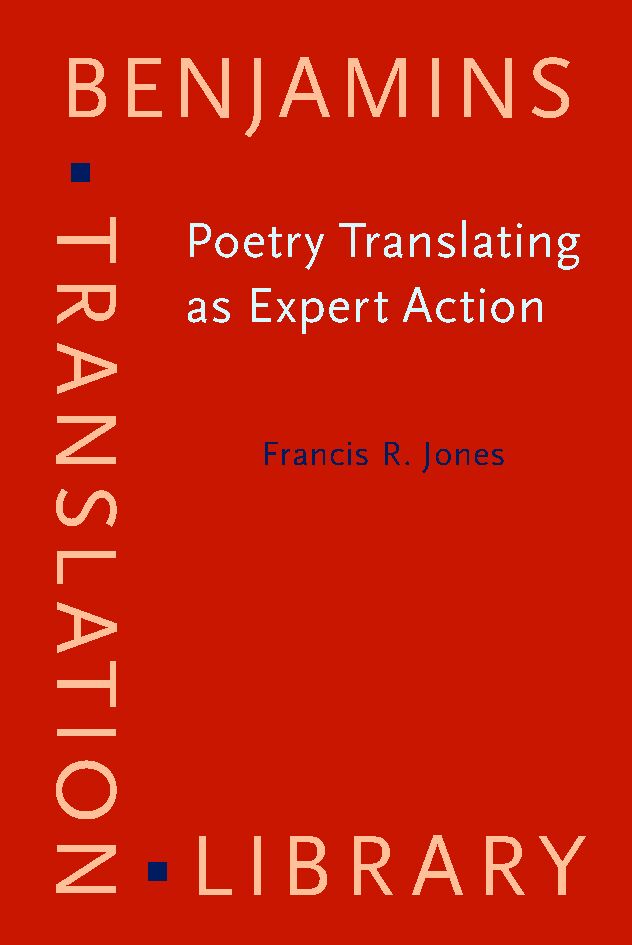
Poetry translating as expert action : processes, priorities and networks
Poetry is a highly valued form of human expression, and poems are challenging texts to translate. For both reasons, people willingly work long and hard to translate them, for little pay but potentially high personal satisfaction. This book shows how experienced poetry translators translate poems and bring them to readers, and how they not only shape new poems, but also help communicate images of the source culture. It uses cognitive and sociological translation-studies methods to analyse real data, most of it from two contrasting source countries, the Netherlands and Bosnia. Case studies, including think-aloud studies, analyse how translators translate poems. In interviews, translators explain why and how they translate. And a 17-year survey of a country's poetry-translation output explores how translators work within networks of other people and texts - publishing teams, fellow translators, source-culture enthusiasts, and translation readers and critics. In mapping the whole sweep of poetry translators' action, from micro-cognitive to macro-social, this book gives the first translation-studies overview of poetry translating since the 1970s.
eBook