
Catalogue Search | MBRL


Are you sure you want to remove the book from the shelf?

{{itemTitle}}
47,267
result(s) for
"Poetry and Poetics"
Sort by:

Becoming poetry : poets and their methods
\"Becoming Poetry focuses on helping readers grasp how poetry works upon our understanding and our imagination. A model of practical criticism, this volume of essays by the poet Jay Rogoff prizes the specific example over theoretical generalization and performs close critical examination of texts from a diverse range of poets, classical and contemporary. 'Formalities,' the first section, deals with formal elements in works by poets ranging historically from Shakespeare and Emily Dickinson to contemporary writers such as Andrew Hudgins, Paul Muldoon, and Mary Jo Salter. The central section examines collections of new and selected poems that offer work from poets' entire careers. Rogoff considers how such volumes assemble a body of poetry that then, for readers, defines the essential character of each poet. The poets considered in this section include Philip Booth, Jane Cooper, Robert Dana, Eamonn Grennan, Rachel Hadas, Hafiz, James Henry, Edward Hirsch, Daniel Hoffman, Michael Jennings, Mary Oliver, Kay Ryan, Karl Shapiro, W. D. Snodgrass, Edward Thomas, and David Wojahn. Throughout, Rogoff discusses how the poetry operates, keeping in mind, to paraphrase the scholar Stephen Booth, that a poem is a sequence of actions upon the understanding of the reader. A briefer final section, 'The Ear,' explores the aural qualities of poetry and music, distinguishing between the experience of poetry on the ear and on the page. Designed as a guide for readers of poetry who want to understand more about what makes it tick, Becoming Poetry presents approachable discussions that show how poetry operates on us and how it creates a virtual, affective experience of lasting power and value\"-- Provided by publisher.
Book

“You must be taught to love me”: On Louise Glück’s Choral Lyric
This essay considers the American poet Louise Glück’s 1992 lyric sequence, The Wild Iris , as a contemporary instantiation of theological choral. Following W. R. Johnson’s work on choral lyric, I propose an account of both theological poetics and lyric theory that allows for a theological treatment of Glück’s polyvocal voicings.
Journal Article

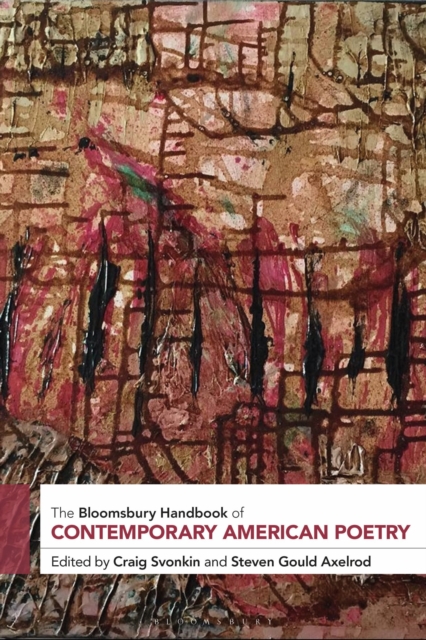
Bloomsbury Handbook of Contemporary American Poetry
With chapters written by leading scholars such as Steven Gould Axelrod, Cary Nelson, and Marjorie Perloff, this comprehensive Handbook explores the full range and diversity of poetry and criticism in 21st-century America. The Bloomsbury Handbook of Contemporary American Poetrycovers such topics as: · Major histories and genealogies of post-war poetry – from the language poets and the Black Arts Movement to New York school and the Beats · Poetry, identity and community – from African American, Chicana/o and Native American poetry to Queer verse and the poetics of disability · Key genres and forms – including digital, visual, documentary and children’s poetry · Central critical themes – economics, publishing, popular culture, ecopoetics, translation and biography The book also includes an interview section in which major contemporary poets such as Rae Armantrout, and Claudia Rankine reflect on the craft and value of poetry today.
eBook

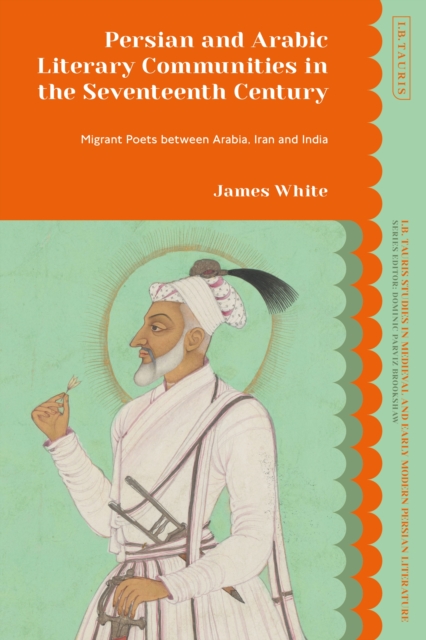
Persian and Arabic Literary Communities in the Seventeenth Century
A wealth of scholarship has highlighted how commercial, political and religious networks expanded across the Arabian Sea during the seventeenth century, as merchants from South Asia traded goods in the ports of Yemen, noblemen from Safavid Iran established themselves in the courts of the Mughal Empire, and scholars from across the region came together to debate the Islamic sciences in the Arabian Peninsula's holy cities of Mecca and Medina. This book demonstrates that the globalising tendency of migration created worldly literary systems which linked Iran, India and the Arabian Peninsula through the production and circulation of classicizing Arabic and Persian poetry. By close reading over seventy unstudied manuscripts of seventeenth-century Arabic and Persian poetry that have remained hidden on the shelves of libraries in India, Iran, Turkey and Europe, the book examines how migrant poets adapted shared poetic forms, imagery and rhetoric to engage with their interlocutors and create communities in the cities where they settled. The book begins by reconstructing overarching patterns in the movement of over a thousand authors, and the economic basis for their migration, before focusing on six case studies of literary communities, which each represent a different location in the circulatory system of the Arabian Sea. In so doing, the book demonstrates the plurality of seventeenth-century aesthetic movements, a diversity which later nationalisms purposefully simplified and misread.
eBook

The poetry of knowledge and the 'two cultures'
This book argues that poetry is compatible with systematic knowledge including science, and indeed inherent in it; it also discusses particular poems that engage with such knowledge, including those of Lucretius, Vergil, and Vita Sackville-West. The book argues that there are substantial similarities between knowledge-making and poetry-making, for example in their being shaped by language, including metaphor, and in their seeking unity in the world, under the impulse of eros and pleasure. The book also discusses some of the obstacles to a \"poetry of knowledge,\" including scientific objectivism, the Kantian tradition in philosophy, and the separation of the \"two cultures\" in our academic and intellectual institutions. The book is designed to be accessible to all those interested in the issue of the \"two cultures,\" or in the role of poetry and of science in contemporary culture.
Book
Affect, Psychoanalysis, and American Poetry
Poetry has often been defined by its closure, its condensation of meaning and value into discrete, self-referential textual objects. Affect, Psychoanalysis and American Poetry challenges the dominant metaphor of poetic containers by turning to recent poetic texts that represent the contagious and uncontainable feelings of anxiety, grief, shame, and rage. From modernists Wallace Stevens to mid-century poets Randall Jarrell, Robert Creeley and Ted Berrigan, and finally to contemporary practitioners Aaron Kunin and Claudia Rankine, John Steen argues that new poetic techniques arise from the poetic productivity of negative affects, and that a new model of poetic value can be found in poems that are–instead of containers–permeable, social spaces of intimacy, attachment, and withdrawal. Drawing from object relations, psychoanalysis, queer theory, and affect theory, Affect, Psychoanalysis, and American Poetry finds poetry’s singularity in its unique capacity to represent anew the transmissible, relational, and uncontainable valences of feeling that structure and destabilize social life.
eBook


Text World Theory and Keats’ Poetry
Text World Theory and Keats' Poetry applies advances in cognitive poetics and text world theory to four poems by the nineteenth century poet John Keats. It takes the existing text world theory as a starting point and draws on stylistics, literary theory, cognitive linguistics, cognitive psychology and dream theories to explore reading poems in the light of their emphasis on states of desire, dreaming and nightmares. It accounts for the representation of these states and the ways in which they are likely to be processed, monitored and understood. Text World Theory and Keats' Poetry advances both the current field of cognitive stylistics but also analyses Keats in a way that offers new insights into his poetry. It is of interest to stylisticians and those in literary studies.
eBook