
Catalogue Search | MBRL


Are you sure you want to remove the book from the shelf?

{{itemTitle}}
263
result(s) for
"Poets, Japanese"
Sort by:

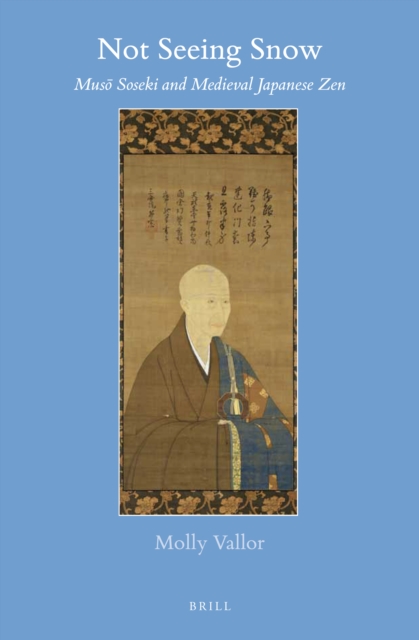
Not seeing snow : Musō Soseki and medieval Japanese Zen
Not Seeing Snow: Muso Soseki and Medieval Japanese Zen offers a detailed look at a crucial yet sorely neglected figure in medieval Japan. It clarifies Muso's far-reaching significance as a Buddhist leader, waka poet, landscape designer, and political figure. In doing so, it sheds light on how elite Zen culture was formed through a complex interplay of politics, religious pedagogy and praxis, poetry, landscape design, and the concerns of institution building. The appendix contains the first complete English translation of Muso's personal waka anthology, Shogaku Kokushishu.
eBook

The old tea seller : Baisaهo : life and Zen poetry in 18th century Kyoto
As he approached his 50s, Baisaهo abandoned the life of a Buddhist priest to sell tea and wander the countryside around Kyoto, Japan. He became a friend and confidante of many of 18th-century Japan's most celebrated artists and intellectuals; though he would never consider himself a zen master, the people who sought him out for a cup of tea treated him with great respect. As a poet, he equaled some of the best of his age. Norman Waddell's biography of this obscure Japanese poet gives insight into the man and the society which surrounded him; also includes translations of all known Baisaهo poems and other writings.
Book
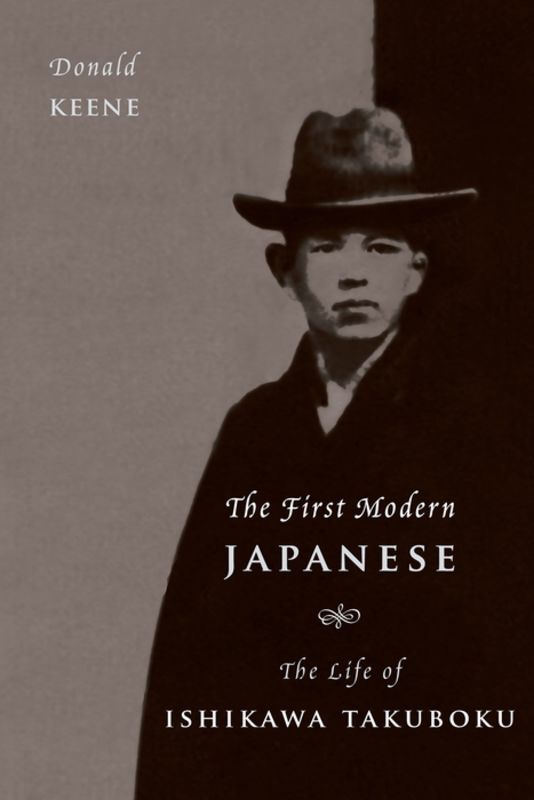
The first modern Japanese
Many books in Japanese have been devoted to the poet and critic Ishikawa Takuboku (1886-1912). Although he died at the age of twenty-six and wrote many of his best-known poems in the space of a few years, his name is familiar to every literate Japanese. Takuboku's early death added to the sad romance of the unhappy poet, but there has been no satisfactory biography of his life or career, even in Japanese, and only a small part of his writings have been translated. His mature poetry was based on the work of no predecessor, and he left no disciples. Takuboku stands unique.
Takuboku's most popular poems, especially those with a humorous overlay, are often read and memorized, but his diaries and letters, though less familiar, contain rich and vivid glimpses of the poet's thoughts and experiences. They reflect the outlook of an unconstrained man who at times behaved in a startling or even shocking manner. Despite his misdemeanors, Takuboku is regarded as a national poet, all but a saint to his admirers, especially in the regions of Japan where he lived. His refusal to conform to the Japan of the time drove him in striking directions and ranked him as the first poet of the new Japan.
eBook

The art and life of Fukuda Kodōjin : Japan's great poet and landscape artist
\"The most comprehensive book on Kodojin's art ever published--beautiful and mysterious--a collection of more than 100 paintings with English translations of the inscribed poems.The Art and Life of Fukuda Kodōjin is the first publication in English to offer an in-depth examination of Kodōjin's life, painting, and poetry. This fully illustrated publication draws from institutions and private collections worldwide, and is the result of fifteen years of extensive research into almost eight hundred works of inscribed poetry, literati landscapes, brush paintings and calligraphy. A beautiful and contemplative look into the world of Kodōjin, this coveted edition accompanies a special exhibition held at the Minneapolis Institute of Art.Fukuda Kodōjin (1865-1944) was a multifaceted artist, recognized for his poetry, painting and calligraphy, and is one of a handful of artists who continued the tradition of Japanese literati painting (nanga) into the twentieth century. Kodōjin's painting style is characterized by bizarrely shaped mountain forms rendered in vivid color or monochromatic ink, often with a solitary scholar enjoying the expansive beauty of nature and bits of inscribed poetry. Creating over 700 works in his lifetime, he also made simple paintings of plants and flowers in his dramatic brushwork, and distinctive literati landscapes.Kodōjin literally means 'Old Taoist' which seems to reflect the path he chose of resilience of an old tradition facing new conditions and new challenges, and is theme felt throughout his art. There is both beauty and mystery in his life and work, and his landscapes can be rich in costly green and blue pigments, detailed layers of ink shading and strokes, or purely abstract.Unique, mysterious and distinctively expressive, The Art and Life of Fukuda Kodojin offers an unprecedented walk through the Old Taoist's mind, sure to both surprise and enlighten the curious reader, scholar, or literati enthusiast.\"-- Provided by publisher.
BOOK

Twelve Views from the Distance
From one of the foremost poets in contemporary Japan comes this entrancing memoir that traces a boy's childhood and its intersection with the rise of the Japanese empire and World War II. Originally published in 1970, this translation is the first available in English.
In twelve chapters that visit and revisit critical points in his boyhood, Twelve Views from the Distancepresents a vanished time and place through the eyes of an accomplished poet. Recounting memories from his youth, Mutsuo Takahashi captures the full range of his internal life as a boy, shifting between his experiences and descriptions of childhood friendships, games, songs, and school. With great candor, he also discusses the budding awareness of his sexual preference for men, providing a rich exploration of one man's early queer life in a place where modern, Western-influenced models of gay identity were still unknown.
Growing up poor in rural southwestern Japan, far from the urban life that many of his contemporaries have written about, Takahashi experienced a reality rarely portrayed in literature. In addition to his personal remembrances, the book paints a vivid portrait of rural Japan, full of oral tradition, superstition, and remnants of customs that have quickly disappeared in postwar Japan. With profuse local color and detail, he re-creates the lost world that was the setting for his beginnings as a gay man and poet.
eBook

Grass sandals : the travels of Basho
A simple retelling of the travels of seventeenth-century Japanese poet, Basho, across his island homeland. Includes examples of the haiku verses he composed.
Book

The Ends of Meter in Modern Japanese Poetry
In The Ends of Meter in Modern
Japanese Poetry , Scott Mehl analyzes the
complex response of Meiji-era Japanese poets and readers to the
challenge introduced by European verse and the resulting crisis in
Japanese poetry. Amidst fierce competition for literary
prestige on the national and international stage, poets and critics
at the time recognized that the character of Japanese poetic
culture was undergoing a fundamental transformation, and the stakes
were high: the future of modern Japanese verse.
Mehl documents the creation of new Japanese poetic forms,
tracing the first invention of Japanese free verse and its
subsequent disappearance. He examines the impact of the acclaimed
and reviled shintaishi , a new poetic form invented for
translating European-language verse and eventually supplanted by
the reintroduction of free verse as a Western import. The Ends
of Meter in Modern Japanese Poetry draws on materials written
in German, Spanish, English, and French, recreating the global
poetry culture within which the most ambitious Meiji-era Japanese
poets vied for position.
eBook


Introduction
This chapter explores the period during which Japanese poets engaged in formal experimentation to a degree unmatched in any other period of comparable length in Japanese history. It takes a look at the close connection between form and translation in the history of modern Japanese poetry. By attending to how literary forms change when writers borrow them from one language and recreate them in another, the chapter unfolds something fundamental about how the implied and explicit values of different literary cultures interact. The chapter then shifts to pose the following fundamental questions about diffusionism: Under what circumstances, if any, can a so-called peripheral culture resist adopting the forms created by a core culture? Is it possible to specify when such resistance would be effective, and when ineffectual? It then considers the phenomenon of modern free-verse poetry in Japanese and how traditional poets and shintaishi poets both attempted to defend their forms against criticisms.
Book Chapter