
Catalogue Search | MBRL


Are you sure you want to remove the book from the shelf?

{{itemTitle}}
104
result(s) for
"Poisoners."
Sort by:

Under your wings
Gwendolyn and Estella have always been as close as sisters can be. Growing up in a wealthy, powerful and sometimes treacherous family, they've relied on each other for support and confidence. Now, though, Gwendolyn is lying in a coma, the sole survivor of Estella's poisoning of their whole family. What in their dark and complicated past has brought them to this point? As Gwendolyn struggles to regain consciousness, she desperately retraces her memories, trying to uncover the moment that led to this brutal act.
Book

The Doctors in Tacitus’ Annals: A Case of Ethnic Prejudice
This paper discusses the portrayals of physicians in the Annals , and argues that they reveal Tacitus’ underlying ethnic prejudice against Greeks. The passages narrating the actions of Eudemus, Charicles, and Xenophon show that the historian portrays them negatively by underscoring their cunningness and involvement, direct or indirect, in the death of an emperor or heir. The pattern at work points to a deeply rooted hostility against them not as medical professionals, but as Greeks. This is further corroborated through the contrast with the non-Greek doctor, Annaeus Statius, and through the comparison with the professional poisoner treated in the Annals , Locusta.
Journal Article

City of Crows
\"Set in seventeenth-century France--a country in the thrall of dark magic, its social fabric weakened by years of plague--Chris Womersley's City of Crows ... tells the story of Charlotte Picot, a young woman from the country forced to venture to the fearsome city of Paris in search of her only-remaining son, Nicolas. Fate (or coincidence) places the quick-witted charlatan Adam Lesage in her path\"--Publisher marketing.
Book
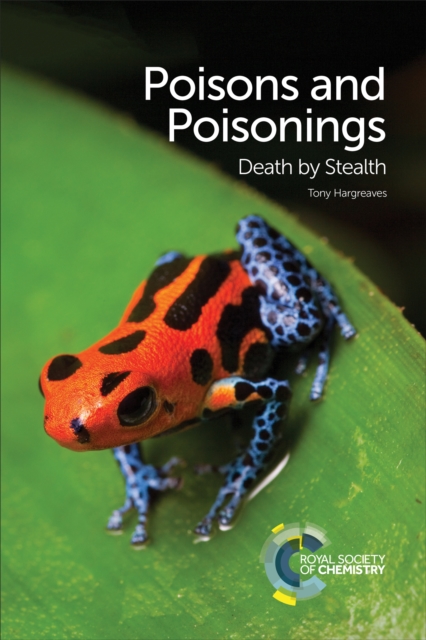
Poisons and Poisonings
It is London in the 1890s. A young woman has just taken a dose of a tonic she's been given in the belief that it will improve her complexion. About ten minutes pass and she starts to experience breathing difficulties. Another minute and she collapses. Mercifully, death arrives but the poison has not yet finished, for the process of rigor mortis has set in with unusual speed. Her body is frozen into a rigid and contorted mass. This is the horror of strychnine, the nastiest of poisons. Despite knowing all the dreadfulness of this poison, Dr Thomas Neill Cream, the Lambeth Poisoner, used it to kill several prostitutes. And who knows how many other victims experienced the horror of strychnine, for it was by no means an uncommon poison. Today, there may well be more poisons available to the individual than ever before, but there are also advances in medical examination and forensic analysis that increase the likelihood of the poisoner being caught. This book will examine poisons, both natural and man-made menaces, and cases based on a particular poison as well as information about how forensic analysis is conducted. Appealing to scientists and non-scientists alike, this enthralling book will entertain and educate and bring the reader up to date with how important chemical analysis is in crime detection.
eBook


Poison, detection, and the Victorian imagination
A history of poisoning in the nineteenth century and in particular the case of Dr William Palmer, convicted of murder by poisoning, and how he baffled toxicologists, doctors, detectives and judges.
eBook


Mythical Transformations of Fish Poisoning
The technique of fish poisoning in the Caco region of Paraguay is not well attested, but myth analysis indicates that the practice has been transposed from the field of pure imagination to that of production. The myths cover an inventory of several different imaginary substitutes for fish poisoning, & provide some answers regarding the absence of the practice in neighboring areas, suggesting that it is attributable not to the natural environment but to a cultural choice. Modified HA.
Journal Article

Nineteenth-century female poisoners : three English women who used arsenic to kill
\"Nineteenth-Century Female Poisoners investigates the Essex poisoning trials of 1846 to 1851 where three women were charged with using arsenic to kill children, their husbands and brothers. Using newspapers, archival sources (including petitions and witness depositions), and records from parliamentary debates, the focus is not on whether the women were guilty or innocent, but rather on what English society during this period made of their trials and what stereotypes and stock-stories were used to describe women who used arsenic to kill. All three women were initially presented as 'bad' women- but as the book illustrates there was no clear consensus on what exactly constituted bad womanhood\"-- Provided by publisher.
Book

Recurrence of Lead Poisoning in Children
Family diagnosis is related to recurrence of lead poisoning in children. Data were gathered by interview & record abstraction from 10 single ingestor & 10 recidivist families. The Voiland family classification scheme was used. Single ingestor families tended to be diagnosed as inadequate (80%) & recidivist families tended to be diagnosed as unsocial (80%). The type of family to which the child belongs is an important variable to consider in both the onset & recidivism of lead poisoning. To counteract recidivism, family & social therapy may be as important as medical procedures. 3 Tables. AA.
Journal Article