
Catalogue Search | MBRL


Are you sure you want to remove the book from the shelf?

{{itemTitle}}
227
result(s) for
"Police -- Illinois -- Chicago -- History"
Sort by:

The Memorial Day Massacre and the movement for industrial democracy
\"This book explores one of the most dramatic and scandalous events in the movement for American democratic reform. Dubbed the Memorial Day Massacre, it saw Chicago police shoot and kill ten demonstrators and beat more than one hundred others as they tried to form a mass picket line at the Republic Steel Plant in South Chicago\"--Provided by publisher.
Book

Robert Nixon and Police Torture in Chicago, 1871–1971
In 2015, Chicago became the first city in the United States to create a reparations fund for victims of police torture, after investigations revealed that former Chicago police commander Jon Burge tortured numerous suspects in the 1970s, '80s, and '90s. But claims of police torture have even deeper roots in Chicago. In the late 19th century, suspects maintained that Chicago police officers put them in sweatboxes or held them incommunicado until they confessed to crimes they had not committed. In the first decades of the 20th century, suspects and witnesses stated that they admitted guilt only because Chicago officers beat them, threatened them, and subjected them to \"sweatbox methods.\" Those claims continued into the 1960s.
In Robert Nixon and Police Torture in Chicago, 1871–1971, Elizabeth Dale uncovers the lost history of police torture in Chicago between the Chicago Fire and 1971, tracing the types of torture claims made in cases across that period. To show why the criminal justice system failed to adequately deal with many of those allegations of police torture, Dale examines one case in particular, the 1938 trial of Robert Nixon for murder. Nixon's case is famous for being the basis for the novel Native Son, by Richard Wright. Dale considers the part of Nixon's account that Wright left out of his story: Nixon's claims that he confessed after being strung up by his wrists and beaten and the legal system's treatment of those claims. This original study will appeal to scholars and students interested in the history of criminal justice, and general readers interested in Midwest history, criminal cases, and the topic of police torture.
eBook

The Rise of the Chicago Police Department
In this book, Sam Mitrani cogently examines the making of the police department in Chicago, which by the late 1800s had grown into the most violent, turbulent city in America. Chicago was roiling with political and economic conflict, much of it rooted in class tensions, and the city's lawmakers and business elite fostered the growth of a professional municipal police force to protect capitalism, its assets, and their own positions in society. Together with city policymakers, the business elite united behind an ideology of order that would simultaneously justify the police force's existence and dictate its functions.
eBook

To Serve and Collect
Crooked politicians, gangsters, madams, and cops on the take: To Serve and Collect tells the story of Chicago during its formative years through the history of its legendary police department.    
eBook

Occupied Territory
In July 1919, an explosive race riot forever changed Chicago. For years, black southerners had been leaving the South as part of the Great Migration. Their arrival in Chicago drew the ire and scorn of many local whites, including members of the city's political leadership and police department, who generally sympathized with white Chicagoans and viewed black migrants as a problem population. During Chicago's Red Summer riot, patterns of extraordinary brutality, negligence, and discriminatory policing emerged to shocking effect. Those patterns shifted in subsequent decades, but the overall realities of a racially discriminatory police system persisted. In this history of Chicago from 1919 to the rise and fall of Black Power in the 1960s and 1970s, Simon Balto narrates the evolution of racially repressive policing in black neighborhoods as well as how black citizen-activists challenged that repression. Balto demonstrates that punitive practices by and inadequate protection from the police were central to black Chicagoans' lives long before the late-century \"wars\" on crime and drugs. By exploring the deeper origins of this toxic system, Balto reveals how modern mass incarceration, built upon racialized police practices, emerged as a fully formed machine of profoundly antiblack subjugation.
eBook

Gentrification and Community Fabric in Chicago
Critical authors of gentrification point to its deleterious impacts on displaced residents. Research on the nature or actual forms of impacts has not advanced much, however. This paper attempts to specify impacts on low-income racial/ethnic groups (Latinos in particular) in five Chicago neighbourhoods, with a particular focus on neighbourhoodbased fabrics of support and advancement. Limited in their mobility and exchange value resources, lower-income groups depend on such fabrics far more than do the higher income. In fact, they have fewer choices and are most vulnerable to place-based shifts. The case seems especially challenging for minorities who, like European immigrants before them, depend largely on place-based platforms/social fabrics but, unlike them, confront the added factors of race and urban restructuring.
Journal Article

Queer Clout
In postwar America, the path to political power for gays and lesbians led through city hall. By the late 1980s, politicians and elected officials, who had originally sought political advantage from raiding gay bars and carting their patrons off to jail, were pursuing gays and lesbians aggressively as a voting bloc-not least by campaigning in those same bars. Gays had acquired power and influence. They had clout.
Tracing the gay movement's trajectory since the 1950s from the closet to the corridors of power,Queer Cloutis the first book to weave together activism and electoral politics, shifting the story from the coastal gay meccas to the nation's great inland metropolis. Timothy Stewart-Winter challenges the traditional division between the homophile and gay liberation movements, and stresses gay people's and African Americans' shared focus on police harassment. He highlights the crucial role of black civil rights activists and political leaders in offering white gays and lesbians not only a model for protest but also an opening to join an emerging liberal coalition in city hall. The book draws on diverse oral histories and archival records spanning half a century, including those of undercover vice and police red squad investigators, previously unexamined interviews by midcentury social scientists studying gay life, and newly available papers of activists, politicians, and city agencies.
As the first history of gay politics in the post-Stonewall era grounded in archival research,Queer Cloutsheds new light on the politics of race, religion, and the AIDS crisis, and it shows how big-city politics paved the way for the gay movement's unprecedented successes under the nation's first African American president.
eBook

Working-Class Heroes
Chicago's Southwest Side is one of the last remaining footholds for the city's white working class, a little-studied and little-understood segment of the American population. This book paints a nuanced and complex portrait of the firefighters, police officers, stay-at-home mothers, and office workers living in the stable working-class community known as Beltway. Building on the classic Chicago School of urban studies and incorporating new perspectives from cultural geography and sociology, Maria Kefalas considers the significance of home, community, and nation for Beltway residents.
eBook
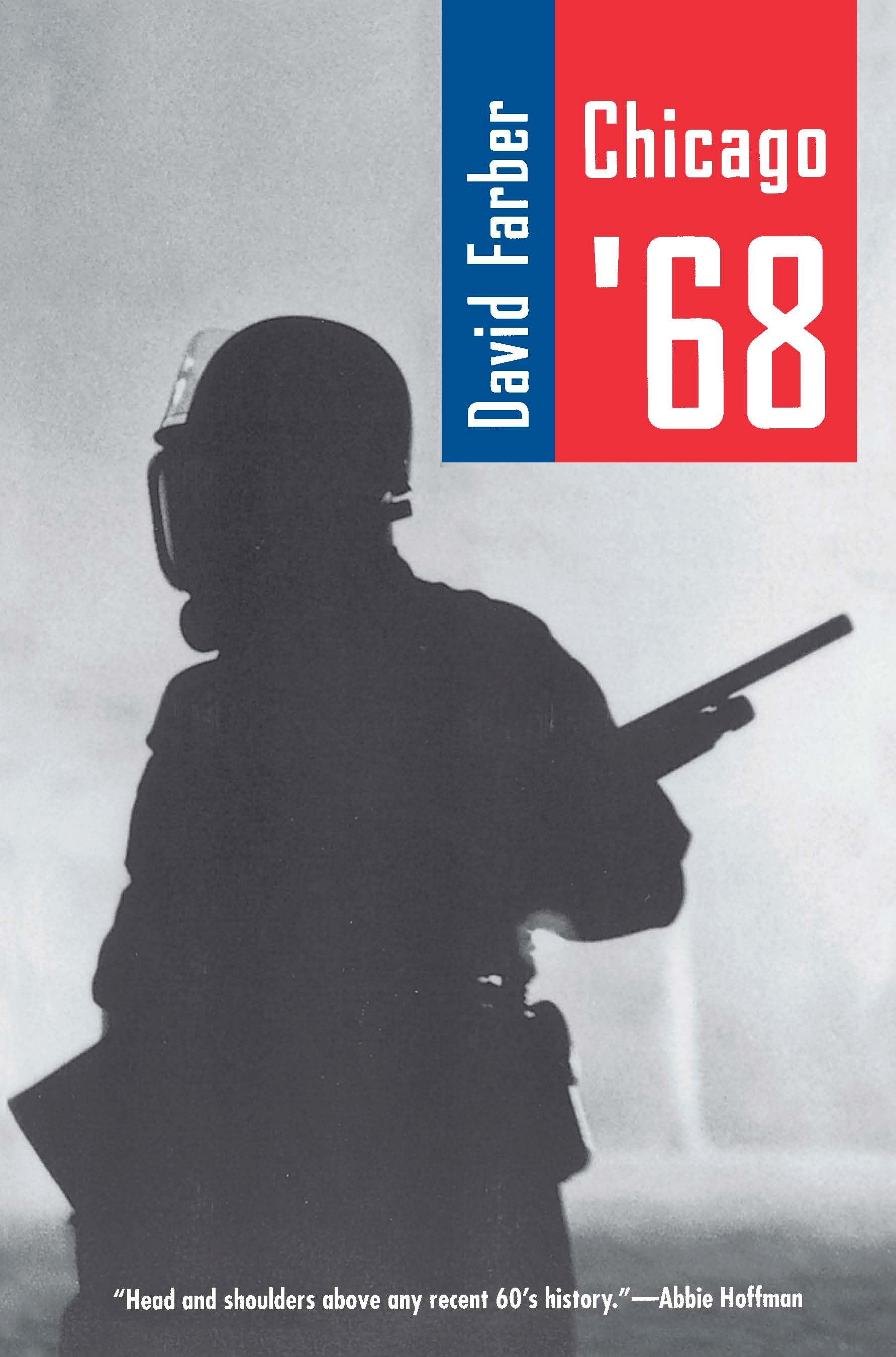
Chicago '68
Entertaining and scrupulously researched, Chicago '68 reconstructs the 1968 Democratic Convention in Chicago—an epochal moment in American cultural and political history. By drawing on a wide range of sources, Farber tells and retells the story of the protests in three different voices, from the perspectives of the major protagonists—the Yippies, the National Mobilization to End the War, and Mayor Richard J. Daley and his police. He brilliantly recreates all the excitement and drama, the violently charged action and language of this period of crisis, giving life to the whole set of cultural experiences we call \"the sixties.\"
eBook

Prostitution Politics and Feminist Activism in Modern America: Sophonisba Breckinridge and the Morals Court in Prohibition-Era Chicago
In 1930, Sophonisba Breckinridge, a feminist social work professor at the University of Chicago, initiated a campaign to reform the branch of Chicago's Municipal Court system that dealt with prostitutes. A product of an international anti-prostitution movement, the Morals Court was considered a model reform at the time of its inception in 1913. Yet as scholars have observed, reformers' efforts to abolish prostitution resulted in repressive policies that sanctioned state control and police harassment of sex workers. Although most studies note feminist critiques of prostitution policies on civil libertarian grounds, few have explored this phenomenon, particularly after 1920. Breckinridge's crusade to secure civil rights for accused prostitutes in Prohibition-era Chicago offers a new perspective on the politics of prostitution, prompts a reexamination of American feminism after the achievement of suffrage, and sheds light on current debates about the international traffic in women. Adapted from the source document.
Journal Article