
Catalogue Search | MBRL


Are you sure you want to remove the book from the shelf?

{{itemTitle}}
15
result(s) for
"Police films -- United States -- History and criticism"
Sort by:

Crime Films
This book surveys the entire range of crime films, including important subgenres such as the gangster film, the private eye film, film noir, as well as the victim film, the erotic thriller, and the crime comedy. Focusing on ten films that span the range of the twentieth century, Thomas Leitch traces the transformation of the three leading figures that are common to all crime films: the criminal, the victim and the avenger. Analyzing how each of the subgenres establishes oppositions among its ritual antagonists, he shows how the distinctions among them become blurred throughout the course of the century. This blurring, Leitch maintains, reflects and fosters a deep social ambivalence towards crime and criminals, while the criminal, victim and avenger characters effectively map the shifting relations between subgenres, such as the erotic thriller and the police film, within the larger genre of crime film that informs them all.
eBook

Unless the threat of death is behind them : hard-boiled fiction and film noir
Early in the twentieth century a new character type emerged in the crime novels of American writers such as Dashiell Hammett and Raymond Chandler: the \"hard-boiled\" detective, most famously exemplified by Sam Spade in The Maltese Falcon. Unlike the analytical detectives of nineteenth-century fiction, such as Edgar Allan Poe's Inspector Dupin, the new detectives encountered cases not as intricate logical puzzles but as stark challenges of manhood. In the stories of these characters and their criminal opposites, John T. Irwin explores the tension within ideas of American masculinity between subordination and independence and, for the man who becomes \"his own boss, \" the conflict between professional codes and personal desires. He shows how, within different works of hard-boiled fiction, the professional either overcomes the personal or is overcome by it, ending in ruinous relationships or in solitary integrity, and how within the genre all notions of manly independence are ultimately revealed to be illusions subordinate to fate itself.
Tracing the stylistic development of the genre, Irwin demonstrates the particular influence of the novel of manners, especially the writing of F. Scott Fitzgerald. He goes on to argue that, from the time of World War II, when hard-boiled fiction began to appear on the screen in film noir just as women entered the workforce in large numbers, many of its themes came to extend to female empowerment. Finally, he discusses how these themes persist in contemporary dramatic series on television, representing the conflicted lives of Americans into the twenty-first century.
eBook

The Crime Films of Anthony Mann
Anthony Mann (1906-1967) is renowned for his outstanding 1950s
westerns starring James Stewart (Winchester '73, The
Naked Spur, The Man from Laramie). But there is more
to Mann's cinematic universe than those tough Wild West action
dramas featuring conflicted and secretive heroes. This brilliant
Hollywood craftsman also directed fourteen electrifying crime
thrillers between 1942 and 1951, among them such towering
achievements in film noir as T-Men, Raw Deal, and
Side Street. Mann was as much at home filming dark urban
alleys in black-and-white as he was the prairies and mountains in
Technicolor, and his protagonists were no less conflicted and
secretive than his 1950s cowboys.
In these Mann crime thrillers we find powerful stories of sexual
obsession (The Great Flamarion), the transforming images
of women in wartime and postwar America (Strangers in the
Night, Strange Impersonation), exploitation of
Mexican immigrants (Border Incident), studies of the
criminal mind (He Walked by Night), and Civil War bigotry
(The Tall Target). Mann's forceful camera captured such
memorable and diverse stars as Erich von Stroheim, Farley Granger,
Dennis O'Keefe, Claire Trevor, Richard Basehart, Ricardo Montalbán,
Ruby Dee, and Raymond Burr.
The Crime Films of Anthony Mann features analysis of
rare documents, screenplays, story treatments, and studio memoranda
and reveals detailed behind-the-scenes information on preproduction
and production on the Mann thrillers. Author Max Alvarez uses rare
and newly available sources to explore the creation of these noir
masterworks. Along the way, the book exposes secrets and solves
mysteries surrounding the mercurial director and his remarkable
career, which also included Broadway and early live television.
eBook

Film criticism, the Cold War, and the blacklist
Film Criticism, the Cold War, and the Blacklist examines the long-term reception of several key American films released during the postwar period, focusing on the two main critical lenses used in the interpretation of these films: propaganda and allegory. Produced in response to the hearings held by the House Committee on Un-American Activities (HUAC) that resulted in the Hollywood blacklist, these films’ ideological message and rhetorical effectiveness was often muddled by the inherent difficulties in dramatizing villains defined by their thoughts and belief systems rather than their actions. Whereas anti-Communist propaganda films offered explicit political exhortation, allegory was the preferred vehicle for veiled or hidden political comment in many police procedurals, historical films, Westerns, and science fiction films. Jeff Smith examines the way that particular heuristics, such as the mental availability of exemplars and the effects of framing, have encouraged critics to match filmic elements to contemporaneous historical events, persons, and policies. In charting the development of these particular readings, Film Criticism, the Cold War, and the Blacklist features case studies of many canonical Cold War titles, including The Red Menace, On the Waterfront, The Robe, High Noon, and Invasion of the Body Snatchers.
eBook

TV Cops
The police drama has been one of the longest running and most popular genres in American television. In TV Cops, Jonathan Nichols-Pethick argues that, perhaps more than any other genre, the police series in all its manifestations-from Hill Street Blues to Miami Vice to The Wire-embodies the full range of the cultural dynamics of television.
Exploring the textual, industrial, and social contexts of police shows on American television, this book demonstrates how polices drama play a vital role in the way we understand and engage issues of social order that most of us otherwise experience only in such abstractions as laws and crime statistics. And given the current diffusion and popularity of the form, we might ask a number of questions that deserve serious critical attention: Under what circumstances have stories about the police proliferated in popular culture? What function do these stories serve for both the television industry and its audiences? Why have these stories become so commercially viable for the television industry in particular? How do stories about the police help us understand current social and political debates about crime, about the communities we live in, and about our identities as citizens?
eBook

The Horror of Police
Unmasks the horrors of a social order reproduced and
maintained by the violence of police Year after year the
crisis churns: graft and corruption, violence and murder, riot cops
and armored vehicles claim city streets. Despite promises of
reform, police operate with impunity, unaccountable to law. In
The Horror of Police , Travis Linnemann asks why, with this
open record of violence and corruption, policing remains for so
many the best, perhaps only means of security in an insecure
world.
Drawing on the language and texts of horror fiction, Linnemann
recasts the police not only as self-proclaimed \"monster fighters\"
but as monsters themselves, a terrifying force set loose in the
world. Purposefully misreading a collection of everyday police
stories (TV cop dramas, detective fiction, news media accounts, the
direct words of police) not as morality tales of innocence avenged
and order restored but as horror , Linnemann reveals the
monstrous violence at the heart of liberal social order.
The Horror of Police shows that police violence is not
a deviation but rather a deliberate and permanent fixture of U.S.
\"law and order.\" Only when viewed through the refracted motif of
horror stories, Linnemann argues, can we begin to reckon the limits
of police and imagine a world without them.
eBook
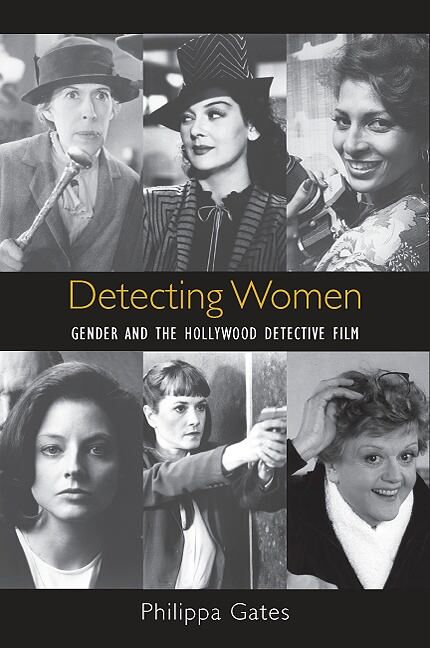
Detecting Women
Finalist for the 2012 Edgar Award in the Best
Critical/Biographical Category presented by the Mystery Writers of
America In this extensive and authoritative study of over
300 films, Philippa Gates explores the \"woman detective\" figure
from her pre-cinematic origins in nineteenth century detective
fiction through her many incarnations throughout the history of
Hollywood cinema. Through the lens of theories of gender, genre,
and stardom and engaging with the critical concepts of
performativity, masquerade, and feminism, Detecting Women analyzes
constructions of the female investigator in the detective genre and
focuses on the evolution of her representation from 1929 to today.
While a popular assumption is that images of women have become
increasingly positive over this period, Gates argues that the most
progressive and feminist models of the female detective exist in
mainstream film's more peripheral products such as 1930's B-picture
and 1970's Blaxploitation films. Offering revisions and new
insights into peripheral forms of mainstream film, Gates explores
this space that allows a fantasy of resolution of social anxieties
about crime and, more interestingly, gender, in the 20th and early
21st centuries. The author's innovative, engaging, and capacious
approach to this important figure within feminist film history
breaks new ground in the field of gender and film studies.
eBook

Hardboiled and High Heeled
Can a gumshoe wear high heels? In a genre long dominated by men, women are now taking their place-as authors and as characters-alongside hard-boiled legends like Sam Spade and Mike Hammer. Hardboiled and High Heeled examines the meteoric rise of the female detective in contemporary film, television, and literature.
Richly illustrated and written with a fan's love of the genre, Hardboiled and High Heeled is an essential introduction to women in detective fiction, from past to present, from pulp fiction to blockbuster films.
Linda Mizejewski is Professor of English and Chair of the Women's Studies Department at Ohio State University. She is author of Ziegfeld Girl: Image and Icon in Culture and Cinema and Divine Decadence: Fascism, Female Spectacle, and the Makings of Sally Bowles . She lives in Columbus, Ohio.
eBook
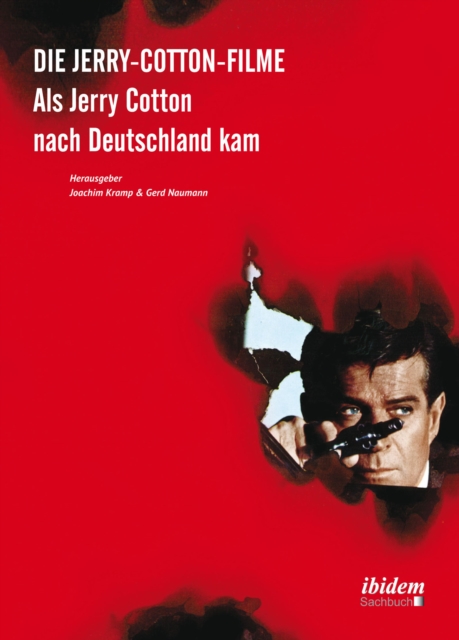
Die Jerry-Cotton-Filme: Als Jerry Cotton nach Deutschland kam
Die Jerry-Cotton-Filme aus den sechziger Jahren haben Kultstatus erlangt. Selbst wer die Filme noch nicht gesehen haben sollte, kennt den Hauptdarsteller George Nader. Er ist im kulturellen Gedachtnis bis heute das Gesicht des FBI-Agenten. Zwischen 1965 und 1969 entstanden acht Filme, die im Kino sensationelle Publikumserfolge feierten. Mit dem Band Die Jerry-Cotton-Filme. Als Jerry Cotton nach Deutschland kam legt nun das erfahrene Herausgeberteam Joachim Kramp und Gerd Naumann das erste Buch vor, das sich ausfuhrlich mit der popularen Filmreihe befasst. Neben den acht klassischen Filmen mit George Nader wird dabei auch die jungste Verfilmung behandelt, in der Christian Tramitz in die Hauptrolle schlupft. Kramp und Naumann fuhren nicht nur in die Produktionshintergrunde ein, sondern beleuchten auch das zeitgenossische Umfeld, in dem die Jerry-Cotton-Filme entstehen konnten. Neben einer umfassenden Darstellung der Geschichte der klassischen Jerry-Cotton-Filme findet sich eine ausfuhrliche Ubersicht samtlicher Filme und ausgewahlter Kritiken. Besondere Hohepunkte sind die exklusiven Interviews mit George Nader sowie dem Kameramann Franz Xaver Lederle. Fur Nader war es das letzte Interview in Deutschland, bevor er 2002 verstarb. Lederle berichtet zahlreiche interessante Anekdoten rund um die Filme und gibt teils sehr private Erinnerungen rund um die Dreharbeiten preis. Personliche Erinnerungen an die Hamburger Dreharbeiten eines Jerry-Cotton-Films steuert auch Gerd von Borstel bei, der als Jugendlicher Zaungast am Set von Mordnacht in Manhattan war und dabei erleben durfte, wie problematisch es war, fur eine Actionszene eine Tankstelle zu sprengen. Ein umfangreiches Kapitel widmet sich zudem dem Phanomen der Verfilmungen deutscher 'Groschenromanhefte', darunter auch Kommissar X. Weitere Hintergrunddarstellungen, unter anderem uber das FBI, den deutschen Kriminalfilm oder den Filmkomponisten Peter Thomas, runden den Band ab. Anlasslich des jungsten Jerry-Cotton-Films mit Christian Tramitz kommen die 'neuen' Komponisten Helmut Zerlett und Christoph Zirngibl zu Wort. Als besondere Extras finden sich seltene Premieren- und Setphotos sowie ein Reprint der handgeschriebenen Partitur des bekannten Jerry-Cotton-Marsch. Eingeleitet wird das Buch mit einem exklusiven Vorwort des Jerry-Cotton-Komponisten Peter Thomas.
eBook