
Catalogue Search | MBRL


Are you sure you want to remove the book from the shelf?

{{itemTitle}}
136,810
result(s) for
"Police shootings."
Sort by:


Firearm Availability and Fatal Police Shootings
Do states with more guns have higher rates of fatal police shootings? This article uses a validated measure of firearm availability (the percentage of suicides committed with a firearm) to examine the relationship between gun proliferation and fatal police shootings. It expands on existing research to include (1) measures of access to Level I and II trauma centers, (2) interpretation of the findings from the lenses of “statistical prediction,” and (3) tests for structural differences between models for black decedents versus nonblack decedents. Findings confirm the correlation between statewide prevalence of gun ownership and fatal police shootings for both all decedents and unarmed decedents. It provides partial support for “statistical prediction” by police and finds that greater access to trauma centers is associated with lower rates of citizen deaths. The analysis suggests a far broader range of policy options for saving lives, such as better enforcement of legal restrictions on firearm possession, than focusing solely on policing systems.
Journal Article

Something happened in our town : a child's story about racial injustice
After discussing the police shooting of a local black man with their families, Emma and Josh know how to treat a new student who looks and speaks differently than his classmates.
Book

The Deadly Force Script
How many times have you read a news story about someone being shot by the police while reaching for their waistband?Or about an officer who testified at trial that the person he shot during a physical struggle had superhuman strength or a thousand-yard stare in his eyes?.
eBook

When police kill
Deaths of civilians at the hands of on-duty police are in the national spotlight as never before. How many killings by police occur annually? What circumstances provoke police to shoot to kill? Who dies? The lack of answers to these basic questions points to a crisis in American government that urgently requires the attention of policy experts. 'When Police Kill' is an analysis of the use of lethal force by police in the United States and how its death toll can be reduced.
Book

Variation in Rates of Fatal Police Shootings across US States: the Role of Firearm Availability
The USA has very high rates of homicide by police compared to other high-income countries, with approximately 1000 civilians killed annually. The overwhelming majority of these police homicides are fatal shootings. Over the past 5 years, several comprehensive, real-time, data repositories, drawn largely from news reporting, have kept track of incidents in which civilians die during an encounter with the police and have become widely available. Data from these repositories, which are more complete than data available from federal data systems, have been used to explore fatal police shootings of civilians, often with a focus on racial disparities in police shootings of unarmed civilians, and have consistently found that police are more likely to shoot unarmed African American men than unarmed White men. Although numerous studies have examined how rates of police killings of civilians are related to several ecologic determinants of these events, no peer-reviewed study to date has examined the extent to which variation in police involved firearm homicides is explained by firearm prevalence while adjusting for violent crime rates (the most well-established ecologic factor associated with fatal police shootings). The current cross-sectional state-level analysis uses data on the number of civilians shot and killed by police in the line of duty, aggregated over 2015–2017. Data come from the Washington Post’s “Fatal Force Database”, which assembles the information from news reports and other sources. Data provided include information on whether the victim was armed, and, if so, with what weapon. Explanatory ecologic variables in our models include the violent crime rate, the percentage of the state population that is non-White, poverty rate, and urbanization, along with a validated proxy for firearm prevalence. We find that rates of police shooting deaths are significantly and positively correlated with levels of household gun ownership, even after accounting for the other explanatory variables. The association is stronger for the shooting of armed (with a gun) rather than unarmed victims.
Journal Article

Light it up
Told from multiple viewpoints, Shae Tatum, an unarmed, thirteen-year-old black girl, is shot by a white police officer, throwing their community into upheaval and making it a target of demonstrators.
Book

A high-profile police-involved shooting, civil unrest, and officers’ perceptions of legitimacy: insights from a natural experiment
Objective
To examine the effects of a high-profile police-involved shooting that resulted in a civil unrest on officers’ attitudes towards their communities and job performance.
Methods
A natural experiment design and original data from a population survey of 1,003 police officers in Newark are used to compare officers’ perceptions of community support for law enforcement, the impact of repeated media scrutiny of law enforcement on their job, and officers' aversion to discipline before and after the civil unrest that occurred in response to the controversial police shooting of Keith Scott in Charlotte.
Results
In the weeks after the Keith Scott incident, officers reported significantly lower levels of perceived community support for law enforcement and greater discipline aversion, while no significant change in the impact of media scrutiny was observed.
Conclusion
Findings suggest officers may not be immune to controversies involving police in other cities and might project onto the communities they police the feelings of hostility expressed towards law enforcement elsewhere.
Journal Article
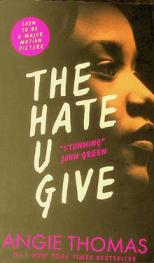
The hate u give
Sixteen-year-old Starr lives in two worlds: the poor neighbourhood where she was born and raised and the her posh high school in the suburbs. The uneasy balance between them is shattered when Starr is the only witness to the fatal shooting of her unarmed best friend, Khalil, by a police officer. Now what Starr says could destroy her community. It could also get her killed.
Book

Shooting to Kill
The present book brings together perspectives from different legal fields to examine the significant legal, moral and political issues which arise in relation to the use of lethal force in both domestic and international law.
eBook