
Catalogue Search | MBRL


Are you sure you want to remove the book from the shelf?

{{itemTitle}}
296,595
result(s) for
"Police state"
Sort by:


The Governor's Hounds
In the tumultuous years following the Civil War, violence and lawlessness plagued the state of Texas, often overwhelming the ability of local law enforcement to maintain order. In response, Reconstruction-era governor Edmund J. Davis created a statewide police force that could be mobilized whenever and wherever local authorities were unable or unwilling to control lawlessness. During its three years (1870-1873) of existence, however, the Texas State Police was reviled as an arm of the Radical Republican party and widely condemned for being oppressive, arrogant, staffed with criminals and African Americans, and expensive to maintain, as well as for enforcing the new and unpopular laws that protected the rights of freed slaves.
Drawing extensively on the wealth of previously untouched records in the Texas State Archives, as well as other contemporary sources, Barry A. Crouch and Donaly E. Brice here offer the first major objective assessment of the Texas State Police and its role in maintaining law and order in Reconstruction Texas. Examining the activities of the force throughout its tenure and across the state, the authors find that the Texas State Police actually did much to solve the problem of violence in a largely lawless state. While acknowledging that much of the criticism the agency received was merited, the authors make a convincing case that the state police performed many of the same duties that the Texas Rangers later assumed and fulfilled the same need for a mobile, statewide law enforcement agency.
eBook

Marked man : Frank Serpico's inside battle against police corruption
\"Marked Man tells the propulsive story of Frank Serpico who, in the 1960s, single-handedly rooted out systematic corruption in the New York Police Department. Since the NYPD was formed in 1845, the famous \"pad\" was as much a criminal ring as it was a legitimate police force. As the decades wore on, corruption became so out of hand that cops were regularly demanding payments from brothels, bars, pool halls, and gambling joints to keep them out of trouble with the law. It was a multimillion-dollar-a-year business that everyone seemed to turn a blind eye to. Everyone, that is, except Frank Serpico. Delve into this true story of corruption and greed, of the dark history of the largest police department in the US, and the price one man pays for doing what he thinks is right. Perfect for fans of Steve Sheinkin and Rebecca Barone, Marked Man is a dive into one man's courageous fight against a corrupt system\"-- Provided by publisher.
Book
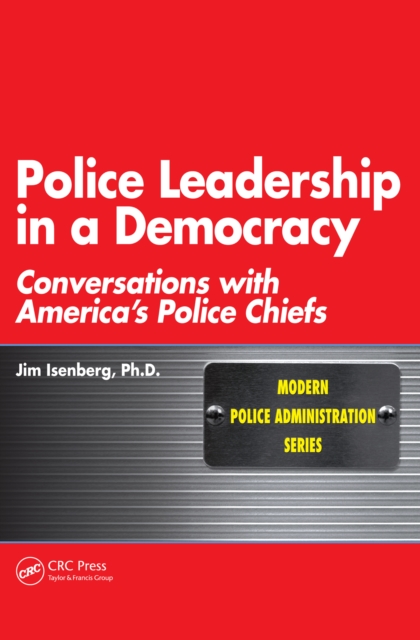
Police Leadership in a Democracy
Explores the personal experiences of a group of police chiefs who examine their leadership challenges in diverse cities. This book presents a historical overview and a short background of each police chief. It includes a set of recommendations for the future of police leadership in a democracy.
eBook

The New York City Police Department : the impact of its policies and practices
\"Studying the flagship New York City Police Department is critical to understanding policing and democratic society. An examination of the department by experts who have been watching it for years, this book reviews qualitative research on how the community views the NYPD, police culture, resistance to change, and the drop in the homicide rate in recent years. It explores hiring, firing and retention, discusses crime-fighting strategies, and reviews legal concerns and the response to public demonstrations such as the Occupy Wall Street movement. The final chapter demonstrates how the lessons relate to other departments throughout the world\"-- Provided by publisher.
Book

Life and Death in the Fast Lane: Police Enforcement and Traffic Fatalities
Simultaneity complicates the estimation of the causal effect of police on crime. We overcome this obstacle by focusing on a mass layoff of Oregon State Police in February of 2003. Due solely to budget cuts, 35 percent of the roadway troopers were laid off, which dramatically reduced citations. The subsequent decrease in enforcement is associated with a significant increase in injuries and fatalities. The effects are similar using control groups chosen either geographically or through data-driven methods. Our estimates suggest that a highway fatality can be prevented with $309,000 of expenditures on state police.
Journal Article

Case files of the NYPD : more than 175 years of solved and unsolved crimes
\"From atrocities that occurred before the establishment of New York's police force in 1845 through the terrorist attack on the World Trade Center in 2001 to the present day, this chronological visual history is an insider's look at more than 80 real-life crimes that shocked the nation, from arson to gangland murders, robberies, serial killers, bombings, and kidnappings\"-- Provided by publisher.
Book

This stops today
After the death of her son, Eric Garner, at the hands of New York City police officers on Staten Island went viral, Gwen Carr’s life changed forever. The illegal chokehold that took Garner’s life has been seared into the public consciousness forever as the large black man struggled to breathe while a white policeman held him down on a hot concrete sidewalk. His death set the tone for a new normal where young black men and women now automatically document police interactions with their cell phones for fear of brutality and even death. As one of the Mothers of the Movement, Gwen Carr, a retired transit train operator, now dedicates her time to fighting for racial equality, especially the way law enforcement treats blacks in the United States. In This Stops Today, Carr shares the tragedies she’s faced, recalls her son’s life and death, and recounts her newfound role as an activist in the fight for racial equality. More than the story of a single moment, her book recounts a life of family, community, and of a woman who now speaks for those who no longer can. She has to do it for her firstborn. She has to do it for Eric.
eBook


Exploring digital evidence recognition among officers and troopers in a sample of a state police force
Purpose
The purpose of this paper is to examine the extent to which line officers in police agencies can identify digital evidence at crime scenes, also known as the binary artifacts stored on computers, mobile devices, tablets and the internet, through an analysis of survey responses of line staff in a Midwestern state police agency.
Design/methodology/approach
An electronic survey was completed by 258 respondents using a scenario-based vignette asking them to identify where such evidence may be located during a fictitious call for service.
Findings
Most all respondents identified appropriate devices and locations where digital evidence may be stored on suspects and victims in a scenario call for service. There were significant differences in responses on the basis of recent field experience with digital evidence.
Research limitations/implications
The findings demonstrate the importance of experiential learning and training for line staff in police agencies to prepare them for basic digital evidence handling in the field. This sample is, however, based on a single state police agency and may not be reflective of other similarly sized agencies. Future research is needed to replicate this study and expand the generalizability of these findings.
Originality/value
First responders should be able to identify and secure all appropriate forms of evidence at crime scenes, regardless of crime type, while awaiting specialized investigators. This study is one of the first to consider when and how police are able to recognize digital evidence at crime scenes.
Journal Article