
Catalogue Search | MBRL


Are you sure you want to remove the book from the shelf?

{{itemTitle}}
1,264
result(s) for
"Polish People"
Sort by:


Building Fortress Europe
What happens when a region accustomed to violent shifts in borders is subjected to a new, peaceful partitioning? Has the European Union spent the last decade creating a new Iron Curtain at its fringes?Building Fortress Europe: The Polish-Ukrainian Frontierexamines these questions from the perspective of the EU's new eastern external boundary. Since the Schengen Agreement in 1985, European states have worked together to create a territory free of internal borders and with heavily policed external boundaries. In 2004 those boundaries shifted east as the EU expanded to include eight postsocialist countries-including Poland but excluding neighboring Ukraine. Through an analysis of their shared frontier,Building Fortress Europeprovides an ethnographic examination of the human, social, and political consequences of developing a specialized, targeted, and legally advanced border regime in the enlarged EU. Based on fieldwork conducted with border guards, officials, and migrants shuttling between Poland and Ukraine as well as extensive archival research,Building Fortress Europeshows how people in the two countries are adjusting to living on opposite sides of a new divide. Anthropologist Karolina S. Follis argues that the policing of economic migrants and asylum seekers is caught between the contradictory imperatives of the European Union's border security, economic needs of member states, and their declared commitment to human rights. The ethnography explores the lives of migrants, and their patterns of mobility, as framed by these contradictions. It suggests that only a political effort to address these tensions will lead to the creation of fairer and more humane border policies.
eBook


Between national socialism and Soviet communism
In May of 1945, there were more than eight million \"displaced persons\" (or DPs) in Germany-recently liberated foreign workers, concentration camp prisoners, and prisoners of war from all of Nazi-occupied Europe, as well as eastern Europeans who had fled west before the advancing Red Army. Although most of them quickly returned home, it soon became clear that large numbers of eastern European DPs could or would not do so. Focusing on Bavaria, in the heart of the American occupation zone,Between National Socialism and Soviet Communismexamines the cultural and political worlds that four groups of displaced persons-Polish, Ukrainian, Russian, and Jewish-created in Germany during the late 1940s and early 1950s. The volume investigates the development of refugee communities and how divergent interpretations of National Socialism and Soviet Communism defined these displaced groups.
Combining German and eastern European history, Anna Holian draws on a rich array of sources in cultural and political history and engages the broader literature on displacement in the fields of anthropology, sociology, political theory, and cultural studies. Her book will interest students and scholars of German, eastern European, and Jewish history; migration and refugees; and human rights.
eBook


Giuseppe Mazzini’s Young Europe and the Birth of Modern Nationalism in the Slavic World
This book explores the influence of Young Europe - an international alliance founded by Giuseppe Mazzini in 1834 - on the Polish, Slovak, Czech, and Ukrainian intelligentsia in the first half of the nineteenth century.
eBook
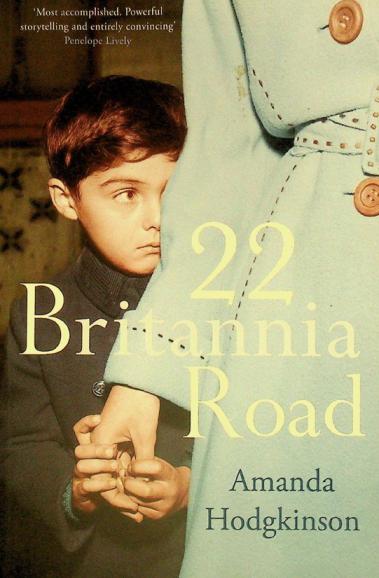
22 Britannia Road
At the end of the war, Silvana and eight-year-old Aurek board the ship that will take them from Poland to England. After living wild in the forests for years, carrying a terrible secret, all Silvana knows is that she and Aurek are survivors. Everything else is lost.

EU migrant workers, Brexit and precarity : Polish women's perspectives from inside the UK
How has the Brexit vote affected EU migrants to the UK? This book presents a female Polish perspective, using findings from research carried out with migrants interviewed before and after the Brexit vote – voices of real people who made their home in the UK. It looks at how migrants view Brexit and what it means for them, how their experiences compare pre- and post-Brexit vote, and their future plans, as well as considering the wider implications of the migrant experience in relation to precarity and the British paid labour market.
eBook

Polish war veterans in Alberta : the last four stories
\"In the aftermath of World War II, more than 4,500 Polish veterans, displaced by the war events and the emerging Soviet-oriented Polish government, were resettled in Canada as farm workers; 750 of these men were accepted by the province of Alberta. Polish War Veterans in Alberta examines how these former soldiers experienced their new country and its sometimes-harsh postwar realities. This compelling work of social history is brought to life through the words and stories of four veterans, whose remembrances provide an intimate firsthand look at a moment of Canada's past that is at risk of being forgotten\"-- Provided by publisher.
Book
Agriculture and the environment in Poland in the years 1944–2004: an Outline
among the many studies on the history of Polish countryside and agriculture af-ter 1945, there are no studies analyzing in a broader scope the issue of the relationship be-tween agricultural production and the natural environment, despite the close connection between this sector of the economy and natural resources. the negative impact of agricul-tural intensification based on chemicalization and mechanization of agriculture on the con-dition of the natural environment is also omitted (or treated marginally). this text is an at-tempt to fill this gap. its subject is the problem of the impact of agriculture on the natural environment in Poland in the years 1944–2004, i.e. in the period from the end of the war to Poland’s accession to the european Union. the basic research questions concern the directions of agricultural policy in the above period and selected methods of agricultur-al intensification and their impact on the environment, with particular emphasis on arti-ficial fertilization and chemical plant protection, agricultural mechanization and agricul-tural land improvement. due to the lack of space, the description of the above problems is a synthetic sketch concerning selected issues that await in-depth research. however, ex-isting research shows that the degree of environmental threat depends on the level of fer-tilization and use of plant protection products, the degree of mechanization and dissem-ination of monocultures, and the level of drainage. therefore, in Poland it occurred with varying intensity, greater in large-scale farming areas and less in the case of small and ex-tensive family farms
Journal Article