
Catalogue Search | MBRL


Are you sure you want to remove the book from the shelf?

{{itemTitle}}
78
result(s) for
"Politburo"
Sort by:
The Lost Politburo Transcripts
In this groundbreaking book, prominent Western and Russian scholars examine the \"lost\" transcripts of the Soviet Politburo, a set of verbatim accounts of meetings that took place from the 1920s to 1938 but remained hidden in secret archives until the late 1990s. Never intended for publication or wide distribution, these records (known as stenograms in Russia) reveal the actual process of decision making at the highest levels of the Soviet communist party. The transcripts also provide new, first-hand records of the rise of Stalin's dictatorship.
The contributors to the volume explore the power struggles among the Politburo members, their methods of discourse and propaganda, and their economic policies. Taken as a whole, the essays shed light on early Soviet history and on the individuals who supported or opposed Stalin's consolidation of power.
eBook
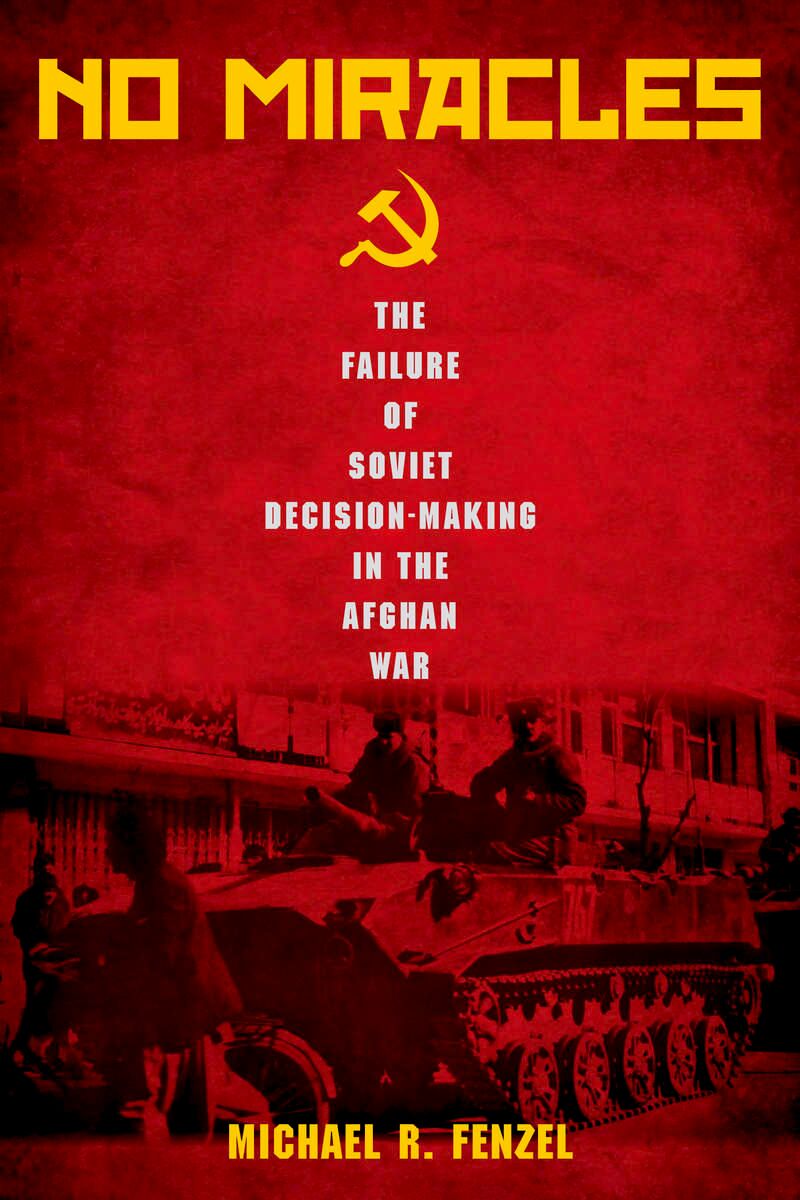
No Miracles: The Failure of Soviet Decision-Making in the Afghan War
The Soviet experience in Afghanistan provides a compelling perspective on the far-reaching hazards of military intervention. In 1985, Mikhail Gorbachev decided that a withdrawal from Afghanistan should occur as soon as possible. The Soviet Union's senior leadership had become aware that their strategy was unraveling, their operational and tactical methods were not working, and the sacrifices they were demanding from the Soviet people and military were unlikely to produce the forecasted results. Despite this state of affairs, operations in Afghanistan persisted and four more years passed before the Soviets finally withdrew their military forces. In No Miracles, Michael Fenzel explains why and how that happened, as viewed from the center of the Soviet state. From that perspective, three sources of failure stand out: poor civil-military relations, repeated and rapid turnover of Soviet leadership, and the perception that Soviet global prestige and influence were inexorably tied to the success of the Afghan mission. Fenzel enumerates the series of misperceptions and misjudgments that led to the Soviet invasion of Afghanistan, tracing the hazards of their military intervention and occupation. Ultimately, he offers a cautionary tale to nation states and policymakers considering military intervention and the use of force.
eBook


A Model of Adaptive Mobilization: Implications of the CCP's \Diaoyan\ Politics
Diaoyan (investigation and research) occupies a special place in the politics of the Chinese Communist Party (CCP). The concept can be broken down into two distinct types: symbolic diaoyan, and standard diaoyan. The former refers to the phenomenon of top leaders promoting and initiating the coordinated implementation of a particular political line. Leaders first promote their ideas through symbolic trips and speeches, and observe the extent of support for their political line within the ranks of the party elite. If support is forthcoming, the leader will then mobilize other central leaders to carry out standard diaoyan. This refers to investigation carried out by the central leaders into their own area of political responsibility within the scope of this overarching political line, with the aim of accumulating information and model experiences to inform specific policy decisions. These two types function in tandem: symbolic diaoyan promotes an abstract political line, and standard diaoyan fleshes out its substance. This article uses the term \"adaptive mobilization model\" to denote the use of diaoyan in the CCP's policy making, and discusses two specific cases of Hu Jintao's Scientific Outlook on Development and Xi Jinping's China Dream to illustrate how regime adaptation and legitimization of the political line occur through the process of diaoyan.
Journal Article
THE SEGMENTATION OF THE YUGOSLAV COMMUNIST ELITE, 1943–1972
The communist elite of Yugoslavia established Yugoslavia anew during World War II. A federal communist arrangement was put in place, with the period shifting from an almost totalitarian regime towards an operationally consociational one. In this paper, we question the issue of the homogeneity and very existence of the Yugoslav ruling communist elite in the period 1943–1991. We focus on decision-making, discussions and purges by considering newly available archival sources. The article finds that while the elite was successful in taking power it was not long before the elite started to be ethnically segmented. The origins of this segmentation related to how resolution of the national question of the nations at issue was understood, in turn further driving the segmentation process. Overall, we argue that individual national elites were already established by 1972.
Journal Article

Profiling Future Chinese Politburo Members: Looking at Trends and Characteristics of Newly Promoted Central Committee Members (1992–2012)
Efforts at finding the next Politburo members have, since the mid-1970s, been at the center of Chinese Elite and leadership studies. From the late 1980s onwards, leadership selection has become more institutionalized. This allows scholars to narrow down their search to more “propitious” elements in order to try to predict who might ascend to the Politburo. Consequently, this article ponders if it was possible to differentiate these individuals from their less “promotable” counterparts upon their entry into the Central Committee between 1992 and 2012. Based on statistical reassessment of variables commonly found in the literature, the article argues that soon-to-be Politburo members were already displaying a different profile than that of their counterparts 5 to 10 years before their entry into the Politburo. This article does not seek to establish a perfect predictive model rather than circumscribe the profile-type and environment in which these rising Elites can be found. Lastly, the latter opens a discussion on what to expect from the results as well as competing profiles found inside the Central Committee.
Journal Article

The Soviet Blueprint for the Postwar Korean Provisional Government: A Case Study of the Politburo's Decisions
By analyzing the Soviet Politburo's decrees, I seek to reconstruct the blueprint that the Communist Party of the Soviet Union (CPSU) devised for organizing the post-World War II Korean provisional government. The CPSU obstructed the antitrusteeship forces' participation in the US-USSR Joint Commission, aiming to establish a government dominated by the left. Under the Soviet Union's suggested arrangement, the provisional government could exercise legislative and administrative authority only under the Commission's control. Despite believing that rule under a trusteeship would best secure Korea's autonomy, the Soviets did not specify a process for Korea's transition to complete independence.
Journal Article
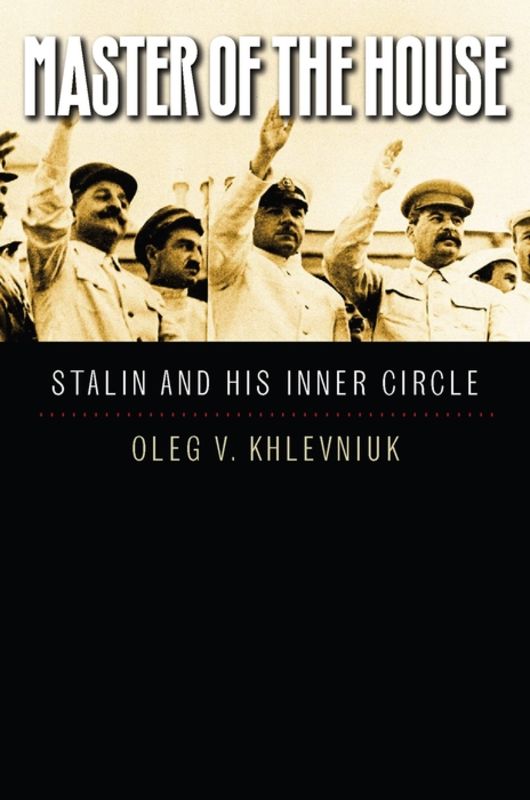
Master of the House
Based on meticulous research in previously unavailable documents in the Soviet archives, this compelling book illuminates the secret inner mechanisms of power in the Soviet Union during the years when Stalin established his notorious dictatorship. Oleg V. Khlevniuk focuses on the top organ in Soviet Russia's political hierarchy of the 1930s-the Political Bureau of the Central Committee of the Communist Party-and on the political and interpersonal dynamics that weakened its collective leadership and enabled Stalin's rise.
Khlevniuk's unparalleled research challenges existing theories of the workings of the Politburo and uncovers many new findings regarding the nature of alliances among Politburo members, Sergei Kirov's murder, the implementation of the Great Terror, and much more. The author analyzes Stalin's mechanisms of generating and retaining power and presents a new understanding, unmatched in texture and depth, of the highest tiers of the Communist Party in a crucial era of Soviet history.
eBook

A Failed Empire
In this widely praised book, Vladislav Zubok argues that Western interpretations of the Cold War have erred by exaggerating either the Kremlin's pragmatism or its aggressiveness. Explaining the interests, aspirations, illusions, fears, and misperceptions of the Kremlin leaders and Soviet elites, Zubok offers a Soviet perspective on the greatest standoff of the twentieth century. Using recently declassified Politburo records, ciphered telegrams, diaries, and taped conversations, among other sources, Zubok offers the first work in English to cover the entire Cold War from the Soviet side.A Failed Empireprovides a history quite different from those written by the Western victors. In a new preface for this edition, the author adds to our understanding of today's events in Russia, including who the new players are and how their policies will affect the state of the world in the twenty-first century.
eBook
