
Catalogue Search | MBRL


Are you sure you want to remove the book from the shelf?

{{itemTitle}}
9,162
result(s) for
"Political Science/Public Policy"
Sort by:

Sex Tourism in Bahia
For nearly a decade, Brazil has surpassed Thailand as the world's premier sex tourism destination. As the first full-length ethnography of sex tourism in Brazil, this pioneering study treats sex tourism as a complex and multidimensional phenomenon that involves a range of activities and erotic connections, from sex work to romantic transnational relationships. Erica Lorraine Williams explores sex tourism in the Brazilian state of Bahia from the perspectives of foreign tourists, tourism industry workers, sex workers who engage in liaisons with foreigners, and Afro-Brazilian men and women who contend with foreigners' stereotypical assumptions about their licentiousness. She shows how the Bahian state strategically exploits the touristic desire for exotic culture by appropriating an eroticized blackness and commodifying the Afro-Brazilian culture in order to sell Bahia to foreign travelers.
eBook

Affliction: Health, Disease, Poverty
Affliction inaugurates a novel way of understanding the trajectories of health and disease in the context of poverty. Focusing on low-income neighborhoods in Delhi, it stitches together three different sets of issues. First, it examines the different trajectories of illness: What are the circumstances under which illness is absorbed within the normal and when does it exceed the normal putting resources, relationships, and even one's world into jeopardy? A second set of issues involves how different healers understand their own practices. The astonishing range of practitioners found in the local markets in the poor neighborhoods of Delhi shows how the magical and the technical are knotted together in the therapeutic experience of healers and patients. The book asks: What is expert knowledge? What is it that the practitioner knows and what does the patient know? How are these different forms of knowledge brought together in the clinical encounter, broadly defined? How does this event of everyday life bear the traces of larger policies at the national and global levels? Finally, the book interrogates the models of disease prevalence and global programming that emphasize surveillance over care and deflect attention away from the specificities of local worlds. Yet the analysis offered retains an openness to different ways of conceptualizing \"what is happening\" and stimulates a conversation between different disciplinary orientations to health, disease, and poverty. Most studies of health and disease focus on the encounter between patient and practitioner within the space of the clinic. This book instead privileges the networks of relations, institutions, and knowledge over which the experience of illness is dispersed. Instead of thinking of illness as an event set apart from everyday life, it shows the texture of everyday life, the political economy of neighborhoods, as well as the dark side of care. It helps us see how illness is bound by the contexts in which it occurs, while also showing how illness transcends these contexts to say something about the nature of everyday life and the making of subjects.
eBook

Capitalism from Outside?
Does capitalism emerging in Eastern Europe need as solid ethnic or spiritual foundations as some other “Great Transformations” in the past? Apparently, one can become an actor of the new capitalist game without belonging to the German, Jewish, or, to take a timely example, Chinese minority. Nor does one have to go to a Protestant church every Sunday, repeat Confucian truisms when falling asleep, or study Adam Smith’s teachings on the virtues of the market in a business course. He/she may just follow certain quasi-capitalist routines acquired during communism and import capitalist culture (more exactly, various capitalist cultures) in the form of down-to-earth cultural practices embedded in freshly borrowed economic and political institutions. Does capitalism come from outside? Why do then so many analysts talk about hybridization? This volume offers empirical insights into the current cultural history of the Eastern European economies in three fields: entrepreneurship, state governance and economic science. The chapters are based on large case studies prepared in the framework of an eight-country research project (funded by the European Commission, and directed jointly by the Center for Public Policy at the Central European University and the Institute for Human Sciences) on East-West cultural encounters in the ex-communist economies.
eBook

Insurance as Governance
Insurance as Governanceis the first major sociological study of the insurance industry. It examines how the industry controls our institutions and daily lives in ways that are largely invisible, and how it thereby functions as a form of government beyond the state.
Drawing on extensive ethnographic research on industry practices, the work penetrates the complexities of the insurance industry and demonstrates why it is such a powerful and pervasive institution. The authors advance the concept of moral risk as they consider how insurance companies partner with governments and corporations in the negotiation of economic policy.
In effect,Insurance as Governancedocuments liberal theory at work. It offers a major case study of liberal governance beyond the state and explores such larger issues as how insurance is increasingly liberal rather than welfarist in orientation, and how insurance is the vanguard of liberalization in governance throughout postindustrial societies. Wide-ranging in scope and original in approach, the text provides a sophisticated integration of empirical data and theoretical approaches relating to insurance, risk, governance, and security.
eBook

Can We Price Carbon?
A political science analysis of the feasibility and sustainability of carbon pricing, drawing from North American, European, and Asian case studies.
Climate change, economists generally agree, is best addressed by putting a price on the carbon content of fossil fuels—by taxing carbon, by cap-and-trade systems, or other methods. But what about the politics of carbon pricing? Do political realities render carbon pricing impracticable? In this book, Barry Rabe offers the first major political science analysis of the feasibility and sustainability of carbon pricing, drawing upon a series of real-world attempts to price carbon over the last two decades in North America, Europe, and Asia.
Rabe asks whether these policies have proven politically viable and, if adopted, whether they survive political shifts and managerial challenges over time. The entire policy life cycle is examined, from adoption through advanced implementation, on a range of pricing policies including not only carbon taxes and cap-and-trade but also such alternative methods as taxing fossil fuel extraction. These case studies, Rabe argues, show that despite the considerable political difficulties, carbon pricing can be both feasible and durable.
eBook
Anti-racism in Social Work practice
Anti-racism has a long history within the profession of social work and its education. Despite an agenda within higher education which promotes internationalization and practice which recognizes diversity, little has been written to address the question of why black African students have a different experience from others on their social work educational journey.
This book is based upon the authors experience as educators and their own research about and with black students experience of racism and otherness within social work practice and education. Radical and honest in nature, it re-visits anti-racism within social work practice and education from a student focused and informed perspective based on lived experience and conversations.
This book will be of interest to all social work students, educators and policy makers with an interest in anti-racism and diversity. It includes practical models and tried and tested tools to help the reader work through these issues.
Tools that can assist students in discussing uncomfortable issues in the classroom are to be welcomed, and this book is thus a valuable resource. This book offers many examples of how racism can be addressed in social work education and training. Important features of the book are the summaries of key pieces of research in each chapter, as well as, case studies and critical questions, which provide a springboard for discussion. It offers a timely reminder that discussion about race and anti-racist forms of pedagogical approaches for teaching has fallen off the agenda. It is written in an accessible style, is an engaging read, and this is a welcome addition to the literature.
Dr Claudia Bernard, Goldsmiths College
eBook

Blind spot
Neoliberalism has been the defining paradigm in global health since the latter part of the twentieth century. What started as an untested and unproven theory that the creation of unfettered markets would give rise to political democracy led to policies that promoted the belief that private markets were the optimal agents for the distribution of social goods, including health care. A vivid illustration of the infiltration of neoliberal ideology into the design and implementation of development programs, this case study, set in post-Soviet Tajikistan's remote eastern province of Badakhshan, draws on extensive ethnographic and historical material to examine a \"revolving drug fund\" program—used by numerous nongovernmental organizations globally to address shortages of high-quality pharmaceuticals in poor communities. Provocative, rigorous, and accessible, Blind Spot offers a cautionary tale about the forces driving decision making in health and development policy today, illustrating how the privatization of health care can have catastrophic outcomes for some of the world's most vulnerable populations.
eBook
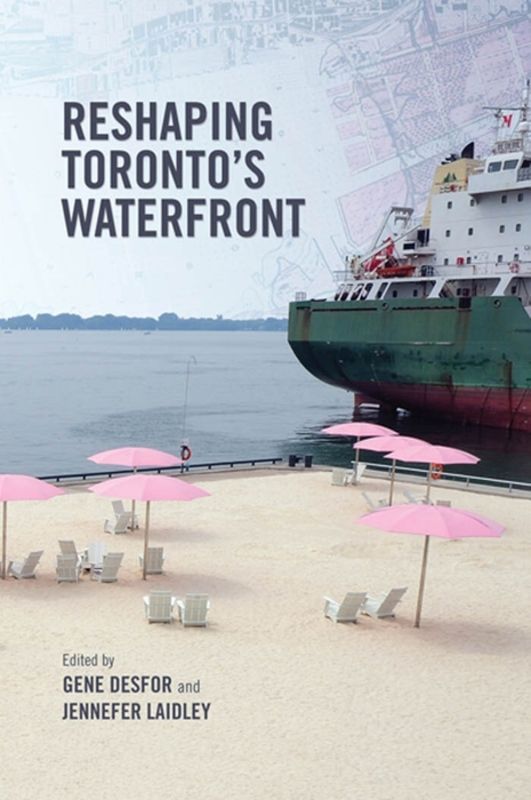
Reshaping Toronto's Waterfront
Large-scale development is once again putting Toronto's waterfront at the leading edge of change. As in other cities around the world, policymakers, planners, and developers are envisioning the waterfront as a space of promise and a prime location for massive investments. Currently, the waterfront is being marketed as a crucial territorial wedge for economic ascendancy in globally competitive urban areas.Reshaping Toronto's Waterfront analyses how and why 'problem spaces' on the waterfront have become 'opportunity spaces' during the past hundred and fifty years. Contributors with diverse areas of expertise illuminate processes of development and provide fresh analyses of the intermingling of nature and society as they appear in both physical forms and institutional arrangements, which define and produce change. Reshaping Toronto's Waterfront is a fundamental resource for understanding the waterfront as a dynamic space that is neither fully tamed nor wholly uncontrolled.
eBook

Reluctant intimacies
Based on seventeen months of ethnographic research among Indonesian eldercare workers in Japan, this book is the first ethnography to research Indonesian care workers' relationships with the cared-for elderly, their Japanese colleagues and their employers.
eBook

Pulp Surrealism
In addition to its more well known literary and artistic origins,
the French surrealist movement drew inspiration from currents of
psychological anxiety and rebellion running through a shadowy side
of mass culture, specifically in fantastic popular fiction and
sensationalistic journalism. The provocative nature of this
insolent mass culture resonated with the intellectual and political
preoccupations of the surrealists, as Robin Walz demonstrates in
this fascinating study. Pulp Surrealism weaves an
interpretative history of the intersection between mass print
culture and surrealism, re-evaluating both our understanding of
mass culture in early twentieth-century Paris and the revolutionary
aims of the surrealist movement. Pulp Surrealism presents
four case studies, each exploring the out-of the-way and
impertinent elements which inspired the surrealists. Walz discusses
Louis Aragon's Le paysan de Paris, one of the great
surrealist novels of Paris. He goes on to consider the popular
series of Fantômes crime novels; the Parisan press coverage of the
arrest, trial, and execution of mass-murderer Landru; and the
surrealist inquiry \"Is Suicide a Solution?\", which Walz juxtaposes
with reprints of actual suicide faits divers
(sensationalist newspaper blurbs). Although surrealist interest in
sensationalist popular culture eventually waned, this exploration
of mass print culture as one of the cultural milieux from which
surrealism emerged ultimately calls into question assumptions about
the avant-garde origins of modernism itself.
eBook