
Catalogue Search | MBRL


Are you sure you want to remove the book from the shelf?

{{itemTitle}}
170,348
result(s) for
"Political corruption"
Sort by:


Post-Communist Mafia State
Having won a two-third majority in Parliament at the 2010 elections, the Hungarian political party Fidesz removed many of the institutional obstacles of exerting power. Just like the party, the state itself was placed under the control of a single individual, who since then has applied the techniques used within his party to enforce submission and obedience onto society as a whole. In a new approach the author characterizes the system as the ‘organized over-world’, the ‘state employing mafia methods’ and the ’adopted political family', applying these categories not as metaphors but elements of a coherent conceptual framework.The actions of the post-communist mafia state model are closely aligned with the interests of power and wealth concentrated in the hands of a small group of insiders. While the traditional mafia channeled wealth and economic players into its spheres of influence by means of direct coercion, the mafia state does the same by means of parliamentary legislation, legal prosecution, tax authority, police forces and secret service. The innovative conceptual framework of the book is important and timely not only for Hungary, but also for other post-communist countries subjected to autocratic rules.
eBook

Corruption in public administration : an ethnographic approach
\"Despite the growth in literature on political corruption, contributions from field research are still exiguous. This book provides a timely and much needed addition to current research, bridging the gap and providing an innovative approach to the study of corruption and integrity in public administration\"--Back cover.
Book

Twenty-Five Sides of a Post-Communist Mafia State
The twenty-five essays accompany, illustrate and underpin the conceptual framework elaborated in Post-Communist Mafia State, published in conjunction with this volume. Leading specialists analyze the manifestations of the current political regime in Hungary from twenty-five angles. Topics discussed include the ideology, constitutional issues, social policy, the judiciary, foreign relations, nationalism, media, memory politics, corruption, civil society, education, culture and so on. Beyond the basic features of the economy the domains of taxation, banking system, energy policies and the agriculture are treated in dedicated studies. The essays are based on detailed empirical investigation about conditions in today's Hungary. They nevertheless contribute to the exploration of the characteristic features of post-communist authoritarian regimes, shared by an increasing number of countries in Europe and Central Asia.
eBook

Combating corruption in the Middle East : a socio-legal study of Kuwait
\"This book examines the phenomenon of 'grand corruption' in Kuwait and the pattern in the wider region. Taking an interdisciplinary approach, the work places corruption in its sociological, political and economic context to explore the relationship between the characteristics of Kuwait as a state with an endemic corruption problem. It then focuses on laws and regulations as key problem-solving mechanisms. In doing so, it identifies, explores and assesses the existing counter-corruption laws and regulations in Kuwait in a broad socio-political-economic context. The work goes beyond doctrinal legal research, employing empirical methodology based on semi-structured interviews with elite politicians and professional experts from criminal justice and NGOs. These valuable and original insights are reflected upon throughout the study\"-- Provided by publisher.
Book
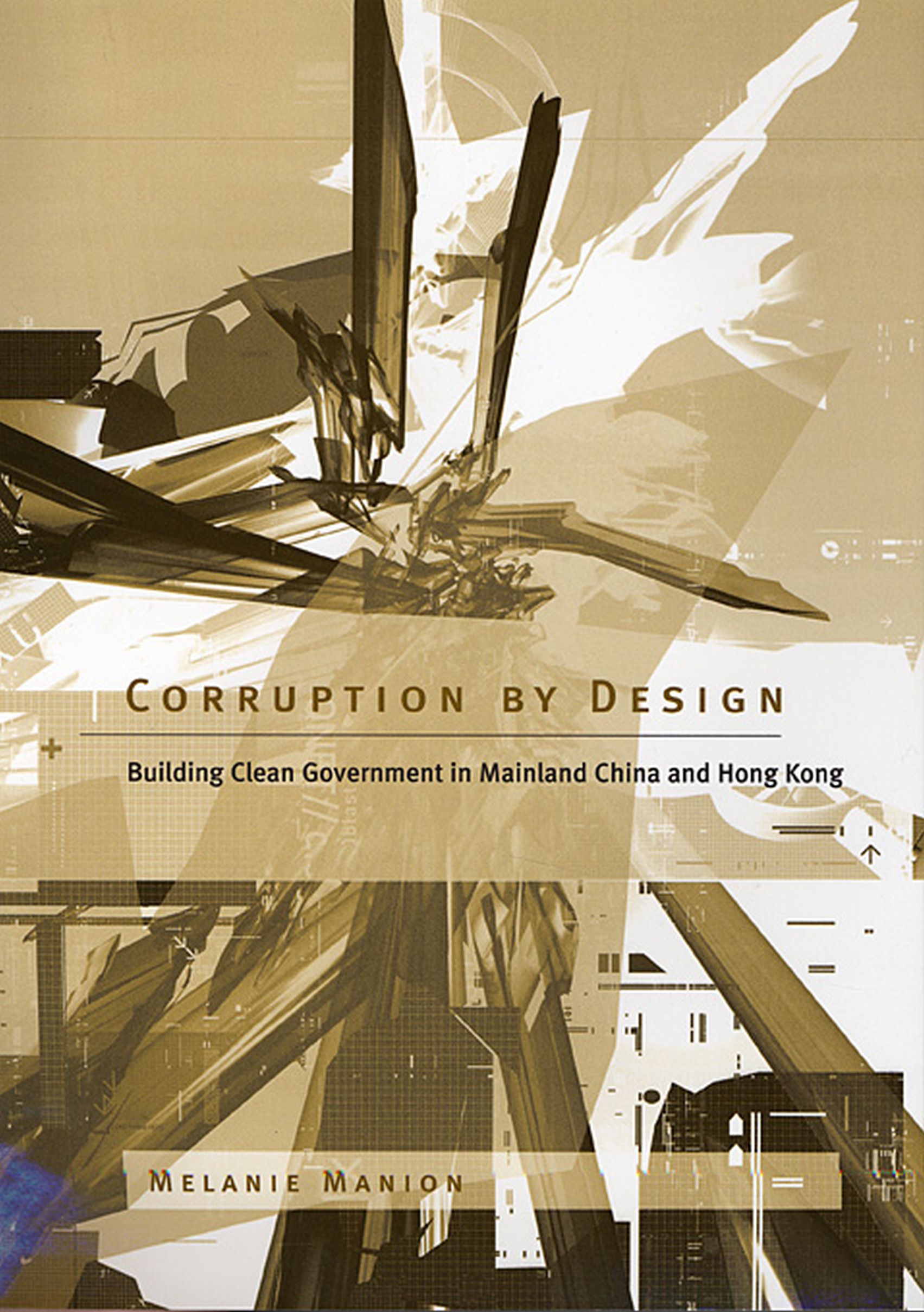
Corruption by Design
This book contrasts experiences of mainland China and Hong Kong to explore the pressing question of how governments can transform a culture of widespread corruption to one of clean government. Melanie Manion examines Hong Kong as the best example of the possibility of reform. Within a few years it achieved a spectacularly successful conversion to clean government. Mainland China illustrates the difficulty of reform. Despite more than two decades of anticorruption reform, corruption in China continues to spread essentially unabated. The book argues that where corruption is already commonplace, the context in which officials and ordinary citizens make choices to transact corruptly (or not) is crucially different from that in which corrupt practices are uncommon. A central feature of this difference is the role of beliefs about the prevalence of corruption and the reliability of government as an enforcer of rules ostensibly constraining official venality. Anticorruption reform in a setting of widespread corruption is a problem not only of reducing corrupt payoffs, but also of changing broadly shared expectations of venality. The book explores differences in institutional design choices about anticorruption agencies, appropriate incentive structures, and underlying constitutional designs that contribute to the disparate outcomes in Hong Kong and mainland China.
eBook


Spoils of Truce
InSpoils of Truce, Reinoud Leenders documents the extensive corruption that accompanied the reconstruction of Lebanon after the end of a decade and a half of civil war. With the signing of the Ta'if peace accord in 1989, the rebuilding of the country's shattered physical infrastructure and the establishment of a functioning state apparatus became critical demands. Despite the urgent needs of its citizens, however, graft was rampant. Leenders describes the extent and nature of this corruption in key sectors of the Lebanese economy and government, including transportation, health care, energy, natural resources, construction, and social assistance programs.
Exploring in detail how corruption implicated senior policymakers and high-ranking public servants, Leenders offers a clear-eyed perspective on state institutions in the developing world. He also addresses the overriding role of the Syrian leadership's interests in Lebanon and in particular its manipulation of the country's internal differences. His qualitative and disaggregated approach to dissecting the politics of creating and reshaping state institutions complements the more typical quantitative methods used in the study of corruption. More broadly,Spoils of Trucewill be uncomfortable reading for those who insist that power-sharing strategies in conflict management and resolution provide some sort of panacea for divided societies hoping to recover from armed conflict.
eBook

Clarity of responsibility, accountability, and corruption
\"Corruption is a significant problem for democracies throughout the world. Even the most democratic countries constantly face the threat of corruption and the consequences of it at the polls. Why are some governments more corrupt than others, even after considering cultural, social, and political characteristics? In Clarity of Responsibility, Accountability, and Corruption, the authors argue that clarity of responsibility is critical for reducing corruption in democracies. The authors provide a number of empirical tests of this argument, including a cross-national time-series statistical analysis to show that the higher the level of clarity the lower the perceived corruption levels. Using survey and experimental data, the authors show that clarity causes voters to punish incumbents for corruption. Preliminary tests further indicate that elites respond to these electoral incentives and are more likely to combat corruption when clarity is high\"-- Provided by publisher.
Book

Corruption and Reform in India
Why do some governments improve public services more effectively than others? Through the investigation of a new era of administrative reform, in which digital technologies may be used to facilitate citizens' access to the state, Jennifer Bussell's analysis provides unanticipated insights into this fundamental question. In contrast to factors such as economic development or electoral competition, this study highlights the importance of access to rents, which can dramatically shape the opportunities and threats of reform to political elites. Drawing on a sub-national analysis of twenty Indian states, a field experiment, statistical modeling, case studies, interviews of citizens, bureaucrats and politicians, and comparative data from South Africa and Brazil, Bussell shows that the extent to which politicians rely on income from petty and grand corruption is closely linked to variation in the timing, management and comprehensiveness of reforms.
eBook