
Catalogue Search | MBRL


Are you sure you want to remove the book from the shelf?

{{itemTitle}}
39
result(s) for
"Political corruption Prevention Case studies."
Sort by:

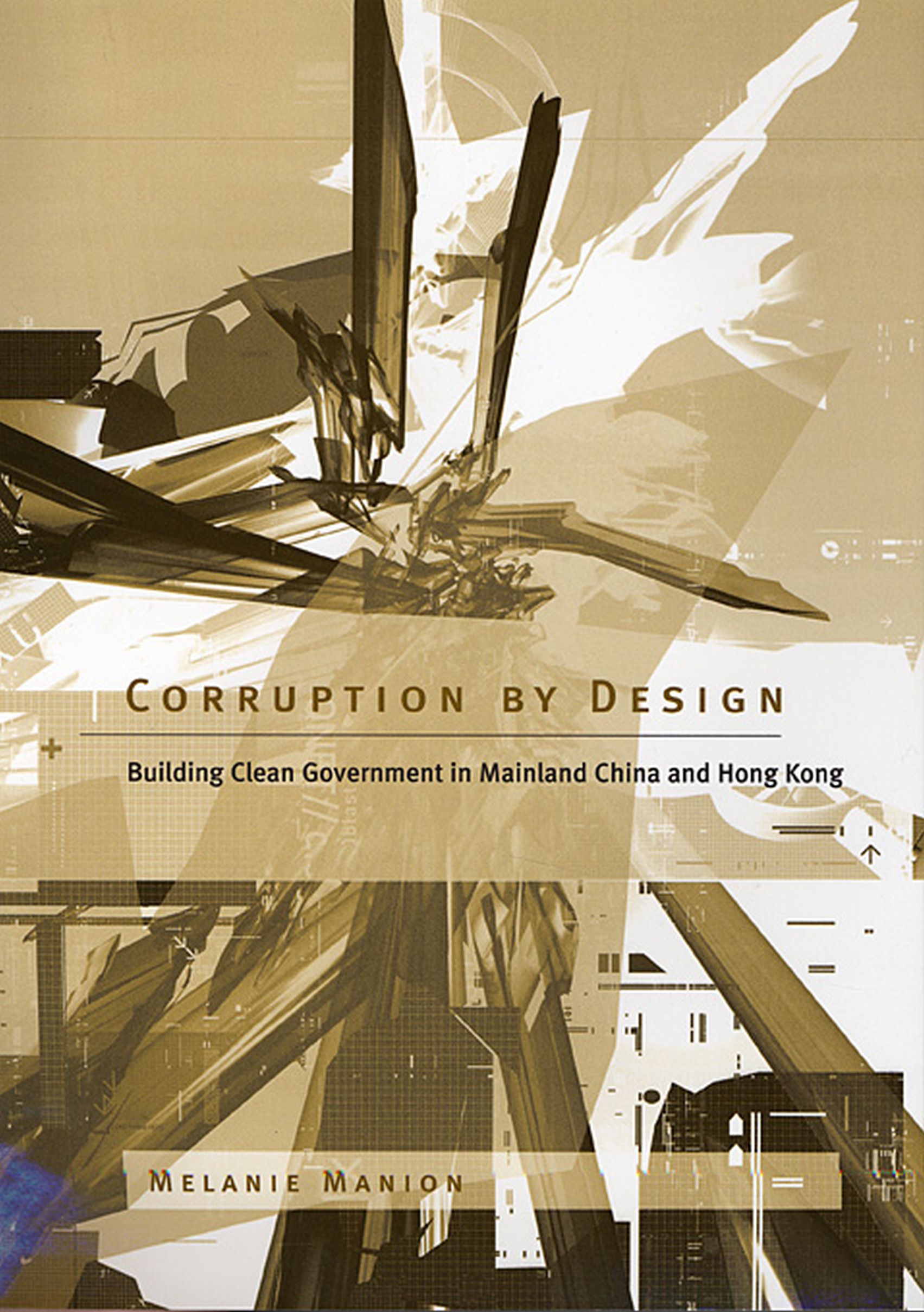
Corruption by Design
This book contrasts experiences of mainland China and Hong Kong to explore the pressing question of how governments can transform a culture of widespread corruption to one of clean government. Melanie Manion examines Hong Kong as the best example of the possibility of reform. Within a few years it achieved a spectacularly successful conversion to clean government. Mainland China illustrates the difficulty of reform. Despite more than two decades of anticorruption reform, corruption in China continues to spread essentially unabated. The book argues that where corruption is already commonplace, the context in which officials and ordinary citizens make choices to transact corruptly (or not) is crucially different from that in which corrupt practices are uncommon. A central feature of this difference is the role of beliefs about the prevalence of corruption and the reliability of government as an enforcer of rules ostensibly constraining official venality. Anticorruption reform in a setting of widespread corruption is a problem not only of reducing corrupt payoffs, but also of changing broadly shared expectations of venality. The book explores differences in institutional design choices about anticorruption agencies, appropriate incentive structures, and underlying constitutional designs that contribute to the disparate outcomes in Hong Kong and mainland China.
eBook
Income and asset disclosure
The requirement that public officials declare their income and assets can help deter the use of public office for private gain. Income and asset disclosure (IAD) systems can provide a means to detect and manage potential conflicts of interest, and can assist in the prevention, detection, and prosecution of illicit enrichment by public officials. Growing attention to anticorruption policies, institutions, and practices has led to increased interest in financial disclosure systems and the role they can play in supporting national anticorruption strategies and in helping to instill an expectation of ethical conduct for individuals in public office. IAD systems are also a key element in the implementation and enforcement of provisions of the United Nations Convention against Corruption and other international anticorruption agreements. This attention has sparked interest among policy makers and practitioners in the design features and implementation practices that make for effective financial disclosure administration. The case studies collected in this volume are intended to profile a range of systems and practices to help respond to this growing interest.
eBook

How to Improve Governance: A New Framework for Analysis and Action
Emphasizes the need for a comprehensive analytical framework that considers transparency, accountability, governance, and corruption throughout the calculus. Discusses how it can be applied to different countries to help analyze the current situation and identify potential areas for improvement, assessing their relative feasibility and the steps needed to promote them.
eBook


Empowered Participation
Every month in every neighborhood in Chicago, residents, teachers, school principals, and police officers gather to deliberate about how to improve their schools and make their streets safer. Residents of poor neighborhoods participate as much or more as those from wealthy ones. All voices are heard. Since the meetings began more than a dozen years ago, they have led not only to safer streets but also to surprising improvements in the city's schools. Chicago's police department and school system have become democratic urban institutions unlike any others in America.
Empowered Participationis the compelling chronicle of this unprecedented transformation. It is the first comprehensive empirical analysis of the ways in which participatory democracy can be used to effect social change. Using city-wide data and six neighborhood case studies, the book explores how determined Chicago residents, police officers, teachers, and community groups worked to banish crime and transform a failing city school system into a model for educational reform. The author's conclusion: Properly designed and implemented institutions of participatory democratic governance can spark citizen involvement that in turn generates innovative problem-solving and public action. Their participation makes organizations more fair and effective.
Though the book focuses on Chicago's municipal agencies, its lessons are applicable to many American cities. Its findings will prove useful not only in the fields of education and law enforcement, but also to sectors as diverse as environmental regulation, social service provision, and workforce development.
eBook

Anticorruption
The MIT Press Essential Knowledge series provides the reader with accessible, concise, yet interesting and completely up-to-date information. Each part was written by excellent experts on the subject, in a language understood by non-experts, too. In this way, the current research data and results in the field of each topic can be really used. Nowadays, it is not easy to find in the endless set of information obtainable on the World Wide Web those that essentially provide the fundamental knowledge on a particular topic. The MIT series fill a gap in this. The topic of the present volume of the series is the anticorruption, as a world phenomenon, its current development and situation. And the topicality of the current theme is perhaps duly justified by the following World Bank estimate: “Much of the globe is infected with corruption, sapping as much as 3 percent of annual per capita GDP in large swathes of Africa, Asia, and Latin America. Even North America is hardly immune. The World Bank says that 1 trillion or more is lost each year to corruption, globally.” (Rotberg, 2020).
Journal Article

Value co-creation in fighting corruption: evidence from Hong Kong
As the theory of value co-creation argues, the existence and necessity of public service, along with ensuing satisfaction, trust and confidence in the service, are determined by those who receive it and participate in its production. Their perceptions and evaluations shape the current and future development of the service. Following this theory, the study illuminates the importance of value co-creation as not only a theoretical concept but also a practical approach, along with the viability of its application in public governance. It draws on corruption prevention in Hong Kong as a case study to reveal how integrity-related public values can be propagated in society as a consequence of anti-corruption efforts. It finds that anti-corruption success hinges on three important value-based factors at the societal level: social support for fighting corruption, trust and confidence in government, and zero public tolerance of corruption. The findings of this study underscore that corruption prevention transcends the mere exposure of corruption cases and the prosecution of corrupt individuals. Its fundamental goal is to induce profound changes in social values, while these changes can only take place through joint efforts between the government and its citizens.
Journal Article

Cultural Barriers to Preventing Corrupt Practices in Indonesia
Cultural barriers present a major obstacle to preventing widespread corrupt practices. However, this phenomenon has not been comprehensively addressed in previous studies. In response to this gap, the present study focuses on analyzing the characteristics, mechanisms, and societal responses to corruption in Indonesia. Employing a qualitative descriptive approach with a case study methodology, this research highlights a critical finding: despite the pervasive nature of corruption across public institutions and high-ranking state bodies over the past decade—manifesting in forms such as extortion, fraud, and bribery—public attitudes often remain counterproductive to corruption prevention efforts. Given these findings, this study asserts that corrupt practices cannot be eradicated solely through normative legal measures; it also requires a fundamental shift in communal attitudes and mindsets regarding its latent dangers. This study contributes to the prevention of corrupt practices by integrating cultural insights and promoting contextually appropriate anti-corruption policies.
Journal Article

Grey corruption issues in the public sector
PurposeThis paper aims to identify key learnings around the concept of “grey corruption” by systematically reviewing the extant literature. The concept is addressed in terms of areas of alleged misconduct often considered “minor” or “borderline” in relation to “black corruption”. Common examples include favourable treatment of friends and relatives by public officials, receipt of gifts, excessive expenditures and pork barrelling, influence peddling through donations and lies and false promises. The focus of this study is on definitions, extent, public perspectives, explanations and evidence of promising prevention strategies.Design/methodology/approachRelevant sources were sought using systematic keyword searches of major criminological and political databases, a media database and relevant government and non-government websites, up to the end of December 2019.FindingsThe main findings were that there is no single accepted definition of grey corruption but that the concept remains useful, practice is often extensive, it is generally at odds with public opinion, opportunity is a key factor in its incidence and prevention requires the enactment and enforcement of clear principles.Research limitations/implicationsMedia-reported cases were too numerous to analyse in detail for the present study.Practical implicationsEfforts to improve integrity in government need to take account of the concept. Rules require clarification and communication. Enforcement needs improvement. More experiments are needed in prevention.Social implicationsThis paper captures a range of integrity issues of importance to the public but often downgraded or dismissed by politicians.Originality/valueThis paper is unique in reporting the results of a systematic search of the international literature on the topic.
Journal Article