
Catalogue Search | MBRL


Are you sure you want to remove the book from the shelf?

{{itemTitle}}
10
result(s) for
"Political crimes and offenses - Thailand"
Sort by:

Truth on Trial in Thailand
Since 2005, Thailand has been in crisis, with unprecedented political instability and the worst political violence seen in the country in decades. In the aftermath of a military coup in 2006, Thailand’s press freedom ranking plunged, while arrests for lèse-majesté have skyrocketed to levels unknown in the modern world. Truth on Trial in Thailand traces the 110-year trajectory of defamation-based laws in Thailand. The most prominent of these is lèse-majesté, but defamation aspects also appear in laws on sedition and treason, the press and cinema, anti-communism, contempt of court, insulting of religion, as well as libel. This book makes the case that despite the appearance of growing democratization, authoritarian structures and urges still drive politics in Thailand; the long-term effects of defamation law adjudication has skewed the way that Thai society approaches and perceives \"truth.\"
Employing the work of Habermas, Foucault, Agamben, and Schmitt to construct an alternative framework to understand Thai history, Streckfuss contends that Thai history has become \"suspended\" since 1958, and repeatedly declining to face the truth of history has set the stage for an endless state of crisis.
This book will be of interest to students and scholars of South East Asian politics, Asian history, and media and communication.
David Streckfuss is an independent scholar who has lived in Thailand for more than 20 years. His work primarily concerns human rights, and political and cultural history.
David Streckfuss is an independent scholar who has lived in Thailand for more than 20 years. His work primarily concerns human rights, and political and cultural history.
Introduction: The Defamation Dilemma of Thailand 1. The Truth Recently Discovered 2. Regimes of Truth, Regimes of Defamation 3. Truth and Treason in Old Siam 4. Chronology of Thai Defamation-Based Laws 5. Normalizing \"Abnormal Times\" and the Endless State Of Exception 6. Intent and Import 7. The Insulted and Defamed (The Individual to the Nation) 8. The Insulted and Defamed (Monarchy and Lèse-Majesté) 9. The People 10. Culture and Traitor 11. Thai-ification And Colonisation 12. Defamation and Truth 13. Conclusion Appendix – Thai Defamation-Based Laws, 1900 to Present
\"This big, brave and important book argues that defamation laws are the cornerstone of Thailand's authoritarian political culture. They have strangled the media, wrecked public debate, undermined artistic and intellectual work, and ensured impunity for a long litany of state crimes. They underpin an authoritarian control of thought and expression that is extraordinary in a country that likes to think of itself as a democracy... This book is a brilliant essay on Thailand's legal history based on very detailed research into legislation and case law. In addition, it offers a complex, thoughtful and wide-ranging diagnosis of current discontents. Its rich historical and international perspective should make Thailand's democrats and Democrats pause to wonder where the country is heading.\" Chris Baker, Bangkok Post, November 2010
\"David Streckfuss has done a great service to the study of lèse-majesté law and of its role in protecting the political and economic interests of the Thai monarchy. [ Truth on Trial in Thailand ] is a fine, exhaustively referenced study of the history of lèse-majesté law and of Thailand’s defamation laws more generally. It will be an authoritative reference book for a public now very much focused on the problem that lèse-majesté poses for Thai democracy.\" Patrick Jory, NM-TLC Reviewer
\"The book’s thirteen chapters are rich in detail and observation... Thematically organized, the chapters offer an incomparable history of lèse-majesté, law and Thai-ness, public opinion, and the science of traitorology. Of especial relevance given the recent discussion of the judicialization of politics in Thailand is Streckfuss’s remarkable account... of the institutionalization of the “state of exception” by Thai courts working in conjunction with the police and military. This monumental volume is destined to take a leading place in the field of critical studies of Asia.\" Michael K. Connors, Critical Asian Studies, 43:1 (2011), 139–149
\"[T]he real strength of the book is its fascinating analysis of a vast quantity of primary source material, including the analysis of a number of court decisions and some wonderful interviews with government censors.\" David M. Engel , SUNY Distinguished Service Professor, School of Law, State University of New York at Buffalo; South East Asia Research
'This book is an important one, and the author’s research chops are formidable. The book serves as a critical history of Thai law, with a discussion of how lèse-majesté encompasses the world of the monarchy, politics, law enforcement, and religion in Thailand.' - Geoff Alexander, WOwasis 2013.
eBook

Tearing Apart the Land
Since January 2004, a violent separatist insurgency has raged in
southern Thailand, resulting in more than three thousand deaths.
Though largely unnoticed outside Southeast Asia, the rebellion in
Pattani and neighboring provinces and the Thai government's harsh
crackdown have resulted in a full-scale crisis. Tearing Apart the
Land by Duncan McCargo, one of the world's leading scholars of
contemporary Thai politics, is the first fieldwork-based book about
this conflict. Drawing on his extensive knowledge of the region,
hundreds of interviews conducted during a year's research in the
troubled area, and unpublished Thai- language sources that range
from anonymous leaflets to confessions extracted by Thai security
forces, McCargo locates the roots of the conflict in the context of
the troubled power relations between Bangkok and the
Muslim-majority \"deep South.\"
McCargo describes how Bangkok tried to establish legitimacy by
co-opting local religious and political elites. This successful
strategy was upset when Thaksin Shinawatra became prime minister in
2001 and set out to reorganize power in the region. Before Thaksin
was overthrown in a 2006 military coup, his repressive policies had
exposed the precariousness of the Bangkok government's influence. A
rejuvenated militant movement had emerged, invoking Islamic
rhetoric to challenge the authority of local leaders obedient to
Bangkok.
For readers interested in contemporary Southeast Asia,
insurgency and counterinsurgency, Islam, politics, and questions of
political violence, Tearing Apart the Land is a powerful account of
the changing nature of Islam on the Malay peninsula, the legitimacy
of the central Thai government and the failures of its security
policy, the composition of the militant movement, and the
conflict's disastrous impact on daily life in the deep South.
Carefully distinguishing the uprising in southern Thailand from
other Muslim rebellions, McCargo suggests that the conflict can be
ended only if a more participatory mode of governance is adopted in
the region.
Since January 2004, a violent separatist insurgency has raged in
southern Thailand, resulting in more than three thousand deaths.
Though largely unnoticed outside Southeast Asia, the rebellion in
Pattani and neighboring provinces and the Thai government's harsh
crackdown have resulted in a full-scale crisis. Tearing Apart
the Land by Duncan McCargo, one of the world's leading
scholars of contemporary Thai politics, is the first
fieldwork-based book about this conflict. Drawing on his extensive
knowledge of the region, hundreds of interviews conducted during a
year's research in the troubled area, and unpublished Thai-language
sources that range from anonymous leaflets to confessions extracted
by Thai security forces, McCargo locates the roots of the conflict
in the context of the troubled power relations between Bangkok and
the Muslim-majority \"deep South.\"McCargo describes how Bangkok
tried to establish legitimacy by co-opting local religious and
political elites. This successful strategy was upset when Thaksin
Shinawatra became prime minister in 2001 and set out to reorganize
power in the region. Before Thaksin was overthrown in a 2006
military coup, his repressive policies had exposed the
precariousness of the Bangkok government's influence. A rejuvenated
militant movement had emerged, invoking Islamic rhetoric to
challenge the authority of local leaders obedient to Bangkok.For
readers interested in contemporary Southeast Asia, insurgency and
counterinsurgency, Islam, politics, and questions of political
violence, Tearing Apart the Land is a powerful account of
the changing nature of Islam on the Malay peninsula, the legitimacy
of the central Thai government and the failures of its security
policy, the composition of the militant movement, and the
conflict's disastrous impact on daily life in the deep South.
Carefully distinguishing the uprising in southern Thailand from
other Muslim rebellions, McCargo suggests that the conflict can be
ended only if a more participatory mode of governance is adopted in
the region.
eBook

Revolution Interrupted
In October 1973 a mass movement forced Thailand’s prime minister to step down and leave the country, ending nearly forty years of dictatorship. Three years later, in a brutal reassertion of authoritarian rule, Thai state and para-state forces quashed a demonstration at Thammasat University in Bangkok. In
Revolution Interrupted , Tyrell Haberkorn focuses on this period when political activism briefly opened up the possibility for meaningful social change. Tenant farmers and their student allies fomented revolution, she shows, not by picking up guns but by invoking laws—laws that the Thai state ultimately proved unwilling to enforce. In choosing the law as their tool to fight unjust tenancy practices, farmers and students departed from the tactics of their ancestors and from the insurgent methods of the Communist Party of Thailand. To first imagine and then create a more just future, they drew on their own lived experience and the writings of Thai Marxian radicals of an earlier generation, as well as New Left, socialist, and other progressive thinkers from around the world. Yet their efforts were quickly met with harassment, intimidation, and assassinations of farmer leaders. More than thirty years later, the assassins remain unnamed. Drawing on hundreds of newspaper articles, cremation volumes, activist and state documents, and oral histories, Haberkorn reveals the ways in which the established order was undone and then reconsolidated. Examining this turbulent period through a new optic—interrupted revolution—she shows how the still unnameable violence continues to constrict political opportunity and to silence dissent in present-day Thailand.
eBook

Deciphering Southern Thailand's Violence
Scholars have given questions about the perpetrators of nameless violence in Southern Thailand little consideration, leaving the motives that drive Barisan Revolusi Nasional (BRN) heavily cloaked in secrecy and speculation. This book offers a rare glimpse behind the veil that shrouds BRN-Coordinate. Using exclusive access to and detailed interviews with BRN-Coordinate members, this book analyses the communicative dimension of the insurgency. It depicts the hidden channels and organized violence that drive the region's enduring rebellion as well as BRN's dichotomous existence between silence and communication.
eBook

Anticipating the struggle against everyday impunity in Myanmar through accounts from Bangladesh and Thailand
Work done internationally to address impunity concentrates on removing blanket amnesties and establishing commissions of inquiry into past atrocities. Everyday impunity-the impossibility of bringing state officers to account for routinized violent crimes against other individuals-gets less attention, even though its effects on public life are insidious. Studying the 2014 killing of a journalist, we identify modes for the production of everyday impunity in Myanmar that emerge from earlier periods of unmediated military rule but that today are coming to resemble practices in neighbouring countries. Accounts from Bangladesh and Thailand reveal how impunity can persist in new political conditions, producing insecurity and hampering efforts for more inclusive forms of government. We close by urging scholars to remain attentive to their responsibilities in the face of impunity, calling on them not to participate in projects that have the effect of concealing violent crime by state officers, and denying victims justice.
Journal Article

Understanding the complexities of responding to child sex trafficking in Thailand and Cambodia
Purpose
– The market in trafficked children bought and sold for sexual exploitation is one of the most inhumane transnational crimes that appear to have been facilitated by globalisation and its many effects, such as growing disparity in wealth between North and South. Child sex trafficking (CST) in the Greater Mekong Subregion (GMS) is an extremely complex problem, deeply rooted in historical injustice, gender inequality and poverty. In addition to the complexities of the child trafficking issue, the organisations that seek to combat CST are themselves not always a united force and display their own internal and inter-agency complexities. The purpose of this paper is to examine some of the key complexities of responding to CST in Thailand and Cambodia.
Design/methodology/approach
– The methodology for this research consisted of 22 semi-structured interviews with anti-child trafficking experts in Thailand and Cambodia, in addition to field observations in various child sex tourism hubs in Southeast Asia.
Findings
– The complexities of the CST problem in Thailand and Cambodia are discussed as well as analysis of the internal and inter-agency barriers faced by the organisations that seek to combat CST. The research finds that, due to limitations in donor funding, anti-trafficking organisations face difficulties in effectively responding to all aspects of the CST problem. The recommendation is made for improved advocacy networking against this transnational crime. Recent success stories are highlighted.
Research limitations/implications
– The research for this paper involved semi-structured interviews with staff from non-government organisations and United Nations agencies, but not with government representatives. The lack of available data from Thai and Cambodian government representatives limits the ability of the researcher to evaluate the effectiveness of anti-trafficking organisations’ response to the child trafficking issue. Also lacking is the voice of child trafficking victims, the key beneficiaries of anti-trafficking organisations’ aid and advocacy efforts.
Originality/value
– There is an abundance of literature on the subject of CST but a dearth in scholarly literature on the subject of advocacy and policy responses to CST in Southeast Asia. This paper provides a valuable contribution the knowledge base on child trafficking by analysing both the complexities of the CST issue and the complexities, for anti-trafficking organisations, of effectively combating CST in the GMS.
Journal Article
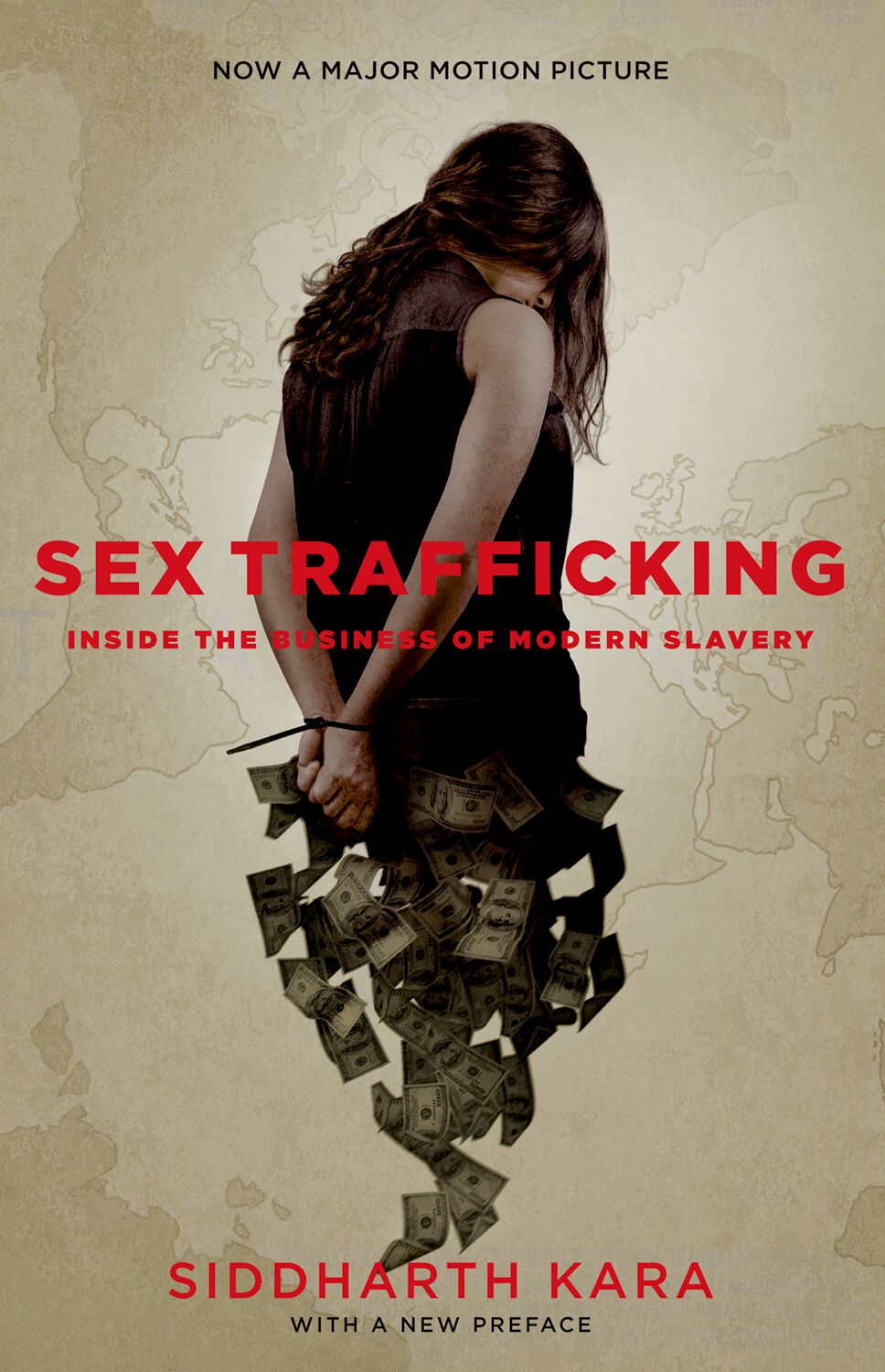
Sex trafficking
Every year, hundreds of thousands of women and children are abducted, deceived, seduced, or sold into forced prostitution, coerced to service hundreds if not thousands of men before being discarded. These trafficked sex slaves form the backbone of one of the world's most profitable illicit enterprises and generate huge profits for their exploiters, for unlike narcotics, which must be grown, harvested, refined, and packaged, sex slaves require no such \"processing,\" and can be repeatedly \"consumed.\" Kara first encountered the horrors of slavery in a Bosnian refugee camp in 1995. Subsequently, in the first journey of its kind, he traveled across four continents to investigate these crimes and take stock of their devastating human toll. Kara made several trips to India, Nepal, Burma, Thailand, Laos, Vietnam, the United Kingdom, Italy, the Netherlands, Denmark, Albania, Moldova, Mexico, and the United States. He witnessed firsthand the sale of human beings into slavery, interviewed over four hundred slaves, and confronted some of those who trafficked and exploited them. In this book, Kara provides a riveting account of his journey into this unconscionable industry, sharing the moving stories of its victims and revealing the shocking conditions of their exploitation. He draws on his background in finance, economics, and law to provide the first ever business analysis of contemporary slavery worldwide, focusing on its most profitable and barbaric form: sex trafficking. Kara describes the local factors and global economic forces that gave rise to this and other forms of modern slavery over the past two decades and quantifies, for the first time, the size, growth, and profitability of each industry. Finally, he identifies the sectors of the sex trafficking industry that would be hardest hit by specifically designed interventions and recommends the specific legal, tactical, and policy measures that would target these vulnerable sectors and help to abolish this form of slavery, once and for all.
eBook

Assessing the Impact of the 1996 Thai Prostitution Law: A Study of Police Arrest Data
The purpose of this paper was to evaluate the impact of the Thai Prevention and Suppression of Prostitution Act of 1996 in ten geographical regions of the country. This paper also addresses law enforcement approaches in controlling prostitution. Data for prostitution arrests from 1995 to 1998 were obtained from official police sources (
Statistics of Reported Crimes of Thailand
). ARIMA intervention analysis was employed; revealing the arrest rates of prostitutes between pre- and post-enactment of the present Prostitution Act did not differ statistically within the regions except for Region 8 (Phuket). The paper reaches two general conclusions: (1) the 1996 Thai prostitution law did not significantly reduce the arrest rate for prostitution across the country; and (2) further consideration must be given to the idea of decriminalizing prostitution, which might allow for licensure, improving health and living conditions as well as potentially limiting exploitation and impact crimes associated with the prostitution industry.
Journal Article

The world bank and crimes of globalization: A case study
Friedrichs and Friedrichs discuss whether the policies and practices of an international financial institutions (the World Bank), arising in the context of accelerated globalization, are usefully characterized as a form of crime and a criminological phenomenon. They address the claim that at least some of the policies and practices of the World Bank can be validly characterized as criminal by providing a case history of a World Bank-financed dam in Thailand.
Journal Article
