
Catalogue Search | MBRL


Are you sure you want to remove the book from the shelf?

{{itemTitle}}
69
result(s) for
"Political crimes and offenses -- South Africa"
Sort by:


Justice and Reconciliation in Post-Apartheid South Africa
Justice and Reconciliation in Post-Apartheid South Africa assesses the transitional processes under way since the early 1990s to create a stable and just society. Change in South Africa is often credited to the efforts of the Truth and Reconciliation Commission (TRC), but the work of this institution forms but a facet of a much broader picture. This book looks at the steps which accompanied and followed the TRC's activities, such as land restitution, institutional reforms and social and cultural initiatives. Thematically, it interlinks the TRC's concerns over truth and reconciliation with an analysis of the concepts of justice, accountability, harm and reconciliation and with competing perceptions of what these notions entail in the South African context. Bringing together international and South African scholars whose work has focused on these themes, the contributions provide a cohesive and inspiring analysis of South Africa's response to its unjust past.
eBook

The Truth and Reconciliation Commission
\"15 April 2016 marked 20 years since the Truth and Reconciliation Commission (TRC) hearings began. The TRC was set up to give an opportunity for perpetrators of human rights transgressions to come clean about the atrocities that happened during those evil days of apartheid. Sadly, only half of the truth came to the fore. Many families still do not know what happened to their loved ones. There are few people better placed than Mary Burton to write about the TRC, having been one of its Commissioners. Burton's pocket book provides an informed account from the inside of the process and workings of the TRC and a measured and balanced assessment of its outcomes and significance. Even at the time of its existence, the TRC came in for criticism from a variety of quarters: both the African National Congress and ex-President F.W. de Klerk took legal action to challenge or prevent the publication of the Commission's report; however, the Commission also fulfilled a vital and important role in the transition from apartheid to democracy, and it has become a model for other countries wishing to undertake similar journeys to deal with past atrocities and come to some kind of national resolution, reconciliation or closure.\"--Publisher's website.
Book
Transformative Justice
iTransitional justice mechanisms employed in post-conflict and post-authoritarian contexts have largely focused upon individual violations of a narrow set of civil and political rights, as well as the provision of legal and quasi-legal remedies, such as truth commissions, amnesties and prosecutions. In contrast, this book highlights the significance of structural violence in producing and reproducing rights violations. The book further argues that, in order to remedy structural violations of human rights, there is a need to utilise a different toolkit from that typically employed in transitional justice contexts. The book sets out and applies a definition of transformative justice as expanding upon, and providing an alternative to, transitional justice. Focusing on a comparative study of social movements, nongovernmental organisations and trade unions working on land and housing rights in South Africa, and their network relationships, the book argues that networks of this kind make an important contribution to processes advancing transformative justice. Providing an opportunity for affected communities to articulate their concerns over socioeconomic rights issues, such networks provide a vital means by which existing structures and practices may be contested.
eBook


A just defiance
Both a riveting courtroom drama and a real-life thriller, A Just Defiance tells the story of four young black South Africans who were arrested for a string of political murders in 1987. In gripping prose, Peter Harris—the white lawyer who defended the men—describes how he came to understand, while constructing the case to save the defendants from the death penalty, the chain of events that led them to undergo training at ANC camps in Angola and return to their homeland to execute some of the apartheid regime's most notorious collaborators. The shocking twists and turns of the high-profile trial kept the public in suspense during the dying days of apartheid. Harris's account of the trial is intercut with flashbacks to instances of the cold-blooded brilliance and deadly efficiency of the squad's operations. We see Nelson Mandela recently released from Robben Island as he begins negotiations that will eventually lead to the assumption of power by the ANC. We read about bomb-making and assassination attempts by both the ANC and the South African police. A critical and popular success in South Africa, this book is a tale of people driven to extremes by injustice and repression, and of ordinary citizens caught up in extraordinary events. Finally, it is the story of a country's search for reconciliation, one that captures the moral vertigo of South Africa's violent apartheid years.
eBook

Saving Nelson Mandela : the Rivonia trial and the fate of South Africa
Discusses the trials of Nelson Mandela and the politics of South Africa.
BOOK
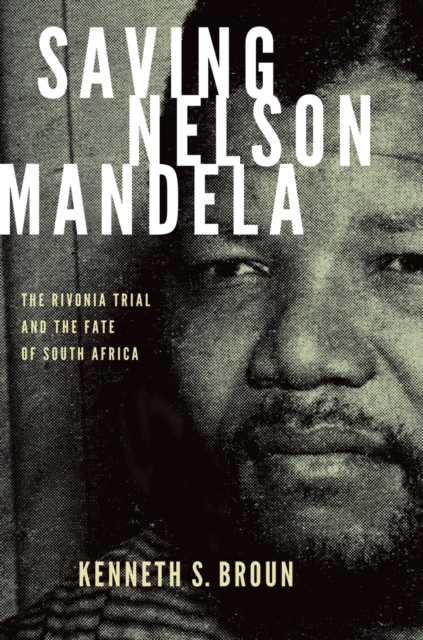
Saving Nelson Mandela : the Rivonia trial and the fate of South Africa
When South Africa's apartheid government charged Nelson Mandela with planning its overthrow in 1963, most observers feared that he would be sentenced to death. But the support he and his fellow activists in the African National Congress received during his trial not only saved his life, but also enabled him to save his country. This book recreates the trial—called the “Rivonia” Trial after the Johannesburg suburb where police seized Mandela. Based upon interviews with many of the case's primary figures and portions of the trial transcript, the book situates readers inside the courtroom at the imposing Palace of Justice in Pretoria. Here, the trial unfolds through a dramatic narrative that captures the courage of the accused and their defense team, as well as the personal prejudices that colored the entire trial. The Rivonia trial had no jury and only a superficial aura of due process, combined with heavy security that symbolized the apartheid government's system of repression. The book shows how outstanding advocacy, combined with widespread public support, in fact backfired on apartheid leaders, who sealed their own fate. Despite his twenty-seven-year incarceration, Mandela's ultimate release helped move his country from the racial tyranny of apartheid toward democracy.
eBook
Post-TRC Prosecutions in South Africa
This book offers the first comprehensive analysis and evaluation of criminal prosecutions required after the Truth and Reconciliation Commission's amnesty process, putting the issue into a normative and practical perspective of transitional justice in South Africa.
eBook
Judging State-Sponsored Violence, Imagining Political Change
How should state-sponsored atrocities be judged and remembered? This controversial question animates contemporary debates on transitional justice and reconciliation. This book reconsiders the legacies of two institutions that transformed the theory and practice of transitional justice. Whereas the Nuremberg Trials exemplified the promise of legalism and international criminal justice, South Africa's Truth and Reconciliation Commission promoted restorative justice and truth commissions. Leebaw argues that the two frameworks share a common problem: both rely on criminal justice strategies to investigate experiences of individual victims and perpetrators, which undermines their critical role as responses to systematic atrocities. Drawing on the work of influential transitional justice institutions and thinkers such as Judith Shklar, Hannah Arendt, José Zalaquett and Desmond Tutu, Leebaw offers a new approach to thinking about the critical role of transitional justice – one that emphasizes the importance of political judgment and investigations that examine complicity in, and resistance to, systematic atrocities.
eBook