
Catalogue Search | MBRL


Are you sure you want to remove the book from the shelf?

{{itemTitle}}
124
result(s) for
"Political culture -- Saudi Arabia"
Sort by:
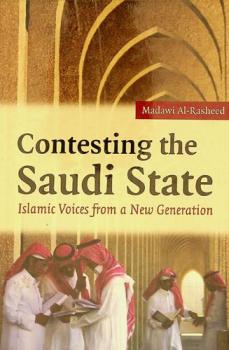

Contesting the Saudi State
The terms Wahhabi or Salafi are seen as interchangeable and frequently misunderstood by outsiders. However, as Madawi al-Rasheed explains in a fascinating exploration of Saudi Arabia in the twenty-first century, even Saudis do not agree on their meaning. Under the influence of mass education, printing, new communication technology, and global media, they are forming their own conclusions and debating religion and politics in traditional and novel venues, often violating official taboos and the conservative values of the Saudi society. Drawing on classical religious sources, contemporary readings and interviews, Al-Rasheed presents an ethnography of consent and contest, exploring the fluidity of the boundaries between the religious and political. Bridging the gap between text and context, the author also examines how states and citizens manipulate religious discourse for purely political ends, and how this manipulation generates unpredictable reactions whose control escapes those who initiated them.
eBook

Desert kingdom : how oil and water forged modern Saudi Arabia
Oil and water, and the science and technology used to harness them, have long been at the heart of political authority in Saudi Arabia. Oil's abundance, and the fantastic wealth it generated, has been a keystone in the political primacy of the kingdom's ruling family. The other bedrock element was water, whose importance was measured by its dearth. Over much of the twentieth century, it was through efforts to control and manage oil and water that the modern state of Saudi Arabia emerged.
The central government's power over water, space, and people expanded steadily over time, enabled by increasing oil revenues. The operations of the Arabian American Oil Company proved critical to expansion and to achieving power over the environment. Political authority in Saudi Arabia took shape through global networks of oil, science, and expertise. And, where oil and water were central to the forging of Saudi authoritarianism, they were also instrumental in shaping politics on the ground. Nowhere was the impact more profound than in the oil-rich Eastern Province, where the politics of oil and water led to a yearning for national belonging and to calls for revolution.
Saudi Arabia is traditionally viewed through the lenses of Islam, tribe, and the economics of oil. Desert Kingdom now provides an alternative history of environmental power and the making of the modern Saudi state. It demonstrates how vital the exploitation of nature and the roles of science and global experts were to the consolidation of political authority in the desert.
eBook

Leadership Experiences of Nurse Managers in a Saudi Ministry of Health Hospital: A Focused Ethnographic Study
One of the key priorities of Saudi Vision 2030 is to ensure that all Saudi citizens have access to high-quality healthcare, but this goal is constrained by international and domestic nursing staff shortages. Nursing directors have recommended introducing a professional career path focused on developing nurses' leadership skills. Despite recognition of nurse managers' key role in recruiting, retaining, and engaging nurses, few studies have explored how Saudi managers acquire and deploy leadership skills. This study explores how nurse managers view and experience workplace leadership.
This ethnographic study examined nurse managers' perceptions and experiences of leadership development in a Saudi hospital affiliated with the Ministry of Health. Qualitative data were collected during periodic visits over eight months, including workplace and continuing medical education observations, document examinations, and informal and semistructured interviews with 21 nurse managers. A framework analysis approach was used to interpret and summarize the data.
The data were organized into four major themes: imbalanced power dynamics, no shared vision, workplace rituals and behaviors, and the need for learning. The findings indicated a power imbalance, consistent with international studies. The hospital had hierarchical and transactional management structures and a culturally pervasive leadership approach framed by
(\"middleman\" or \"go-between\" in Arabic). Such nepotism, normalized in Saudi business practice, is officially recognized and condemned as corrupt by state legislators. The Saudi government is rigorously combating this practice through strict regulations and enforcement. A climate encouraging adherence with the directorate's guidelines led managers to comply, even though they employed strategies to subvert some of its authority.
Wasta was used to enhance performance, obtain rewards, secure favorable work assignments, gain meritless promotions, and allocate staff arbitrarily. Paradoxically, while managers criticized the capricious use of wasta, they also employed it to secure what they believed they deserved, sometimes at the expense of their colleagues' careers.
Journal Article

Shattering the glass ceiling : A study on the preferred leadership style of Saudi women entrepreneurs
The principal objective of this research is to study the different leadership styles being practiced by Saudi women entrepreneurs, as well as to study the effectiveness of these leadership styles. The leadership style of Saudi women is investigated in this study because Saudi women's role is distinctively separated from men in the male-dominated culture of Saudi Arabia and they are considered less competent and assertive than men. Primary data was collected through a structured questionnaire which consists of questions designed to collect data about the leadership style being practiced by the Saudi women entrepreneurs. The participants for the survey were identified through several organizations such as Monsha'at, MISK Foundation and Wa'ed (Aramco's entrepreneurship centre). For the survey, we focused only on female-owned small businesses that are operating for minimum two years in their respective business area as our target respondents. The sampling technique in this study was a judgemental sampling. Data was collected from 210 women entrepreneurs in Saudi Arabia. The survey data was analyzed using SPSS 21.0. The result shows that authoritarian leadership style is highly practiced by women entrepreneurs followed by democratic leadership style in Hail and Riyadh region. The unique contribution of this study is that it gives an insight on how the leadership style in Saudi firms is impacted by gender disparities in work values. The findings of this study can help educators and government to identify the weaknesses and develop training programs to develop the necessary leadership skills in Saudi women. Based on the findings, the government can develop programs for women small business owners which can develop their identity and characteristic adaptations in addition to skills.
Journal Article

Ethical leadership, ethical climate and integrity violation: A comparative study in Saudi Arabia and Malaysia
The primary aim of this study is to investigate the relationship among the ethical leadership, ethical climate and integrity violation of the local government of two countries, Saudi Arabia and Malaysia. Past studies indicate that ethical leadership and ethical climate influenced the integrity of local government. However, studies were mostly conducted in Western countries. Given the lack of comparative studies in Muslim-oriented countries, we intend to fill the gap by building upon previous studies on the relationship between ethical leadership and ethical climate and integrity violation of the local government. The study used survey to collect data from local authorities in the two nations. PLS-SEM was used to analyze the survey data. The findings demonstrated that the relationship between ethical leadership and integrity violation is not significant for Malaysians. Thus, the study assumption is not supported. By contrast, Saudi showed a different result in the relationship between ethical leadership and integrity violation; the relationship between ethical leadership and integrity violation in Saudi is negatively significant. Hence, the assumption is supported for Saudi participants. In regard to the ethical climate, results reveal that for Malaysia and Saudi, ethical climate negatively and significantly influence integrity violation. Thus, the assumption for both countries is supported. The findings of this study are useful for the practical development of local authorities as the findings provide information for the local government to safeguard against integrity violation. The findings also contribute social implications by educating organizations toward the role of ethical climate in preventing integrity violation. In addition, the study contributes to the growing interest in comparative studies.
Journal Article

Saudi Arabia’s Niche Diplomacy: A Middle Power’s Strategy for Global Influence
Saudi Arabia has emerged as a key middle power, leveraging niche diplomacy to expand its global influence. This study examines how the Kingdom strategically employs mediation, religious diplomacy, humanitarian aid, energy leadership, and sports diplomacy to shape regional and international dynamics. Unlike great powers, middle powers focus on specialized areas where they hold a comparative advantage, allowing them to exert influence despite material constraints. Saudi Arabia’s diplomatic recalibration aligns with its Vision 2030 agenda, prioritizing economic diversification, regional stability, and multilateral engagement. Saudi Arabia enhances its geopolitical significance by positioning itself as a mediator in regional conflicts, reinforcing its religious leadership, investing in sports diplomacy, and maintaining energy dominance. This study contributes to understanding middle power strategies in international relations, highlighting Saudi Arabia’s role as a stabilizing force in an evolving global order.
Journal Article

Can islam be french?
Can Islam Be French? is an anthropological examination of how Muslims are responding to the conditions of life in France. Following up on his book Why the French Don't Like Headscarves, John Bowen turns his attention away from the perspectives of French non-Muslims to focus on those of the country's Muslims themselves. Bowen asks not the usual question--how well are Muslims integrating in France?--but, rather, how do French Muslims think about Islam? In particular, Bowen examines how French Muslims are fashioning new Islamic institutions and developing new ways of reasoning and teaching. He looks at some of the quite distinct ways in which mosques have connected with broader social and political forces, how Islamic educational entrepreneurs have fashioned niches for new forms of schooling, and how major Islamic public actors have set out a specifically French approach to religious norms. All of these efforts have provoked sharp responses in France and from overseas centers of Islamic scholarship, so Bowen also looks closely at debates over how--and how far--Muslims should adapt their religious traditions to these new social conditions. He argues that the particular ways in which Muslims have settled in France, and in which France governs religions, have created incentives for Muslims to develop new, pragmatic ways of thinking about religious issues in French society.
eBook

Nasser's Gamble
Nasser's Gambledraws on declassified documents from six countries and original material in Arabic, German, Hebrew, and Russian to present a new understanding of Egypt's disastrous five-year intervention in Yemen, which Egyptian president Gamal Abdel Nasser later referred to as \"my Vietnam.\" Jesse Ferris argues that Nasser's attempt to export the Egyptian revolution to Yemen played a decisive role in destabilizing Egypt's relations with the Cold War powers, tarnishing its image in the Arab world, ruining its economy, and driving its rulers to instigate the fatal series of missteps that led to war with Israel in 1967.
Viewing the Six Day War as an unintended consequence of the Saudi-Egyptian struggle over Yemen, Ferris demonstrates that the most important Cold War conflict in the Middle East was not the clash between Israel and its neighbors. It was the inter-Arab struggle between monarchies and republics over power and legitimacy. Egypt's defeat in the \"Arab Cold War\" set the stage for the rise of Saudi Arabia and political Islam.
Bold and provocative,Nasser's Gamblebrings to life a critical phase in the modern history of the Middle East. Its compelling analysis of Egypt's fall from power in the 1960s offers new insights into the decline of Arab nationalism, exposing the deep historical roots of the Arab Spring of 2011.
eBook

Saudi-Indonesian Relations: Historical Dynamics and Contemporary Development
In this article, we focus on the bilateral relationship between Saudi Arabia and Indonesia, placing the contemporary development of the mutual relationships and cooperation between these two Muslim-majority nations into historical context. Moreover, we describe not only formal political economic relationships but also informal cultural, educational, religious relations between the two states. We argue that although socioreligious and people-to-people interactions are vital in the relations, these are not the only factors in the inherently pragmatic contemporary relationship between the Kingdom of Saudi Arabia and the Republic of Indonesia, which is built increasingly on the basis of national interests.
Journal Article