
Catalogue Search | MBRL


Are you sure you want to remove the book from the shelf?

{{itemTitle}}
12,699
result(s) for
"Political ethics History."
Sort by:

On civic republicanism : ancient lessons for global politics
\"Continuing the analysis of contemporary issues through the lens of ancient theories beyond the themes of Enduring Empire and the award-winning On Oligarchy, On Civic Republicanism explores the enduring relevance of the ancient concepts of republicanism and civic virtue to modern questions about political engagement and identity. Examining both ancient and early modern conceptions of civic republicanism, the contributors respond to the work of thinkers ranging from Plato and Aristotle to Machiavelli, Montesquieu, and Wollstonecraft. A testament to the continuing influence of the concept and the ongoing scholarly debate which surrounds it, On Civic Republicanism addresses fundamental questions regarding democratic participation, liberal democracy, and the public good. Its essays speak to the many ways in which the idea of the republic still challenges us today.\"--Publisher's description.
Book

The moral rhetoric of American presidents
Although sometimes decried by pundits, George W. Bush’s use of moral and religious rhetoric is far from unique in the American presidency. Throughout history and across party boundaries, presidents have used such appeals, with varying degrees of political success. The Moral Rhetoric of American Presidents astutely analyzes the president’s role as the nation’s moral spokesman.
Armed with quantitative methods from political science and the qualitative case study approach prevalent in rhetorical studies, Colleen J. Shogan demonstrates that moral and religious rhetoric is not simply a reflection of individual character or an expression of American “civil religion” but a strategic tool presidents can use to enhance their constitutional authority.
To determine how the use of moral rhetoric has changed over time, Shogan employs content analysis of the inaugural and annual addresses of all the presidents from George Washington through George W. Bush. This quantitative evidence shows that while presidents of both parties have used moral and religious arguments, the frequency has fluctuated considerably and the language has become increasingly detached from relevant policy arguments.
Shogan explores the political effects of the rhetorical choices presidents make through nine historical cases (Presidents Washington, Jefferson, Madison, Buchanan, Lincoln, Theodore Roosevelt, Kennedy, Lyndon Johnson, and Carter). She shows that presidents who adapt their rhetoric to the political conditions at hand enhance their constitutional authority, while presidents who ignore political constraints suffer adverse political consequences. The case studies allow Shogan to highlight the specific political circumstances that encourage or discourage the use of moral rhetoric.
Shogan concludes with an analysis of several dilemmas of governance instigated by George W. Bush’s persistent devotion to moral and religious argumentation.
eBook

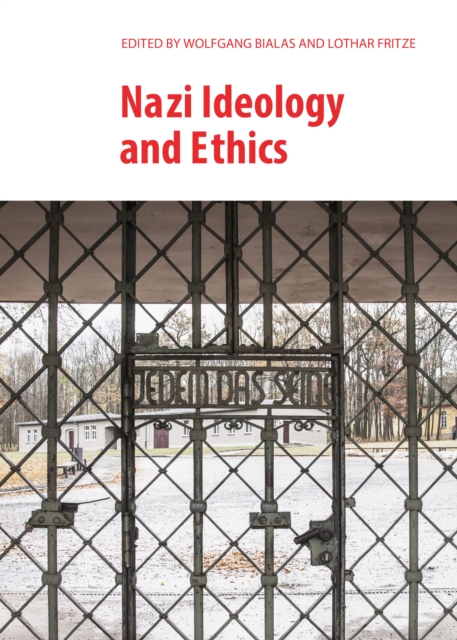
Nazi Ideology and Ethics
This volume documents the still-rare encounter of moral-philosophical, historiographic and medical-ethical research on National Socialism, and looks at the ethical aspects of the National Socialist ideology, as well as at the moral convictions of National Socialist perpetrators, some of whom acted as \"perpetrators with a good conscience\". It furthermore discusses questions such as the content and rationale of Nazi race ethics, the \"euthanasia\" killings and the Nazi ethics of racial warfare an.
eBook


Addressing Injustice in the Medieval Body Politic
Justice and injustice were subjects of ongoing debate in medieval Europe. Received classical and biblical models both influenced how these qualities of moral and political life were perceived, discussed and acted upon. Important among these influences was the anonymous seventh-century Irish text, On The Twelve Abuses of the Age, a biblically-inspired discussion of the moral duties particular to each sector of society. This volume probes its long influence, and its interaction with the revival of classical ideas. By bringing together scholars of political thought and practice, in lay and religious contexts spanning the seventh to fourteenth centuries, this volume crosses boundaries of periodisation, discipline and approach to reflect upon the medieval evolution of concepts of injustice and means of redress. Contributions address how ideas about justice and injustice were discussed among scholars and theologians, and how those ideas were translated into action through complaint and advice throughout the medieval period.
eBook

Evil empire : a reckoning with power
\"\"All history,\" writes Maximillian Alvarez in his contribution, \"is the history of empire--a bid for control of that greatest expanse of territory, the past.\" Evil Empire confronts these histories head-on, exploring the motivations, consequences, and surprising resiliency of empire and its narratives. Contributors grapple with the economic, technological, racial, and rhetorical elements of U.S. power and show how the effects are far-reaching and, in many ways, self-defeating. Drawing on a range of disciplines--from political science to science fiction--our authors approach the theme with imagination and urgency, animated by the desire to strengthen the fight for a better future.\"--Page 4 of cover.
Book
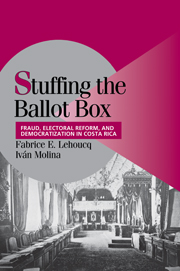
Stuffing the Ballot Box
Stuffing the Ballot Box is a pioneering study of electoral fraud and reform. It focuses on Costa Rica, a country where parties gradually transformed a fraud-ridden political system into one renowned for its stability and fair elections by the mid-twentieth century. Lehoucq and Molina draw upon a unique database of more than 1,300 accusations of ballot-rigging to show that parties denounced fraud where electoral laws made the struggle for power more competitive. They explain how institutional arrangements generated opportunities for executives to assemble legislative coalitions to enact far-reaching reforms. This book also argues that nonpartisan commissions should run elections and explains why splitting responsibility over election affairs between the executive and the legislature is a recipe for partisan rancour and political conflict. Stuffing the Ballot Box will interest a broad array of political and social scientists, constitutional scholars, historians, election specialists and policy-makers interested in electoral fraud and institutional reform.
eBook

Compromise : a political and philosophical history
\"This book offers a conceptual history of compromise that demonstrates the connection between different understandings of compromise and corresponding differences in understandings of political representation\"-- Provided by publisher.
Book
Études morales et politiques
Extrait: \"Le livre de M. Saisset (que l'auteur me pardonne de commencer par une critique) a le défaut de porter un titre trop général; on ne voit pas assez quel est le sujet. Philosophie religieuse est un nom vague qui se prête aux designations les plus diverses; d'ordinaire il indique quelque nouvelle tentative pour concilier la philosophie et le christianisme, la raison et la foi...\"À PROPOS DES ÉDITIONS LIGARANLes éditions LIGARAN proposent des versions numériques de qualité de grands livres de la littérature classique mais également des livres rares en partenariat avec la BNF. Beaucoup de soins sont apportés à ces versions ebook pour éviter les fautes que l'on trouve trop souvent dans des versions numériques de ces textes. LIGARAN propose des grands classiques dans les domaines suivants: • Livres rares
• Livres libertins
• Livres d'Histoire
• Poésies
• Première guerre mondiale
• Jeunesse
• Policier
eBook