
Catalogue Search | MBRL


Are you sure you want to remove the book from the shelf?

{{itemTitle}}
25,747
result(s) for
"Political indicators."
Sort by:


Democratic Deficit
Many fear that democracies are suffering from a legitimacy crisis. This book focuses on 'democratic deficits', reflecting how far the perceived democratic performance of any state diverges from public expectations. Pippa Norris examines the symptoms by comparing system support in more than fifty societies worldwide, challenging the pervasive claim that most established democracies have experienced a steadily rising tide of political disaffection during the third-wave era. The book diagnoses the reasons behind the democratic deficit, including demand (rising public aspirations for democracy), information (negative news about government) and supply (the performance and structure of democratic regimes). Finally, Norris examines the consequences for active citizenship, for governance and, ultimately, for democratization. This book provides fresh insights into major issues at the heart of comparative politics, public opinion, political culture, political behavior, democratic governance, political psychology, political communications, public policymaking, comparative sociology, cross-national survey analysis and the dynamics of the democratization process.
eBook

Governing human well-being : domestic and international determinants
This book provides a comprehensive explanation of human well-being outcomes by analyzing the role of domestic and international political factors. The well-being outcomes under study are the building blocks of development, and play a crucial developmental role in the lives of citizens, states, and the global community. The project introduces cases from Brazil, Japan, China, and Iraq, and proposes to answer some of the pressing questions that scholars and policy-makers alike have pondered over for years. Why are there large disparities between countries in the quality of life people lead? What factors account for the general well-being of mankind? How do we improve human lives?
Book
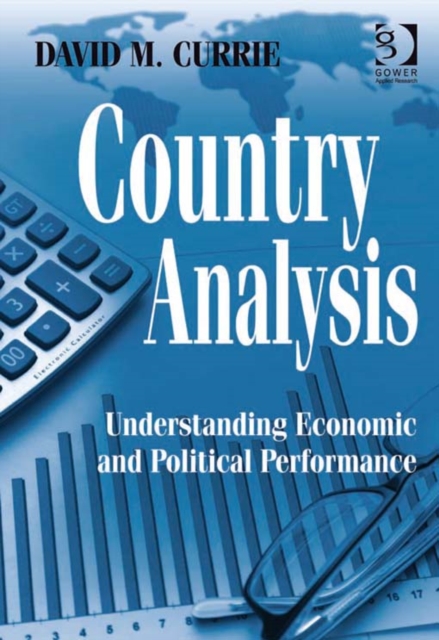
Country Analysis
The ability to connect theoretical macroeconomics to the analysis of the economic and political performance of a given country is an essential skill for global investors. In Country Analysis: Understanding Economic and Political Performance, David M. Currie takes a unique analytical approach to the subject, clearly demonstrating the relationship between theory and application in investing practices. This valuable book shows how to interpret country performance and provides the practising investor with sufficient background on economic principles to be able to understand and interpret country summaries that appear in business periodicals and other media. It covers key topics such as the Washington Consensus and the three major categories of economic decisions - fiscal policy, monetary policy and trade policy. It includes an important chapter on the political aspect of government performance, to give the reader an understanding of economic decisions in their true context. Country Analysis explains the reasoning behind the criteria used in evaluating country risk and economic performance, without the need for a sophisticated understanding of economics or mathematics. Each chapter includes a series of text boxes that include real-life examples from business periodicals to reinforce what is discussed and enable readers to practice identifying and interpreting relevant information. Practitioners making investment decisions in global markets, as well as students in MBA and other courses, will find this immensely practical book a valuable aid to critical decision making.
eBook

Democratic deficit : critical citizens revisited
\"This book focuses on 'democratic deficits', reflecting how far the perceived democratic performance of any state diverges from public expectations. Norris examines the reasons behind the democratic deficit and analyzes the consequences for active citizenship, for governance, and ultimately, for democratization\"-- Provided by publisher.
Book
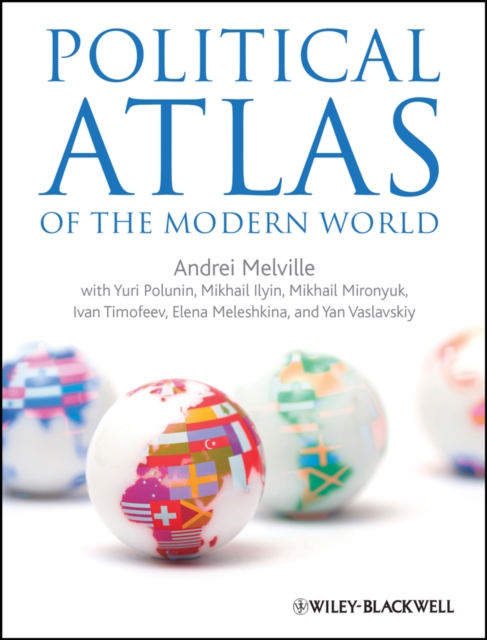
Political atlas of the modern world : an experiment in multidimensional statistical analysis of the political systems of modern states
The Political Atlas of the Modern World is a unique reference source which addresses these questions by providing a comparative study of the political systems of all 192 countries of the world. Uses quantitative data and multidimensional statistical analysis Ranks countries according to five indices of political development: stateness, external.
eBook
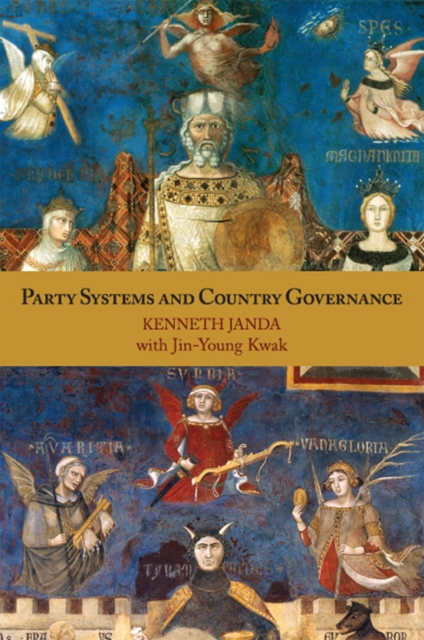
Party Systems and Country Governance
Party Systems and Country Governance focuses on the variety of party systems across the world and their effects on country governance and the conceptualisation and measurement of country governance. International aid agencies have spent millions of dollars believing that the presence of stable party systems contributes to better country governance. This study largely supports the assumptions of the aid agencies. To measure governance, the authors used the existing World Bank Governance Indicators for 2007 on 212 countries. They collected parliamentary party data for 189 countries. The authors identified fifteen additional countries that did not hold elections for parliamentary parties and eight countries that held non-partisan elections, seating no deputies by party. Together these 212 countries account for virtually all the variations in party systems across the world.
eBook

Mapping Value Orientations in Central and Eastern Europe
This volume elaborates on a number of issues that seem particular important for the people in Central and Eastern Europe: the development and working of democracy, the public support for, legitimacy and efficacy of democracy and the free market economy, and of course the stability of the newly established political culture.
eBook

The performance of nations
Why do some nations fail while others succeed? How can we compare the political capacity of a totalitarian regime to a democracy? Are democracies always more efficient? The Performance of Nations answers these key questions by providing a powerful new tool for measuring governments' strengths and weaknesses. Allowing researchers to look inside countries down to the local level as well as to compare across societies and over time, the book demonstrates convincingly that political performance is the missing link in measuring power and military capability. This groundbreaking work will be an essential resource for scholars, policymakers, and institutions interested in measuring the political capacities of nations and in knowing where foreign aid and investment will be most effective.
eBook
Rule of Law Dynamics
This volume explores the various strategies, mechanisms and processes that influence rule of law dynamics across borders and the national/international divide, illuminating the diverse paths of influence. It shows to what extent, and how, rule of law dynamics have changed in recent years, especially at the transnational and international levels of government. To explore these interactive dynamics, the volume adopts an interdisciplinary approach, bringing together the normative perspective of law with the analytical perspective of social sciences. The volume contributes to several fields, including studies of rule of law, law and development, and good governance; democratization; globalization studies; neo-institutionalism and judicial studies; international law, transnational governance and the emerging literature on judicial reforms in authoritarian regimes; and comparative law (Islamic, African, Asian, Latin American legal systems).
eBook