
Catalogue Search | MBRL


Are you sure you want to remove the book from the shelf?

{{itemTitle}}
50
result(s) for
"Political posters Exhibitions."
Sort by:
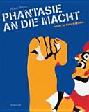
Phantasie an die Macht : Politik im Künstlerplakat = Power to the imagination : artists, posters and politics
Mit dem Aufruf \"Die Phantasie an die Macht\" unterstützte der Künstler Pierre Soulages den Aufstand der Pariser Studenten im Mai 1968. Die Bandbreite zwischen Utopie und erlebter Geschichte verleiht den politischen Plakaten der Künstler der Avantgarde ihren besonderen Reiz. Diese Geschichte der internationalen Protestbewegungen, erzählt mit eindringlichen Entwürfen der grossen Künstler unserer Zeit, ist zugleich eine Geschichte der Kunst dieser Zeit - selektiv betrachtet, aber doch Ausdruck einer erstaunlichen Kontinuität und Authentizität. Katalogbuch zur Ausstellung: Museum für Kunst und Gewerbe, Hamburg, ca. AprilJuni 2011 / Galerie Stihl Waiblingen, Waiblingen, 8.7.-25.9.2011.
Book


Preserving Dissent: The Sam L. Slick Collection of Latin American and Iberian Posters
Text of a paper given by the author at the ARLIS/NA Annual Conference held in Houston (March 2005), in which she describes the Sam L. Slick collection of Latin American and Iberian posters held in the collections of the University of New Mexico Libraries. The author describes the collection as comprising 10,000 Latin American and Spanish political and cultural posters from Sam L. Slick, notes the Library's acquisition of a further 500 posters, and reports on the project to catalogue and digitize the collection via a publicly searchable web interface. She provides an overview of the collection, highlighting countries represented, dates, medium, and themes documented, explores the history of the collection, tracing the origins of Slick's interest and acquisition methods, and discusses the Library's project to preserve, catalogue, and digitize the posters. She describes the promotion of the collection through educational programmes, reports on its representation in the exhibition 'Latin American Posters: Public Aesthetics and Mass Politics' on show at the National Hispanic Cultural Center in Albuquerque, NM, (9 Sept. 2006-4 March 2007), and concludes by emphasizing the historical value of the posters.
Journal Article

Raymond Hains's \France in Shreds\ and the politics of Décollage
ABSTRACT This article traces the reception of Raymond Hains's 1961 exhibition of torn posters relating to the war in Algeria, titled “La France déchirée” (France in Shreds). By examining how these works were read, and how they both mobilized and contained their imagery for different audiences, the political instability of montage during the early sixties—its availability as a tool of ambiguity for artists like Hains—becomes clear.
Journal Article


Advertising Seizes Control of Life: Berlin Dada and the Power of Advertising
The article examines Berlin Dada's interaction with advertising and popular culture, situating it within art's increasingly complex relationship to the mass-produced commodity during the century's second decade. Changing commercial practices within the art world contributed to an increasingly overt commodification of art, while art was also called upon to market mass-produced commodities. The Berlin Dadaists were deeply enmeshed in these changing conditions of art, as well as with the modern practice of propaganda which emerged from advertising during the war. They turned brandnames and slogans into poetic concepts, creating montages intended to sow chaos within and encourage resistance to an economic-political order that was still negotiating its relationship with the mass media and advertising. The Dadaists believed that real socio-political entities were increasingly embodied and mobilized through visual signs, a practice that intensified during the revolution. The article examines Berlin Dada's effort to understand and respond to this emerging practice, an effort crucial to Dada's viability as social and artistic critique.
Journal Article