
Catalogue Search | MBRL


Are you sure you want to remove the book from the shelf?

{{itemTitle}}
37
result(s) for
"Political prisoners South Africa Biography."
Sort by:

Nelson Mandela : from prisoner to president
\"This Step 4 leveled reader about Nelson Mandela, the Nobel Prize winning activist for racial equality in South Africa, is as spellbinding a biography as you can find. His journey from student to revolutionary to inmate to president of South Africa will inspire and engage kids of all ages.\"--Provided by publisher.
Book

Govan Mbeki
Govan Mbeki (1910-2001) was a core leader of the African National Congress, the Communist Party, and the armed wing of the ANC during the struggle against apartheid. Known as a hard-liner, Mbeki was a prolific writer and combined in a rare way the attributes of intellectual and activist, political theorist and practitioner. Sentenced to life in prison in 1964 along with Nelson Mandela and others, he was sent to the notorious Robben Island prison, where he continued to write even as tension grew between himself, Mandela, and other leaders over the future of the national liberation movement. As one of the greatest leaders of the antiapartheid movement, and the father of Thabo Mbeki, president of South Africa from 1999 to 2008, the elder Mbeki holds a unique position in South African politics and history. This biography by noted historian Colin Bundy goes beyond the narrative details of his long life: it analyzes his thinking, expressed in his writings over fifty years. Bundy helps establish what is distinctive about Mbeki: as African nationalist and as committed Marxist - and more than any other leader of the liberation movement - he sought to link theory and practice, ideas and action. Drawing on exclusive interviews Bundy did with Mbeki, careful analysis of his writings, and the range of scholarship about his life, this biography is personal, reflective, thoroughly researched, and eminently readable.
eBook


Mandela
Mandela: His Essential Life chronicles the life and legacy of one of the twentieth century's most influential and admired statesmen. Charting his development from remote rural roots to city lawyer, freedom fighter, and then political leader, Peter Hain takes an in-depth look at Mandela's rise through the ranks of the African National Congress (ANC) and subsequent 27 years imprisonment on Robben Island, as increasingly vocal protests against the injustices of Apartheid brought his struggle against overwhelming prejudice and oppression to the eyes of the world. This book encompasses Mandela’s inauguration as South Africa's first democratically elected president, his \"retirement\" campaigns for human rights, a solution to AIDS and poverty. It goes on to chronicle his later years and death. Throughout, the humanity and compassion of this extraordinary world leader shine through. The author concludes with a critical analysis of his and the ANC’s achievements, its leadership’s subsequent slide into corruption, and whether under new direction South Africa can reclaim the values and legacy of Mandela, and the ‘rainbow nation’ he created and led to such global acclaim.
eBook

Nelson Mandela : Nobel Peace Prize-winning champion for hope and harmony
Presents the life and career of Nelson Mandela, the former political prisoner who became the first black president of South Africa.
Book
Biko lives! : contesting the legacies of Steve Biko
This collection looks at the on-going significance of Black Consciousness, situating it in a global frame, examining the legacy of Steve Biko, the current state of post-apartheid South African politics, and the culture and history of the anti-apartheid movements.
eBook
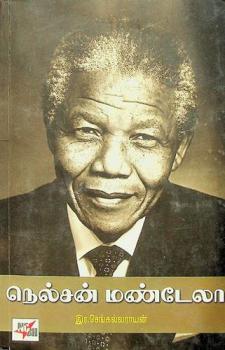

A Life for Freedom
From June 1963 to October 1964, ten antiapartheid activists were tried at South Africa's Pretoria Supreme Court. Standing among the accused with Nelson Mandela, Ahmed Kathrada, and Walter Sisulu was Denis Goldberg. Charged under the Sabotage and Suppression of Communism Acts for \"campaigning to overthrow the government by violent revolution,\" Goldberg was found guilty and sentenced to life imprisonment. The only white man convicted during the infamous Rivonia trial, he played a historic role in the struggle for justice in South Africa.
In this remarkable autobiography, Goldberg discusses growing up acutely aware of the injustice permeating his homeland. He joined the South African Communist Party and helped found the Congress of Democrats. It was his role as an officer in the armed underground wing of the African National Congress (ANC), however, that led to his life sentence -- the outcome of which was a staggering twenty-two years behind bars. While he was incarcerated, the racist dogma of apartheid imposed complete separation from his black comrades and colleagues, a segregation that denied him both the companionship and the counsel of his fellow accused.
Recounted with humor and humility, Goldberg's story not only provides a sweeping overview of life in South Africa both during and after apartheid, but also illuminates the experiences of the activists and oppressors whose fates were bound together.
eBook

Lie on your wounds
This book, comprising approximately 300 letters, provides access to the voice of Robert Sobukwe via the single most poignant resource of Sobukwe’s voice that exists: his prison letters. Not only do the letters evince Sobukwe’s storytelling abilities, they convey the complexity of a man who defied easy categorization. More than this: they are testimony both to the desolate conditions of his imprisonment and to Sobukwe’s unbending commitment to the cause of African liberation. The memory of Robert Mangaliso Sobukwe, inspirational political leader and first President of the Pan-Africanist Congress, has been sadly neglected in post-apartheid South Africa. In 1960, Sobukwe led the Anti-Pass Protests, which culminated in the Sharpeville Massacre, which proved a crucial turning point in the eventual demise of apartheid. Nevertheless, Sobukwe – a man once thought to hold greater promise for the liberation of South Africa than even Nelson Mandela – has been consistently marginalised in histories of the liberation struggle. Jailed for nine years, including a six-year period of near complete solitary confinement on Robben Island, Sobukwe was silenced throughout his life, a condition that has been extended into the post-apartheid present, so much so that we can say that Sobukwe was better known during rather than after apartheid. Given Sobukwe’s antagonistic relations both to white liberalism and to the African National Congress (whom he felt had betrayed the principles of African Nationalism), it is unsurprising that he has been subjected to a ‘consensus of forgetting’. With the changing political climate of recent years, the decline of the African National Congress’s hegemonic hold on power, the re-emergence of Black Consciousness and Africanist political discourse, the growth of student protests, Sobukwe is being looked to once again. Robert Sobukwe, the founder and first leader of the Pan Africanist Congress (PAC), was silenced throughout his life, a condition which has been extended into the post-apartheid present. This book, comprising approximately 300 letters, provides access to his words via the single most poignant resource of Sobukwe’s own voice that exists: his prison letters. Not only do the letters evince Sobukwe’s storytelling abilities, they convey the complexity of a man who defied easy categorisation. More than this: they are testimony both to the desolate conditions of his imprisonment and to Sobukwe’s unbending commitment to the cause of African liberation. Although jailed for nine years, including a six-year period of near complete solitary confinement on Robben Island, Sobukwe was better known during rather than after apartheid. Given his antagonistic views to both white liberalism and the African National Congress (ANC) it is unsurprising that he has been subjected to a ‘consensus of forgetting’. With the changing political climate of recent years, the decline of the ANC’s hegemonic hold on power, the re-emergence of Black Consciousness and Africanist political discourse and the growth of student protests, Sobukwe is being looked to as a leader once again.
eBook