
Catalogue Search | MBRL


Are you sure you want to remove the book from the shelf?

{{itemTitle}}
3,224
result(s) for
"Political song"
Sort by:

Postwar Europe and the Eurovision song contest
Postwar Europe and the Eurovision Song Contest examines how the Eurovision Song Contest has reflected and become intertwined with the history of postwar Europe from a political perspective. Established in 1956, the Eurovision Song Contest is the world's largest popular music event and one of the most popular television programmes in Europe, currently attracting a global audience of around 200 million people. Eurovision is often mocked as cultural kitsch because of its over-the-top performances and frivolous song lyrics. Yet there is no cultural medium that connects Europeans more than popular music, the development of which has always been tied to cultural, economic, political, social and technological change - making Eurovision the ideal tool to explain the history of Europe in the last sixty years. This book uses Eurovision as a vehicle to address topics ranging from the Cold War, liberal democracy and communism to nationalism, European integration, economic prosperity and human rights. It analyses these subjects through their cultural, political and social relationships with Eurovision entries as expressed through lyrics and music, as well as by examining public debates that have accompanied the selection of the entries and the organisation of the contest itself. Postwar Europe and the Eurovision Song Contest also considers how states have used Eurovision to define their identities in a European context, be it to assert their national distinctiveness, highlight political issues or affirm their Europeanism or Euroscepticism in the context of European integration.
Book

The Power of Song
The Power of Song shows how the people of Estonia, Latvia, and Lithuania confronted a military superpower and achieved independence in the Baltic Singing Revolution. When attacked by Soviet soldiers in public displays of violent force, singing Balts maintained faith in nonviolent political action. More than 110 choral, rock, and folk songs are translated and interpreted in poetic, cultural, and historical context.
Watch the trailer: http://www.youtube.com/watch?v=Gh7vFFjK0rc
eBook


Rethinking Campaign Songs as Strategic Narratives: A Critical Analysis of “Awurade Kasa” and “Wona Mayi Wo” in Elections in Ghana
Strategic narratives have emerged as sites of theoretical reflection and objects of inquiry in war and security studies and in international relations and diplomacy, but their potential to offer a nuanced analysis of campaign songs has been conspicuously absent. Drawing on the theory of strategic narratives and employing a thematic analysis of the texts of “Awurade Kasa” and “Wona Mayi Wo,” used by the New Patriotic Party in the 2000 and 2012 elections in Ghana, this article argues that sonic religiopolitical strategic narratives promote a particular problem definition, diagnose the problem’s cause, and make future-oriented claims. It contributes an Afrocentric perspective on “the God strategy” in political communication.
Journal Article

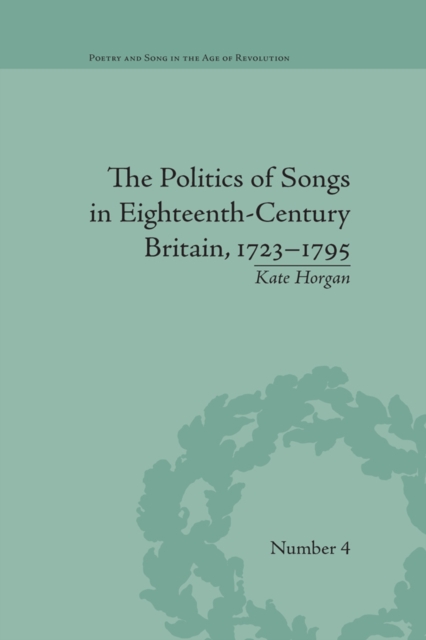
The Politics of Songs in Eighteenth-Century Britain, 1723-1795
Horgan analyses the importance of songs in British eighteenth-century culture with specific reference to their political meaning. Using an interdisciplinary methodology, combining the perspectives of literary studies and cultural history, the utilitarian power of songs emerges across four major case studies.
eBook

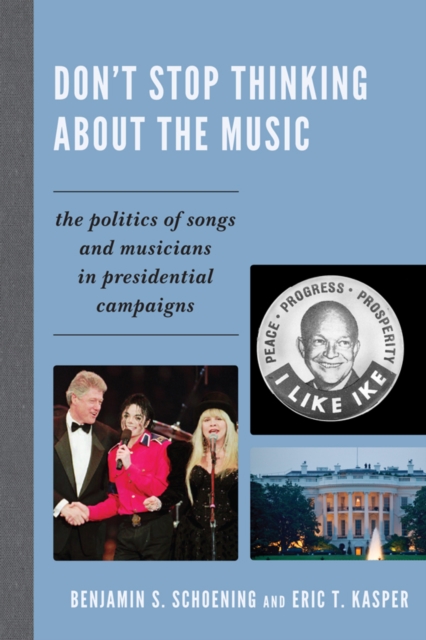
Don't stop thinking about the music
In this insightful, erudite history of presidential campaign music, musicologist Benjamin Schoening and political scientist Eric Kasper explain how politicians use music in American presidential campaigns to convey a range of political messages. From “Follow Washington” to “I Like Ike” to “I Got a Crush on Obama,” they describe the ways that song use by and for presidential candidates has evolved, including the addition of lyrics to familiar songs, the current trend of using existing popular music to connect with voters, and the rapid change of music’s relationship to presidential campaigns due to Internet sites like YouTube, JibJab, and Facebook. Readers are ultimately treated to an entertaining account of American political development through popular music and the complex, two-way relationship between music and presidential campaigns.
eBook

Negotiated power : the state, elites, and local governance in twelfth- to fourteenth-century China
\"Posits an alternative understanding of the relationship between the state and social elites in the middle period of Chinese imperial history. The book shows in vivid detail how state power and local elite interests were mutually constitutive and reinforcing\"--Provided by the publisher.
Book
