
Catalogue Search | MBRL


Are you sure you want to remove the book from the shelf?

{{itemTitle}}
293
result(s) for
"Political stability Middle East."
Sort by:

Fragile politics : weak states in the greater Middle East
\"The 2011 Arab uprisings precipitated the relatively quick collapse of a number of Middle Eastern states once perceived as invincible. The Tunisian and Egyptian states succumbed to revolutionary upheavals early on, followed by that of Qadhafi's Libya. Yemen's President Saleh was also eventually forced to give up power. A bloody civil war continues to rage in Syria. These uprisings highlighted weaknesses in the capacity and legitimacy of states across the Arab Middle East. This book provides a comprehensive study of state weakness-or of 'weak states'-across the Greater Middle East. No other book examines the subject of weak states in the Middle East. Fragile Politics begins with laying the theoretical framework for the study of weak states, examining the theoretical controversies surrounding the topic, the causes and characteristics of weak states, and their consequences for the Middle East. It then looks at a series of case studies, examining various themes within the study of weak states in relation to each case study.\" -- Publisher's description
Book

From resilience to revolution
Based on comparative historical analyses of Iran, Jordan, and Kuwait, Sean L. Yom examines the foreign interventions, coalitional choices, and state outcomes that made the political regimes of the modern Middle East. A key text for foreign policy scholars,From Resilience to Revolutionshows how outside interference can corrupt the most basic choices of governance: who to reward, who to punish, who to compensate, and who to manipulate.
As colonial rule dissolved in the 1930s and 1950s, Middle Eastern autocrats constructed new political states to solidify their reigns, with varying results. Why did equally ambitious authoritarians meet such unequal fates? Yom ties the durability of Middle Eastern regimes to their geopolitical origins. At the dawn of the postcolonial era, many autocratic states had little support from their people and struggled to overcome widespread opposition. When foreign powers intervened to bolster these regimes, they unwittingly sabotaged the prospects for long-term stability by discouraging leaders from reaching out to their people and bargaining for mass support-early coalitional decisions that created repressive institutions and planted the seeds for future unrest. Only when they were secluded from larger geopolitical machinations did Middle Eastern regimes come to grips with their weaknesses and build broader coalitions.
eBook
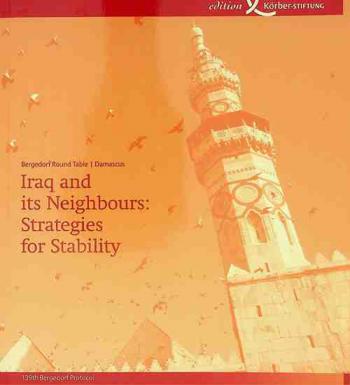


Insecurity communities of South Asia and the Middle East : consequences of US foreign policy
\"This book critically examines how US foreign policy has produced a regional regime of instability and insecurity in South Asia and the Middle East. It focuses on three interconnected zones of conflict - Afghanistan and Pakistan in South Asia, Iran and the Persian Gulf states, and Iraq and its neighbours. In a comprehensive historical survey, this work compares the governing behaviour of these states with that of the West, where the American Foreign Policy Establishment has, in contrast, pushed for investing in collective security. The author studies various events throughout history such as the Taliban regime; the US led war in Afghanistan; Obama administration and Pakistan; Kuwait and Iraq war; the Arab Spring, and the rise of ISIS, to present a theoretical analysis of Washington's consistent pursuit of multibalancing and regime change wars in the region. An important critical assessment of Western foreign policies, this book will be indispensable for students and researchers of US foreign policy, defence and security studies, strategic affairs, politics and international relations, political economy, nation-state building, identity studies, globalization studies, Middle East studies, and South Asian studies\"-- Provided by publisher.
Book
A Region in Turmoil
Learn why Iraq is not the only country in the Middle East that has a history of conflict. The nations of Egypt, Iran, Israel, Jordan, Kuwait, Oman, Qatar, Saudi Arabia, Syria, Turkey, the United Arab Emirates and Yemen are highlighted. Basic statistics and a brief history of each country are included.
Newspaper Article

U.S., Israel sign counter-terrorism cooperation accord
The Counter-Terrorism Cooperation Accord between the United States and Israel was signed in Washington, DC, on April 30, 1996. The statements made by President Clinton and Israeli Prime Minister Peres at the signing ceremony and the full text of the Accord are presented. The need for continued cooperation between Israel and the United States to combat terrorism and create stability in the region is emphasized.
Journal Article

The Conservator: Saving States from Political Bankruptcy
\"The failure of a state is often characterized by a breakdown of political, civil, and economic structures. Commercial activity is often diminished to subsistence level, resulting in the spread of poverty, disease, human rights depredation, refugee creation, and foreign intervention that includes the introduction of terrorist elements and armed conflict. As in Afghanistan, Somalia, Lebanon, and elsewhere, terrorist groups have found failing states to be convenient venues for training and operations. Because of their transnational impact, the consequences of state failure have required a multinational response effort.\" (Harvard International Review) Author Gerald B. Helman describes how the \"objective of the Conservator model...is to help a nation-state restore itself so that it can control its own territory, govern democratically and effectively, promote human rights, develop its economy, and maintain responsible state-to-state relations in accordance with the UN Charter.\"
Magazine Article

Extricating the U.S. from Middle Eastern entanglements
The costs to the US of encouraging the development of economic and political freedom in the Middle East are likely to exceed the benefits. The US should begin to shift some of the responsibility for the region's security and economic stability to other countries.
Magazine Article