
Catalogue Search | MBRL


Are you sure you want to remove the book from the shelf?

{{itemTitle}}
416,964
result(s) for
"Politicians"
Sort by:

12 political leaders who changed the world
Discusses the accomplishments of twelve of the most influential political leaders and their lasting impact on the world.
Book

Friendship and Politics in Post-Revolutionary France
In Friendship and Politics in Post-Revolutionary France, Sarah Horowitz brings together the political and cultural history of post-revolutionary France to illuminate how French society responded to and recovered from the upheaval of the French Revolution. The Revolution led to a heightened sense of distrust and divided the nation along ideological lines. In the wake of the Terror, many began to express concerns about the atomization of French society. Friendship, though, was regarded as one bond that could restore trust and cohesion. Friends relied on each other to serve as confidantes and men and women described friendship as a site of both pleasure and connection. Because trust and cohesion were necessary to the functioning of post-revolutionary parliamentary life, politicians turned to friends and ideas about friendship to create this solidarity. Relying on detailed analyses of politicians’ social networks, new tools from arising from the digital humanities, and examinations of their behind-the-scenes political transactions, Horowitz makes clear the connection between politics and emotions in the early nineteenth century, and she reevaluates the role of women in political life by showing the ways in which the personal was the political in the post-revolutionary era.
eBook

How to be a politician : 2000 years of good (and bad) advice
\"The ultimate book of political advice, conjuring the warp, weft, ebbs, flows, highs and lows of a political life, in the words of those who said it best - curated and introduced by Sir Vince Cable. Structured to follow the arc of a life in politics - from childhood aspirations and first attempts at getting elected, to navigating the back benches, ascending the greasy pole, dealing with detractors, facing crises, and finally escaping - this unique collection weaves together the wittiest, wisest and most acerbic political quotations from the last 2,000 years. Punctuated throughout by candid insights from Sir Vince Cable, How to Be a Politician is a timeless and entertaining education in the dark arts of politics\"--Publisher's description.
Book
Acting Capitol Police chief asked about officer who died by suicide after Capitol attack
In a Feb. 25 hearing, Rep. Jennifer Wexton (D-Va.) asked acting Capitol Police chief Yogananda D. Pittman about Howard Liebengood, a Capitol Police officer who died by suicide three days after the Jan. 6 riot at the Capitol.
Streaming Video

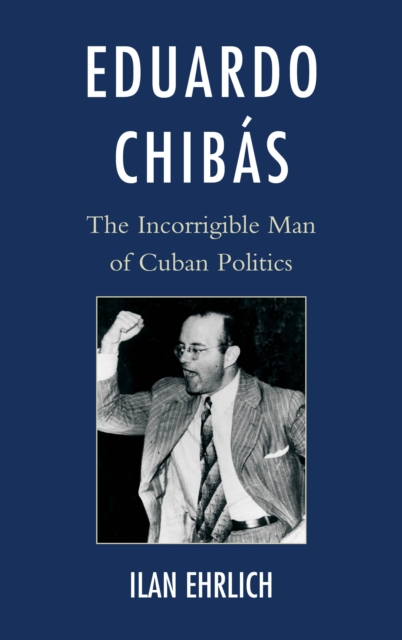
Eduardo Chibâas: the incorrigible man of Cuban politics
This comprehensive biography of Eduardo René Chibás (1907-1951) traces the life and times of Cuba's most popular and charismatic politician during the late 1940s and early 1950s. Chibás, whose admirers included young Fidel Castro, emphasized honesty in Cuban public life and promised to sweep away corrupt politicians during his popular Sunday broadcasts. His ties with supporters, many of whom knew him simply as \"Eddy,\" were closer and more informal than any previous Cuban politician. During his 1948 presidential campaign, Chibás often hurled himself into the arms of adoring supporters after speeches. Such gestures were met with wonder and disgust by politicians more accustomed to buying votes than winning hearts. His suicide in 1951 dashed the dreams of his followers-who hoped he would deliver an honest government that provided services for the island's poor and respected Cuba's progressive 1940 constitution. His death, which was followed seven months hence by a military coup and eight years later by Castro's revolution, represents one of the great what ifs of Cuban politics. This seminal work explores Chibás's life in order to explain the nature of Cuban politics from the mid-twentieth century to today.
eBook

A woman like me : a memoir
From challenging expectations as a bright and restless child of the Windrush generation to making history as the first elected Black female MP in the UK, Diane Abbott has seen it all. In this honest and moving memoir, Diane takes the reader through her incredible journey. She paints a vivid picture of growing up in 1960s North London with her working-class Jamaican parents, before entering the hallowed halls of Cambridge University to study history. Ever since the day she first walked through the House of Commons as the only state-educated Black woman MP, she has been a fearless and vocal champion for the causes that have made Britain what it is today. Written with her trademark frankness and humour, 'A Woman Like Me' is a candid account that celebrates how one woman succeeded against massive odds and built an extraordinary life.
BOOK
Race in America: A Conversation with House Majority Whip James Clyburn
House Majority Whip Rep. James Clyburn joined The Post to discuss the issues driving thousands to demonstrate against police brutality.
Streaming Video

Women of power : half a century of female presidents and prime ministers worldwide
At a time when a woman--Angela Merkel--is arguably the most powerful leader in Europe and another--Hillary Clinton--looks continuously poised for the U.S. presidency, it seems that women have broken through the glass ceiling and begun to populate the highest offices of the political world. This book is a testament to that feat, offering a comprehensive overview of female presidents and prime ministers.
Book

Barack Obama
In this insightful biography, Burton I. Kaufman explores
how the political career of Barack Obama was marked by conservative
tendencies that frustrated his progressive supporters and gave the
lie to socialist fearmongering on the right. Obama's was a landmark
presidency that paradoxically, Kaufman shows, resulted in few, if
any, radical shifts in policy. Following his election,
President Obama's supporters and detractors anticipated radical
reform. As the first African American to serve as president, he
reached the White House on a campaign promise of change. But
Kaufman finds in Obama clear patterns of classical conservativism
of an ideological sort and basic policy-making pragmatism. His
commitment to usher in a multiracial, multiethnic, and
multicultural society was fundamentally connected to opening up,
but not radically altering, the existing free enterprise system.
The Affordable Care Act, arguably President Obama's greatest policy
achievement, was a distillation of his complex motivations for
policy. More conservative than radical, the ACA fitted the
expansion of health insurance into the existing system. Similarly,
in foreign policy, Obama eschewed the use of force to affect regime
change. Yet he kept boots on the ground in the Middle East and
supported ballot-box revolts geared toward achieving in foreign
countries the same principles of liberalism, free enterprise, and
competition that existed in the United States.
In estimating the course and impact of Obama's full political
life, Kaufman makes clear that both the desire for and fear of
change in the American polity affected the popular perception but
not the course of action of the forty-fourth US president.
eBook