
Catalogue Search | MBRL


Are you sure you want to remove the book from the shelf?

{{itemTitle}}
23
result(s) for
"Politics, Practical Brazil."
Sort by:


Ambition, Federalism, and Legislative Politics in Brazil
Ambition theory suggests that scholars can understand a good deal about politics by exploring politicians' career goals. In the USA, an enormous literature explains congressional politics by assuming that politicians primarily desire to win re-election. In contrast, although Brazil's institutions appear to encourage incumbency, politicians do not seek to build a career within the legislature. Instead, political ambition focuses on the subnational level. Even while serving in the legislature, Brazilian legislators act strategically to further their future extra-legislative careers by serving as 'ambassadors' of subnational governments. Brazil's federal institutions also affect politicians' electoral prospects and career goals, heightening the importance of subnational interests in the lower chamber of the national legislature. Together, ambition and federalism help explain important dynamics of executive-legislative relations in Brazil. This book's rational-choice institutionalist perspective contributes to the literature on the importance of federalism and subnational politics to understanding national-level politics around the world.
eBook


Deepening Local Democracy in Latin America
The resurgence of the Left in Latin America over the past decade has been so notable that it has been called “the Pink Tide.” In recent years, regimes with leftist leaders have risen to power in Argentina, Bolivia, Brazil, Chile, Ecuador, El Salvador, Nicaragua, Uruguay, and Venezuela. What does this trend portend for the deepening of democracy in the region? Benjamin Goldfrank has been studying the development of participatory democracy in Latin America for many years, and this book represents the culmination of his empirical investigations in Brazil, Uruguay, and Venezuela. In order to understand why participatory democracy has succeeded better in some countries than in others, he examines the efforts in urban areas that have been undertaken in the cities of Porto Alegre, Montevideo, and Caracas. His findings suggest that success is related, most crucially, to how nationally centralized political authority is and how strongly institutionalized the opposition parties are in the local arenas.
eBook

Media Power and Democratization in Brazil
In this book, Porto analyzes the role of TV Globo in the democratization of Brazil. TV Globo, one of the world's largest media conglomerates, has a dominant position in Brazil's communications landscape. It also exports telenovelas to more than 130 countries and has established joint ventures with transnational media conglomerates. Beginning in the mid-1990s, TV Globo began a process of \"opening,\" replacing its authoritarian model of journalism with a more independent reporting style. Representations of Brazil in prime time telenovelas have also shifted. Given this shift, Porto considers some of the following questions:
What explains these changes in Brazil's most powerful media company?
How are they related to processes of political and social democratization?
How did TV Globo's opening affect Brazil's emerging democracy, especially in terms of the quality of political accountability mechanisms?
Porto uses the Brazilian case of TV Globo to analyze the larger links between democratization, civil society mobilization, and media change in transitional societies.
eBook

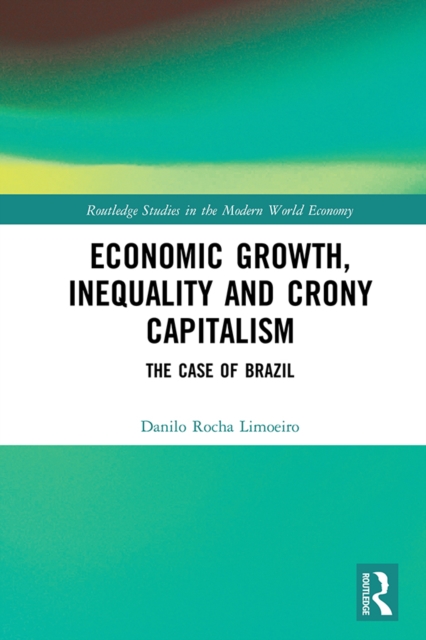
Economic Growth, Inequality and Crony Capitalism
Researchers in international development have long argued that the high costs of
doing business harms prosperity in developing countries, a claim that invites the
question of why governments impose these costs and why societies fail to enact
reforms reducing them. This book seeks to answer the question by looking at the case
of Brazil, a large and highly unequal economy riddled with state-imposed transaction
costs. By delving into the political dynamics underlying a costly business
environment, this book provides the reader with novel insights into crony capitalism
and inequality. It argues that the root cause of a costly business environment is
the collusion between political actors, bureaucrats and business insiders.
Politicians and bureaucrats relish their discretion over rules and policies as a
power resource, since they can increase or decrease the costs of doing business
faced by firms and sectors. Business insiders collude with government agents to
access the loopholes that decrease the cost of doing business, thus gaining a
competitive edge over outsiders. This gives the insiders weaker preferences for
reforms that could decrease the overall cost of doing business. By pursuing their
self-interest, these actors create a low-level equilibrium that perpetuates crony
capitalism and inequality to the detriment of overall prosperity. The book makes its
case with a sophisticated combination of formal modeling, quantitative analyses and
in-depth case studies of tax policy and of the pharmaceutical and agricultural
sectors in Brazil. Observers have declared the need for reforms that improve the
business environment in developing countries for a long time. However, the findings
presented in this book suggest they might have underestimated the challenge ahead.
Scholars and policy-makers in international development, business politics and
political economy will be interested in the innovative perspective of this book.
eBook

Negotiating boundaries : gender, violence and transformation in Brazil
The favelas (slums) of Rio de Janeiro provide an ideal case study since they are renowned for high levels of police and gang violence resulting in high death rates among young black men, causing both outrage and fear. This book foregrounds women's experiences and how different forms of violence overlap and reinforce one another.
eBook

The Practice of Politics in Postcolonial Brazil
The Practice of Politics in Postcolonial Brazil traces the history of high and low politics in nineteenth-century Brazil from the vantage point of the provincial capital of Porto Alegre. In the immediate postcolonial period, new ideas about citizenship and freedom were developing, and elites struggled for control of the state as the lower classes sought inclusion in political life. In a shift from the Liberal Party to Positivist or Conservative rule during the bloody Federalist Revolt of 1893-1895, new leaders sought to bring about a more balanced structure of government where the capitalist was sympathetic to the worker, and the worker more passive toward the elite. This represented a complete change of opinions—a new regime of ideas. Termed a \"scientific\" approach by its proponents, the movement was based on historical process and would be brought about through civic education. Against the backdrop of the abolition of slavery and subsequent assimilation, the rise of European immigration, and industrialization, Kittleson investigates how \"the people\" shaped changing political ideologies and practices, and how through local struggles and changes in elite ideology, the lower classes in Porto Alegre won limited political inclusion that was denied elsewhere.
eBook
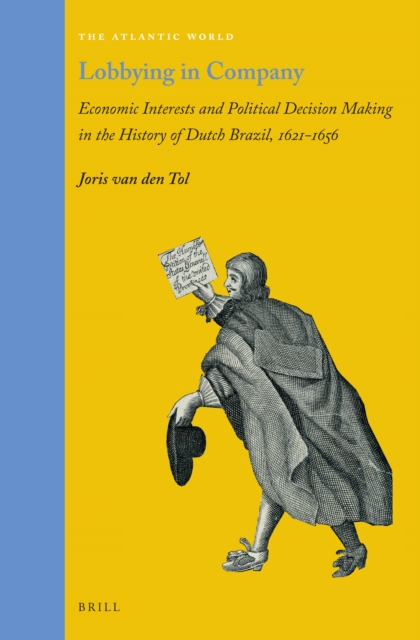
Lobbying in Company
\"This book focuses on the history of the WIC in Brazil in order to study the role of lobbying for political decision making in the seventeenth- century Dutch Republic, and argues that lobbying was the primary tool for people to implement, shape, and maintain institutions. Considering this impact, it is astonishing that lobbying has been underappreciated and regularly neglected by historians of all sub- disciplines\"--
eBook