
Catalogue Search | MBRL


Are you sure you want to remove the book from the shelf?

{{itemTitle}}
8
result(s) for
"Politics, Practical Handbooks, manuals, etc."
Sort by:



The Routledge Handbook of Policy Styles
This Handbook provides a systematic overview of the study of policy styles provided by leading experts in the field.
The book unites theoretical bases and advancements in practice, ranging from the fundamentals of policy styles to its place in greater policy studies, and responds to new questions regarding policy style dynamics across a range of government levels and activities, including contemporary trends affecting styles such as the use of digital tools and big data in government. It is a comprehensive reference for students and scholars of public policy.
Key features:
consolidates and advances the contemporary body of knowledge on policy styles and defines its distinctiveness within broader policy studies;
provides a detailed picture of national policy styles in a wide range of countries as well as insights concerning sectoral and other kinds of styles within countries, including executive styles and styles of policy advice;
systematically explores questions dealing with how policy styles impact policy goals, and the realization of policies, including how styles affect instrument choices and impact;
provides a guide to future comparative research pathways and cross-sectoral dialogue on the concept and practice of policy styles.
The Routledge Handbook Policy Styles is essential reading and an authoritative reference for scholars, students, researchers, and practitioners of public policy, public administration, and public management as well as for comparative politics and government, public organizations, and individual policy areas such as health policy, welfare policy, industrial policy, and environmental policy, among others.
eBook
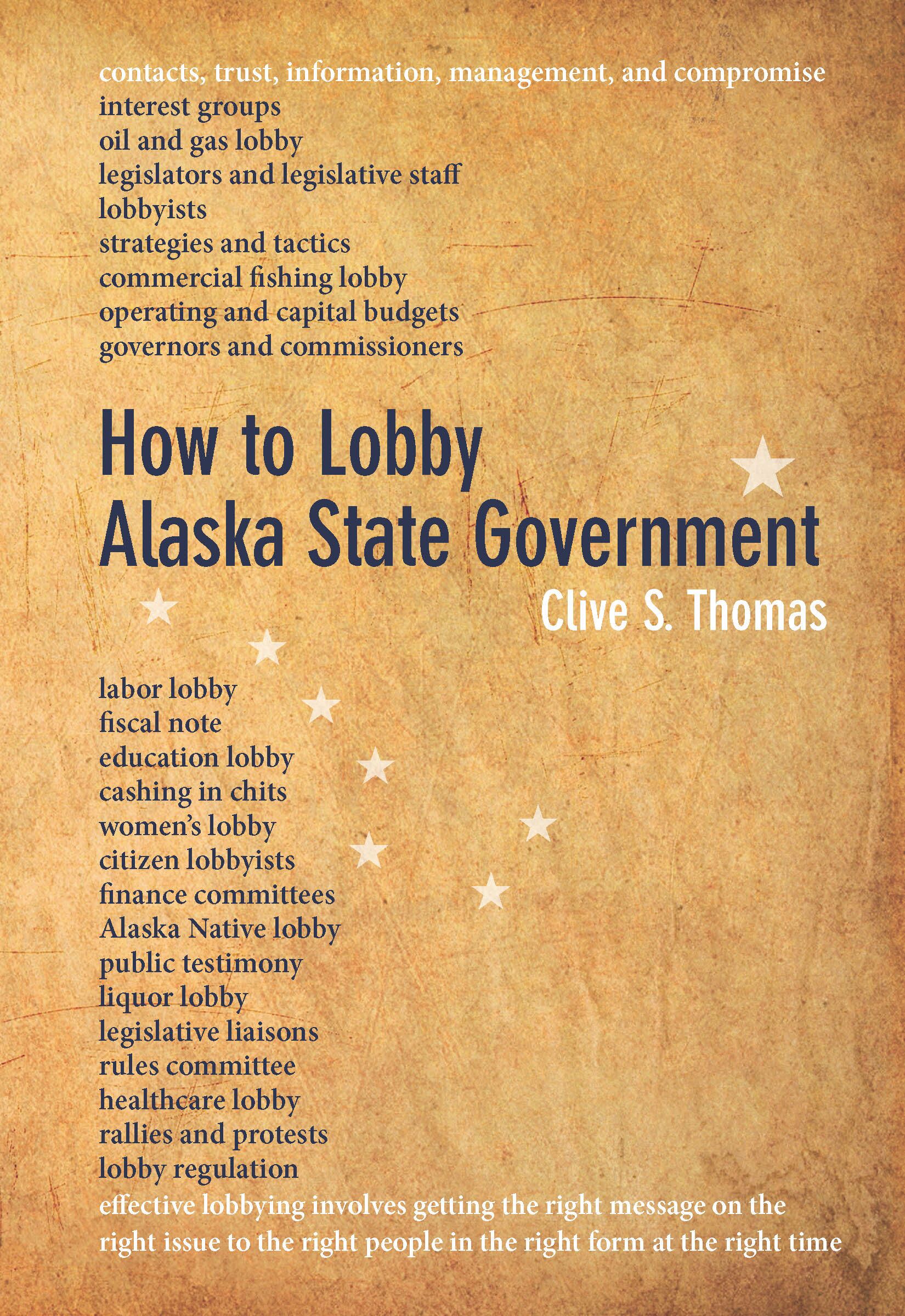
How to Lobby Alaska State Government
Lobbying is about getting the right message to the right people in
the right form at the right time. Even the most persuasive
arguments or most influential groups will come up short if they
aren't combined with personal connections and an understanding of
human nature. How to Lobby Alaska State Government is a
guide to the essentials of organizing and implementing a lobbying
campaign in Alaska that recognizes how you lobby is as important as
who you lobby. This book starts by helping new lobbyists to think
politically, by explaining the structure and operation of state
government, the psychology and needs of public officials, and where
the power lies in Juneau-who's got political clout. How to
Lobby then moves into the nitty-gritty of a lobbying campaign.
It covers the basics of group influence, campaign planning and
management, the pros and cons of various group tactics, tips on
face-to-face meetings, and the challenges of lobbying day-to-day.
In addition to extensive guidance on what to do, this book also
emphasizes the things to avoid that will undermine or eliminate a
lobbyist's chances of success. Pragmatic and portable, this book
will be valuable to new and professional lobbyists both, and anyone
looking for fresh perspectives on this important business.
eBook
Handbook integrated care
This handbook gives profound insight into the main ideas and concepts of integrated care.It offers a managed care perspective with a focus on patient orientation, efficiency, and quality by applying widely recognized management approaches to the field of health care.
eBook

The Activists' Handbook
A priceless resource for everyone ready to make a difference, environmental activist Aidan Ricketts offers a step-by-step handbook for citizens eager to start or get involved in grass-roots movements and beyond. Providing all essential practical tools, methods and strategies needed for a successful campaign and extensively discussing legal and ethical issues, this book empowers its readers to effectively promote their cause. Lots of ready-to-use documents and comprehensive information on digital activism and group strategy make this book an essential companion for any campaign. Including case studies from the US, UK, Canada and Australia, this is the ultimate guidebook to participatory democracy.
eBook

Evaluating Elections
In competitive and contested democratic elections, insuring integrity is critical. Evaluating Elections shows why systematic analysis and reporting of election performance is important and how data-driven performance management can be used by election officials to improve elections. The authors outline how performance management systems can function in elections and their benefits for voters, candidates and political parties. Journalists, election administrators and even candidates often ask whether recent elections were run well, whether there were problems in the administration of a particular state's elections and how well elections were run across the country. The authors explain that such questions are difficult to answer because of the complexity of election administration and because there is currently no standard or accepted framework to assess the general quality of an election.
eBook

Guide for the Care and Use of Laboratory Animals
A respected resource for decades, the Guide for the Care and Use of Laboratory Animals has been revised by a committee of experts, based on input from scientists and the public. The Guide incorporates recent research on commonly used species, including farm animals, and includes extensive references. It is organized around major components of animal use:
Institutional policies and responsibilities. The committee discusses areas that require policy attention: the role and function of the Institutional Animal Care and Use Committee, protocols for animal care and use, occupational health and safety, personnel qualifications, and other areas.
Animal environment, husbandry, and management. The committee offers guidelines on how to design and run a management program, addressing environment, nutrition, sanitation, behavioral and social issues, genetics, nomenclature, and more.
Veterinary care. The committee discusses animal procurement and transportation, disease and preventive medicine, and surgery. The Guide addresses pain recognition and relief and issues surrounding euthanasia.
Physical plant. The committee identifies design and construction issues, providing guidelines for animal-room doors, drainage, noise control, surgery, and other areas.
The Guide for the Care and Use of Laboratory Animals provides a framework for the judgments required in the management of animal facilities-a resource of proven value, now updated and expanded. This revision will be important to researchers, animal care technicians, facilities managers, administrators at research institutions, policymakers involved in research issues, and animal welfare advocates.
eBook