
Catalogue Search | MBRL


Are you sure you want to remove the book from the shelf?

{{itemTitle}}
14
result(s) for
"Politics, Practical Southeast Asia."
Sort by:


Participation without Democracy
Over the past quarter century new ideologies of participation and representation have proliferated across democratic and non-democratic regimes. In Participation without Democracy, Garry Rodan breaks new conceptual ground in examining the social forces that underpin the emergence of these innovations in Southeast Asia. Rodan explains that there is, however, a central paradox in this recalibration of politics: expanded political participation is serving to constrain contestation more than to enhance it.
Participation without Democracyuses Rodan's long-term fieldwork in Singapore, the Philippines, and Malaysia to develop a modes of participation (MOP) framework that has general application across different regime types among both early-developing and late-developing capitalist societies. His MOP framework is a sophisticated, original, and universally relevant way of analyzing this phenomenon. Rodan uses MOP and his case studies to highlight important differences among social and political forces over the roles and forms of collective organization in political representation. In addition, he identifies and distinguishes hitherto neglected non-democratic ideologies of representation and their influence within both democratic and authoritarian regimes.Participation without Democracysuggests that to address the new politics that both provokes these institutional experiments and is affected by them we need to know who can participate, how, and on what issues, and we need to take the non-democratic institutions and ideologies as seriously as the democratic ones.
eBook

The Politics of Religion in South and Southeast Asia
The notion of a 'politics of religion' refers to the increasing role that religion plays in the politics of the contemporary world. This book presents comparative country case studies on the politics of religion in South and South Asia, including India, Pakistan and Indonesia. The politics of religion calls into question the relevance of modernist notions of secularism and democracy, with the emphasis instead on going back to indigenous roots in search of authentic ideologies and models of state and nation building. Within the context of the individual countries, chapters focus on the consequences that politics of religion has on inclusive nation-building, democracy and the rights of individuals, minorities and women.
The book makes a contribution to both the theoretical and conceptual literature on the politics of religion as well as shed light on the implications and ramifications of the politics of religion on contemporary South Asian and South East Asian countries. It is of interest to students and scholars of South and South East Asian Studies, as well as Comparative Politics.
eBook

Between War and the State
In Between War and the
State , Van Nguyen-Marshall examines an array
of voluntary activities, including mutual-help, professional,
charitable, community development, student, women's, and rights
organizations active in South Vietnam from 1954 to 1975.
By bringing focus to the public lives of South Vietnamese people,
Between War and the State challenges persistent
stereotypes of South Vietnam as a place without society or agency.
Such robust associational life underscores how an active civil
society survived despite difficulties imposed by the war,
government restrictions, economic hardship, and external political
forces. These competing political forces, which included the United
States, Western aid agencies, and Vietnamese communist agents,
created a highly competitive arena wherein the South Vietnamese
state did not have a monopoly on persuasive or coercive power. To
maintain its influence, the state sometimes needed to accommodate
groups and limit its use of violence. Civil society participants in
South Vietnam leveraged their social connections, made alliances,
appealed to the domestic and international public, and used street
protests to voice their concerns, secure their interests, and carry
out their activities.
eBook

Encountering Islam
This volume seeks to introduce and deepen the understanding of Islam and its role in politics as encountered in different national and transnational contexts in Southeast Asia, eschewing the neo-orientalist approach that has informed public discourse in recent years. In Encountering Islam, the book lingers beyond the summary moment and reflects on the multiple impressions, suppressions and repressions, whether coherent or incoherent, associated with Islam as a socio-political force in public life. To this end, it is not adequate simply to represent the divergent identities associated with Islam in Southeast Asia, whether embedded in state-endorsed orthodoxy or Islamic movements that contest such orthodoxy. It is also important to examine religious minorities in political contexts where Islam is dominant and Muslim communities in national contexts where they are minorities. By situating these religious identities within their larger socio-political contexts, this volume seeks to provide a more holistic understanding of what is encountered as Islam in Southeast Asia.
eBook

Scandal and Democracy
Successful transitions to enduring democracy are both difficult and rare. In Scandal and Democracy, Mary E. McCoy explores how newly democratizing nations can avoid reverting to authoritarian solutions in response to the daunting problems brought about by sudden change. The troubled transitions that have derailed democratization in nations worldwide make this problem a major concern for scholars and citizens alike.This study of Indonesia's transition from authoritarian rule sheds light on the fragility not just of democratic transitions but of democracy itself and finds that democratization's durability depends, to a surprising extent, on the role of the media, particularly its airing of political scandal and intraelite conflict. More broadly, Scandal and Democracy examines how the media's use of new freedoms can help ward off a slide into pseudodemocracy or a return to authoritarian rule. As Indonesia marks the twentieth anniversary of its democratic revolution of 1998, it remains among the world's most resilient new democracies and one of the few successful democratic transitions in the Muslim world. McCoy explains the media's central role in this change and corroborates that finding with comparative cases from Mexico, Tunisia, and South Korea, offering counterintuitive insights that help make sense of the success and failure of recent transitions to democracy.
eBook
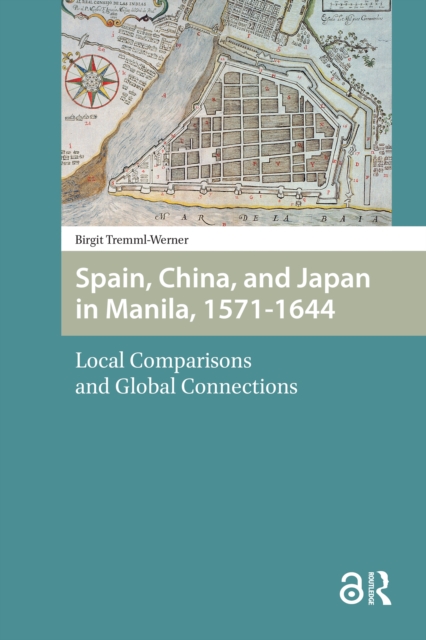
Spain, China, and Japan in Manila, 1571-1644
This book offers a new perspective on the connected histories of Spain, China, and Japan as they emerged and developed following Manila’s foundation as the capital of the Spanish Philippines in 1571. Examining a wealth of multilingual primary sources, Birgit Tremml-Werner shows that crosscultural encounters not only shaped Manila’s development as a “Eurasian” port city, but also had profound political, economic, and social ramifications for the three premodern states. Combining a systematic comparison with a focus on specific actors during this period, this book addresses many long-held misconceptions and offers a more balanced and multifaceted view of these nations’ histories.
eBook

The Candidate's Dilemma
In The Candidate's
Dilemma , Elisabeth Kramer tells the story of
how three political candidates in Indonesia made decisions to
resist, engage in, or otherwise incorporate money politics into
their electioneering strategies over the course of their
campaigns.
As they campaign, candidates encounter pressure from the
institutional rules that guide elections, political parties, and
voters, and must also negotiate complex social relationships to
remain competitive. For anticorruption candidates, this context
presents additional challenges for building and maintaining their
identities. Some of these candidates establish their campaign
parameters early and are able to stay their course. For others, the
campaign trail results in an avalanche of compromises, each one
eating away at their sense of what constitutes \"moral\" and
\"acceptable\" behavior. The Candidate's Dilemma delves into
the lived experiences of candidates to offer a nuanced study of how
the political and personal intersect when it comes to money
politics, anticorruptionism, and electoral campaigning in
Indonesia.
eBook

The politics of NGOs in South-East Asia : participation and protest in the Philippines
The Politics of NGOs in S.E. Asia traces the history of the emergence of NGOs in the Philippines and Southeast Asia and the political factors which encouraged this, including the complex relations between NGOs and other actors
Book
Fighting corruption in Asia
Fundamental changes within economies are needed to create arm's-length relations between governments, corporations, and banks. We are taking risks when investing in the future, and risk-taking demands openness and truthfulness from the agents we employ. If investors and accountants can concur on the degree of disclosure that is morally right we may come to some global agreement on what constitutes corruption - but to do this we have to bring together those who advocate profit-making with those who see this as usury; and we have to care for the future in novel ways - unknown in the past - so as to allow firms to be locally inefficient (apparently) while preserving the environment.
This book looks widely at the prevailing situation in Asia and considers how little some governments are doing to guide their institutions towards probity and transparency. While fundamental changes are needed around the globe, it is in the developing nations that there is scope for radical change in the near future, as their institutions are re-created to meet the modern world. Once developed and functioning their managers will have the opportunity to facilitate and re-direct the institutions in the developed world, which happen to be more conservative than their own.
eBook