
Catalogue Search | MBRL


Are you sure you want to remove the book from the shelf?

{{itemTitle}}
18,059
result(s) for
"Politics and Law : Political Theory"
Sort by:

Administering elections : how American elections work
\"Administering Elections provides a digest of contemporary American election administration using a systems perspective. This provides insight into the interconnected nature of all components of elections administration, and sheds like on the potential consequences of reforms that fail to account for this\"-- Provided by publisher.
Book

Leo Strauss on Religion
Intriguing unpublished manuscripts by Leo Strauss, which explore the intricate relationship between religion, philosophy, and politics, accompanied by fourteen interpretative essays.
Addressing the central theme of his work-the complex relationship between religion, philosophy, and politics-the twelve newly available transcripts included in Leo Strauss on Religion offer unprecedented insights into Leo Strauss's thoughts on previously unexplored subjects. Essential for both avid readers and newcomers, this collection unveils sharper formulations and frank discussions, providing a rare peek into the ambiguous aspects of Strauss's renowned reticence in formulating his ultimate thoughts. Accompanied by fourteen interpretative essays from distinguished scholars, this volume serves as a comprehensive guide to Strauss's intellectual odyssey. Offering fresh perspectives, these essays navigate the understudied aspects of Strauss's reflections on religion, putting his thought in a new perspective thereby enriching the scholarly debate around the controversial yet influential legacy of Leo Strauss.
eBook

Law and government in England in the long eighteenth century : from consent to command
\"Over the long eighteenth century English governance was transformed by large adjustments to the legal instruments and processes of power. This book documents and analyzes these shifts and focuses upon the changing relations between legal authority and the English people\"-- Provided by publisher.
Book
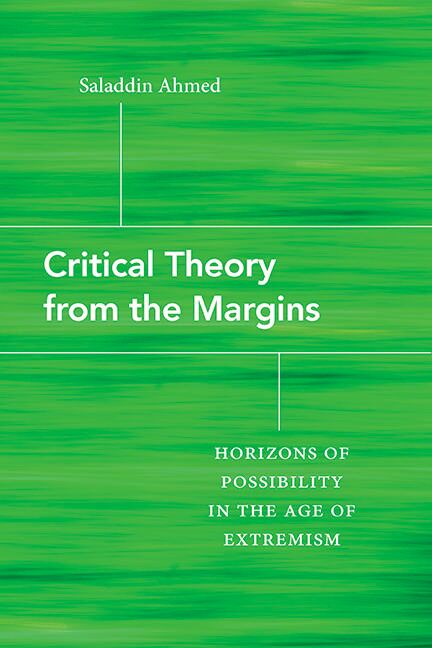
Critical Theory from the Margins
Great critical theorists from Marx and Engels to Adorno and
Horkheimer not only came from the margins but also stayed faithful
to the plight of the marginalized. They refused to compromise about
the struggle for equality and tried to universalize its
emancipatory essence. From Marx to Benjamin, critical philosophers
who showed fidelity to the cause were denied a career in European
universities and made impoverished, stateless, and homeless.
Marginalization and critical theory are inseparable; yet, today,
Marxism is institutionalized, and the Frankfurt School's Critical
Theory is gentrified. Critical Theory from the Margins ,
however, revives the Critical Theory that endorses criticism,
aiming to negate dominant regimes of truth. It is unapologetic in
its fidelity to the universalist struggles of the minoritized. In
that spirit, Saladdin Ahmed shows that capitalism imposes a
totalitarian social mode of existence and neoliberalism perpetuates
fascism as a class of ideology across nationalist and religious
movements. This book, then, is both a theorization and an argument
in favor of the application of the episteme of the silenced as the
essence of the critical education necessary for achieving universal
emancipation.
eBook
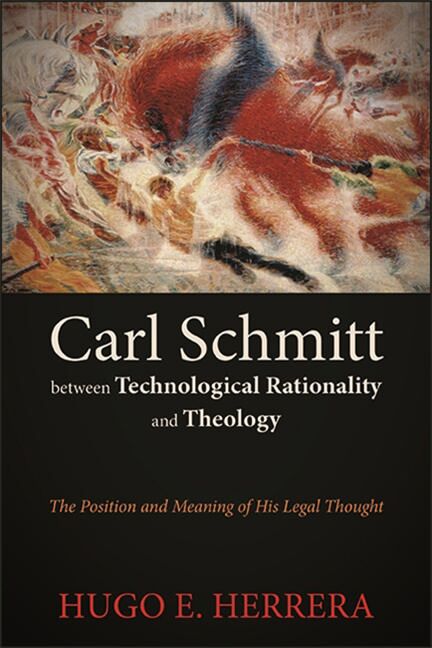
Carl Schmitt between Technological Rationality and Theology
Carl Schmitt, one of the most influential legal and political thinkers of the twentieth century, is known chiefly for his work on international law, sovereignty, and his doctrine of political exception. This book argues that greater prominence should be given to his early work in legal studies. Schmitt himself repeatedly identified as a jurist, and Hugo E. Herrera demonstrates how for Schmitt, law plays a key role as an intermediary between ideal, conceptual theory and the complexity of practical, concrete situations. Law is concerned precisely with balancing the extremes of theory and reality, and in this respect, Schmitt associates it with philosophical thinking broadly as being able to understand and explain the tensions in human experience. Reviewing and analyzing prevailing interpretations of Schmitt by Jacques Derrida, Heinrich Meier, and others, Herrera argues that the importance of Schmitt's legal framework is both significant and overlooked.
eBook
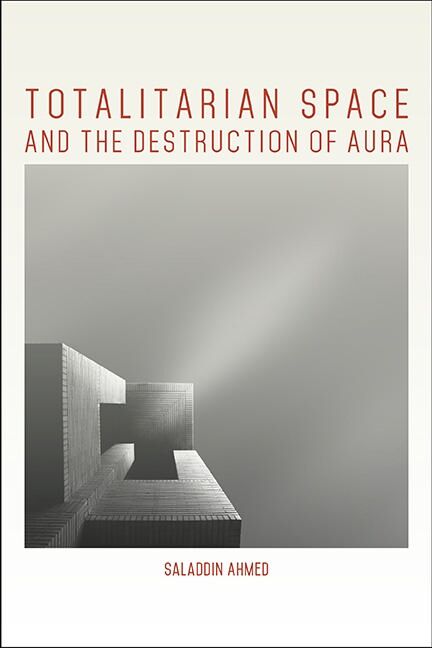
Totalitarian Space and the Destruction of Aura
We live today within a system in which state and corporate power
aim to render space flat, transparent, and uniform, for only then
can it be truly controlled. The gaze of power and the commodity
form are capable of infiltrating even the darkest of corners, and
often, we invite them into our most private spaces. We do so as a
matter of convenience, but also to placate ourselves and cope with
the alienation inherent in our everyday lives. The resulting
dominant space can best be termed totalitarian. It is space
stripped of uniqueness, deprived of the \"spatial aura\" necessary
for authentic experience. In Totalitarian Space and the
Destruction of Aura , Saladdin Ahmed sets out to help us grasp
what has been lost before no trace remains. He draws attention to
that which we might prefer not to see, but despite the bleakness of
this indictment of reality, the book also offers a message of hope.
Namely, it is only once we comprehend the magnitude of the threat
to our spatial experience and our own complicity in sustaining this
system that we can begin to resist the totalizing forces at work.
eBook
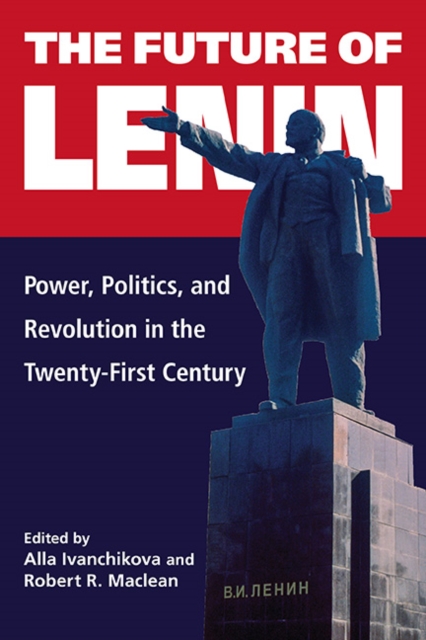
The Future of Lenin
Situated in a particular historical moment marked by the violent
crises of capitalism-the rise of the alt-right, the COVID-19
pandemic, and the Black Lives Matter movement- The Future of
Lenin collects essays by an international cohort of scholars
to assert Lenin's relevance for twenty-first-century politics and
thought. Taking different and sometimes opposing vantage points on
Lenin's value for the future, the contributions to this volume
reveal an unexpected Lenin, one who escapes the stale Cold War-era
discourse of demonization and hagiography. Instead, the
future-oriented Lenin in these pages comes to life as our
contemporary: an interlocutor who is surprisingly relevant for
Black and anticolonial struggles in the US and beyond; for building
the new Left; and for assessing Bernie Sanders' movement as well as
alt-right anti-statism. In short, Lenin's concrete development of
Marxism for his historical conditions may yet offer lessons for
revolutionaries to come.
eBook
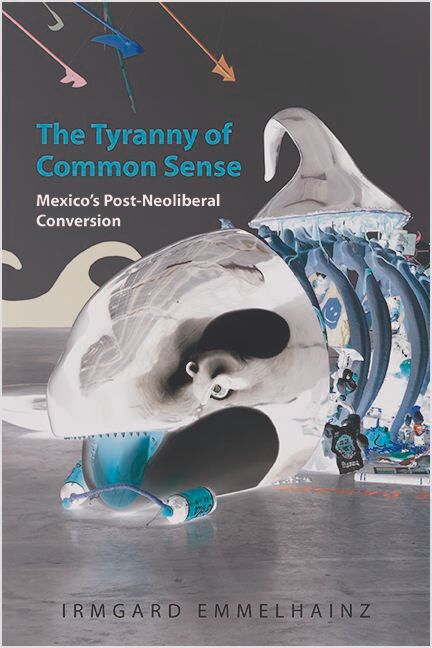
The Tyranny of Common Sense
As one of the first countries to implement a neoliberal state
apparatus, Mexico serves as a prime example of the effects of
neoliberal structural economic reform on our sensibility. Irgmard
Emmelhainz argues that, in addition to functioning as a form of
politico-economic organization, neoliberalism creates particular
ways of seeing and inhabiting the world. It reconfigures common
sense, justifying destruction and dispossession in the name of
development and promising to solve economic precarity with
self-help and permanent education. Pragmatism reigns, yet in always
aiming to maximize individual benefit and profit, such common sense
fuels a culture of violence and erodes the distinction between life
and death. Moreover, since 2018, with the election of a new Mexican
president, neoliberalism has undergone what Emmelhainz calls
\"post-neoliberal conversion,\" intensifying extractavism and
ushering in a novel form of moral, political, and intellectual
hegemony rooted in class tensions and populism. Integrating theory
with history and lived reality with art, film, and literary
criticism, The Tyranny of Common Sense will appeal to
academics and readers interested in the effects of neoliberalism
and, now, post-neoliberalism in Mexico from a broader, global
perspective. Originally published in Spanish in 2016 as La
tiranía del sentido común: La reconversión neoliberal de
México , the English edition has been thoroughly revised and
expanded to encompass a critical vision of the current regime.
eBook

On the Ethics of Torture
The question of when, and under what circumstances, the practice of
torture might be justified has received a great deal of attention
in the last decade in both academia and in the popular media. Many
of these discussions are, however, one-sided with other
perspectives either ignored or quickly dismissed with minimal
argument. In On the Ethics of Torture , Uwe Steinhoff
provides a complete account of the philosophical debate surrounding
this highly contentious subject. Steinhoff's position is that
torture is sometimes, under certain narrowly circumscribed
conditions, justified, basing his argument on the right to
self-defense. His position differs from that of other authors who,
using other philosophical justifications, would permit torture
under a wider set of conditions. After having given the reader a
thorough account of the main arguments for permitting torture under
certain circumstances, Steinhoff explains and addresses the many
objections that have been raised to employing torture under any
circumstances. This is an indispensible work for anyone interested
in one of the most controversial subjects of our times.
eBook

Republic of Readers?
2007 CHOICE Outstanding Academic Title
What is the proper role for literature in political thought and
analysis? Can reading novels make us better citizens of a liberal
democratic society? What is the status of argument and reason in an
academy dominated by readings and redescriptions? Simon Stow
identifies a potentially detrimental literary turn in the
contemporary academy, arguing that the study of literature and the
study of politics have become somewhat indistinguishable
enterprises. Drawing on the work of Judith Butler, Terry Eagleton,
Martha Nussbaum, and Richard Rorty, he examines the problematic
claims, circular reasoning, and misplaced assumptions that underpin
this disciplinary merging, and seeks to defend political philosophy
and social science against the rival claims of literature and
literary criticism as sources of political insight and
construction.
eBook