
Catalogue Search | MBRL


Are you sure you want to remove the book from the shelf?

{{itemTitle}}
16
result(s) for
"Politics and culture -- Europe, Western -- History -- 19th century"
Sort by:

Liberalism and the Habsburg monarchy, 1861-1895
\"Often the liberal movement has been viewed through the lens of its later German nationalism. This presents only one facet of a wide-ranging, all-encompassing project to regenerate the Habsburg Monarchy. By analysing its various nuances, this volume provides a new, more positive interpretation of Austro-German liberalism. In the 1860s the liberals fought for their core concepts of liberal principles, Austrian state patriotism and German nationalism. Their convictions and actions put in place the framework for modern politics in the Habsburg Monarchy - the constitution, parliaments, and a free press. Only gradually over time did German nationalism begin to dominate within the movement. By tracing the interaction of the core concepts and placing the movement within its historical context, Jonathan Kwan presents a balanced assessment of an oft-neglected, much criticized but highly significant political movement\"-- Provided by publisher.
Book

Modernity and Bourgeois Life
To be modern may mean many different things, but for nineteenth-century Europeans 'modernity' suggested a new form of life in which bourgeois activities, people, attitudes and values all played key roles. Jerrold Seigel's panoramic new history offers a magisterial and highly original account of the ties between modernity and bourgeois life, arguing that they can be best understood not in terms of the rise and fall of social classes, but as features of a common participation in expanding and thickening 'networks of means' that linked together distant energies and resources across economic, political and cultural life. Exploring the different configurations of these networks in England, France and Germany, he shows how their patterns gave rise to distinctive forms of modernity in each country and shaped the rhythm and nature of change across spheres as diverse as politics, money and finance, gender relations, morality, and literary, artistic and musical life.
eBook
The Anti-Enlightenment Tradition
In this masterful work of historical scholarship, Zeev Sternhell, an internationally renowned Israeli political scientist and historian, presents a controversial new view of the fall of democracy and the rise of radical nationalism in the twentieth century. Sternhell locates their origins in the eighteenth century with the advent of the Anti-Enlightenment, far earlier than most historians.
The thinkers belonging to the Anti-Enlightenment (a movement originally identified by Friederich Nietzsche) represent a perspective that is antirational and that rejects the principles of natural law and the rights of man. Sternhell asserts that the Anti-Enlightenment was a development separate from the Enlightenment and sees the two traditions as evolving parallel to one another over time. He contends that J. G. Herder and Edmund Burke are among the real founders of the Anti-Enlightenment and shows how that school undermined the very foundations of modern liberalism, finally contributing to the development of fascism that culminated in the European catastrophes of the twentieth century.
eBook

France and 1848
An extensive and authoritative study that examines the economic, social and political crises of France during the revolution of 1848. Using analysis of original sources and recent research, Fortescue here offers new interpretations of events leading up to and after the second republic was declared. Looking at Louis Philippe's overthrow, the proclamation of manhood suffrage and the unexpected success of the right-wing in the subsequent elections, this book evaluates the political history of France in 1848 and the French political culture of the time. This should be read by all students of nineteenth century history, political scientists and all those with an interest in the historical development of French political culture.
William Fortescue is Senior Lecturer in History at the University of Kent at Canterbury. He is the author of The Third Republic in France.
Acknowledgements Introduction 1. The French Revolutionary Tradition from 1789 to the July Monarchy 2. The Economic, Social and Political Crises 3. The February Revolution and the Provisional Government 4. The Executive Commission and the June Days 5. Cavaignac and Louis Napoleon Bonaparte Conclusion Bibliography Index
eBook

The Saint-Napoleon : celebrations of sovereignty in nineteenth-century France
In 1852, President Louis Napoleon of France declared that August 15--Napoleon Bonaparte's birthday--would be celebrated as France's national day. Leading up to the creation of the Second Empire, this was the first in a series of attempts to \"Bonapartize\" his regime and strengthen its popular legitimacy. Across France, public institutions sought to draw local citizens together to celebrate civic ideals of unity, order, and patriotism. But the new sense of French togetherness was fraught with tensions. Drawing on a wealth of archival evidence, Sudhir Hazareesingh vividly reconstructs the symbolic richness and political complexity of the Saint-Napoleon festivities in a work that opens up broader questions about the nature of the French state, unity and lines of fracture in society, changing boundaries between public and private spheres, and the role of myth and memory in constructing nationhood. The state's Bonapartist identity was at times vigorously contested by local social, political, and religious groups. In various regions, people used the national day to celebrate their own communities and to honor their hometown veterans; but elsewhere, the revival of republican sentiment clashed sharply with imperial attitudes. Sophisticated and gracefully written, this book offers rich insights into modern French history and culture.
eBook

Revisiting Asian Values
Asian Values discourse was widely criticized for its cultural inauthenticity and instrumentalism. However, its similarity to an early twentieth-century conversation about the values of “Eastern civilization” places it within a particular history of cultural assertion, which emerges when Asian experience defies expectations about the direction of future progress. Both discourses reformulate historically-central Chinese ideas in more general terms to carve out space between regional ethnocentrism and mimeticism of the West. Although sometimes co-opted by authoritarian elites, they nevertheless articulate “Asian” characteristics as challenges that transform, rather than traditional values which supplement, “Western” processes of modernization.
Journal Article

Eighteenth-Century Periodicals as Agents of Change
Eighteenth-century periodicals as agents of change: Perspectives on Northern Enlightenment offers new accounts of the impact of Enlightenment ideas in Scandinavia, with a particular focus on the transnational and revolutionary role of the new periodical press.
eBook
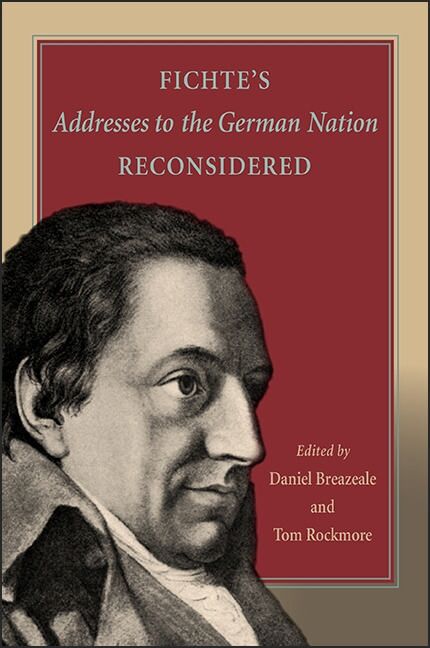
Fichte's Addresses to the German Nation Reconsidered
One of J. G. Fichte's best-known works, Addresses to the German
Nation is based on a series of speeches he gave in Berlin when
the city was under French occupation. They feature Fichte's
diagnosis of his own era in European history as well as his call
for a new sense of German national identity, based upon a common
language and culture rather than \"blood and soil.\" These speeches,
often interpreted as key documents in the rise of modern
nationalism, also contain Fichte's most sustained reflections on
pedagogical issues, including his ideas for a new egalitarian
system of Prussian national education. The contributors'
reconsideration of the speeches deal not only with technical
philosophical issues such as the relationship between language and
identity, and the tensions between universal and particular motifs
in the text, but also with issues of broader concern, including
education, nationalism, and the connection between morality and
politics.
eBook
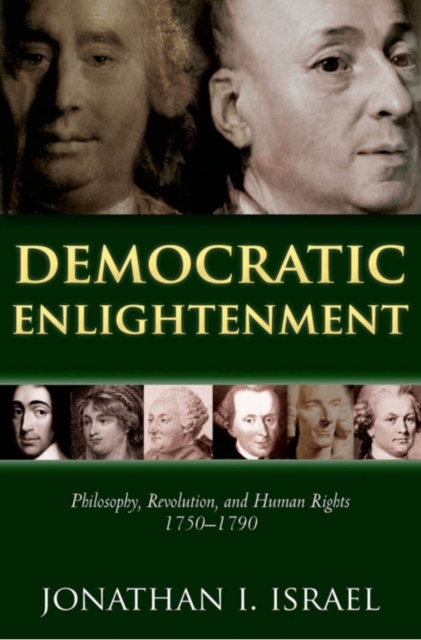
Democratic enlightenment : philosophy, revolution, and human rights 1750-1790
Jonathan Israel's radical new account of the late Enlightenment highlights forgotten currents and figures. Running counter to mainstream thinking, he demonstrates how a group of philosophe-revolutionnaires provided the intellectual powerhouse of the French Revolution, and how their ideas connect with modern Western democracy.
eBook

To what extent were economic factors important in the separation of the south of Ireland from the United Kingdom and what was the economic impact?
The impact of British rule casts a long shadow over Irish history. While nationalist historians tended to blame Union with Britain for all the economic ills of the 19th century (O'Brien, 1921), recent re-evaluations of both historical and recent Irish economic performance have been cause for a reappraisal of the economic relations between Ireland and Britain (Cullen, 1969; Kennedy and Johnson, 1996). The extent to which economic factors were important in Ireland's withdrawal from the United Kingdom will be examined in this paper. A secondary aim is to assess the economic consequences of independence in the interwar period. There were many economic reasons up to 1913 as to why Ireland should separate. UK policy was determined by majority voting and policies were suited to the needs of industrial workers in Britain, rather than agricultural workers in Ireland. This led to increased spending beyond the means of Ireland which caused transition difficulties on independence. Finally the consequences of separation in the north and south of Ireland are examined. Evidence suggests that separation led to short term economic difficulty. In the longer run the south benefited from independence due to weakness in British institutions and the incentive structures created during the interwar period.
Journal Article