
Catalogue Search | MBRL


Are you sure you want to remove the book from the shelf?

{{itemTitle}}
105
result(s) for
"Politisches Engagement"
Sort by:

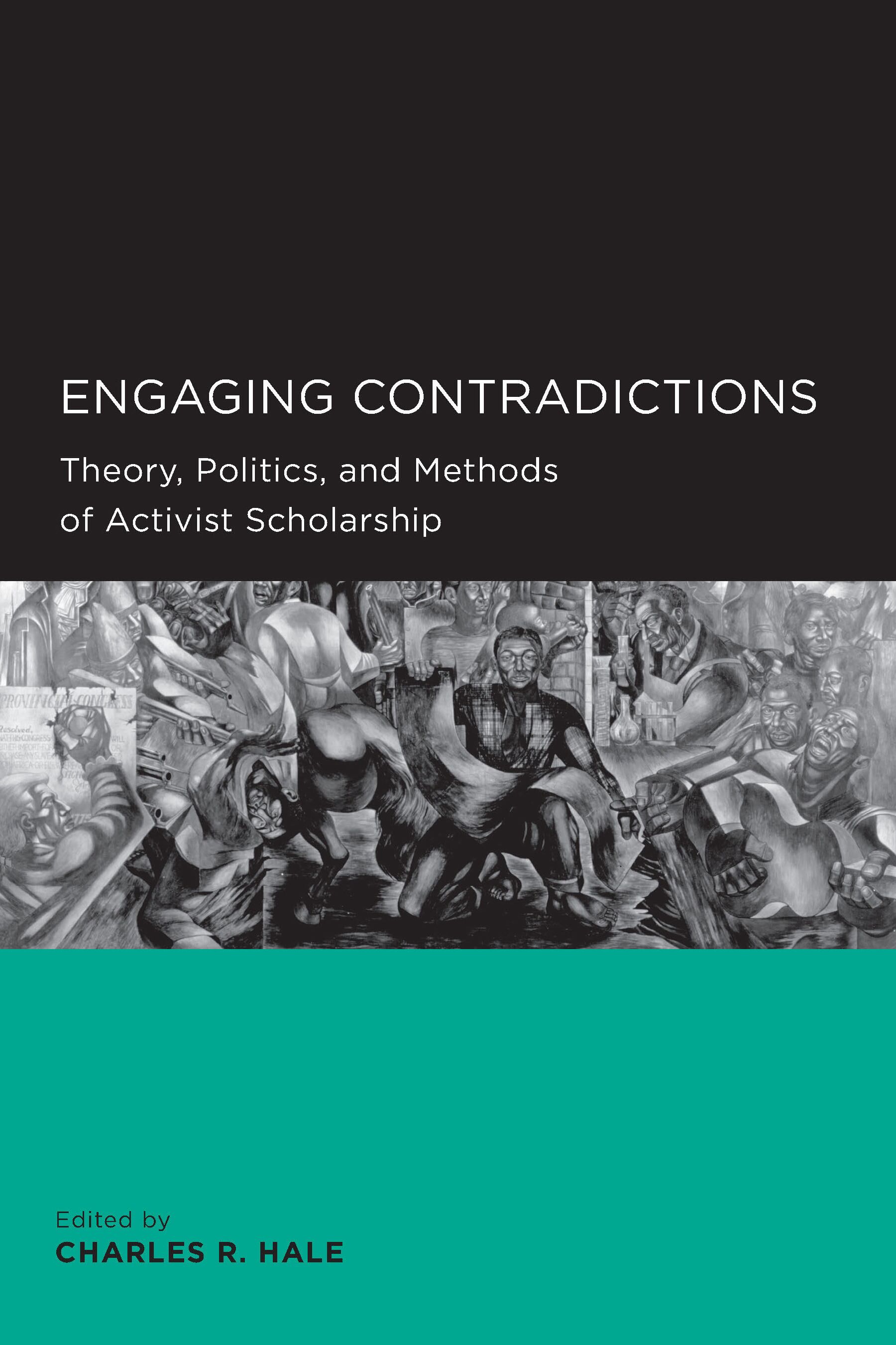
Engaging Contradictions
Scholars in many fields increasingly find themselves caught between the academy, with its demands for rigor and objectivity, and direct engagement in social activism. Some advocate on behalf of the communities they study; others incorporate the knowledge and leadership of their informants directly into the process of knowledge production. What ethical, political, and practical tensions arise in the course of such work? In this wide-ranging and multidisciplinary volume, leading scholar-activists map the terrain on which political engagement and academic rigor meet.Contributors:Ruth Wilson Gilmore, Edmund T. Gordon, Davydd Greenwood, Joy James, Peter Nien-chu Kiang, George Lipsitz, Samuel Martínez, Jennifer Bickham Mendez, Dani Nabudere, Jessica Gordon Nembhard, Jemima Pierre, Laura Pulido, Shannon Speed, Shirley Suet-ling Tang, João Vargas
eBook

To Keep the Republic
American democracy is at an inflection point.With voting rights challenged, election results undermined, and even the US Capitol violently attacked, many Americans feel powerless to save their nation's democratic institutions from the forces dismantling them.
eBook

The Work of Global Justice
Human rights have been generally understood as juridical products, organizational outcomes or abstract principles that are realized through formal means such as passing laws, creating institutions or formulating ideals. In this book, Fuyuki Kurasawa argues that we must reverse this 'top-down' focus by examining how groups and persons struggling against global injustices construct and enact human rights through five transnational forms of ethico-political practice: bearing witness, forgiveness, foresight, aid and solidarity. From these, he develops a new perspective highlighting the difficult social labour that constitutes the substance of what global justice is and ought to be, thereby reframing the terms of debates about human rights and providing the outlines of a critical cosmopolitanism centred around emancipatory struggles for an alternative globalization.
eBook

We Fight To Win
In an adult-dominated society, teenagers are often shut out of participation in politics.We Fight to Winoffers a compelling account of young people's attempts to get involved in community politics, and documents the battles waged to form youth movements and create social change in schools and neighborhoods.Hava Rachel Gordon compares the struggles and successes of two very different youth movements: a mostly white, middle-class youth activist network in Portland, Oregon, and a working-class network of minority youth in Oakland, California. She examines how these young activists navigate schools, families, community organizations, and the mainstream media, and employ a variety of strategies to make their voices heard on some of today's most pressing issuesùwar, school funding, the environmental crisis, the prison industrial complex, standardized testing, corporate accountability, and educational reform.We Fight to Winis one of the first books to focus on adolescence and political action and deftly explore the ways that the politics of youth activism are structured by age inequality as well as race, class, and gender.
eBook
The New Transnational Activism
The New Transnational Activism, first published in 2005, shows how even the most prosaic activities can assume broader political meanings when they provide ordinary people with the experience of crossing transnational space. This means that we cannot be satisfied with defining transnational activists through the ways they think. The defining feature of transnationalism in this book is relational, and not cognitive. This emphasis on activism's relational structure means that even as they make transnational claims, transnational activists draw on the resources, the networks, and the opportunities in which they are embedded, and only then - if at all - on more distant transnational links. But we can no more sharply draw a line between domestic and international politics in studying transnational activism than we could ignore local politics in studying its national equivalent. Understanding the processes that link the local, the national and the international is the major undertaking of the book.
eBook

Rallying for immigrant rights
From Alaska to Florida, millions of immigrants and their supporters took to the streets across the United States to rally for immigrant rights in the spring of 2006. The scope and size of their protests, rallies, and boycotts made these the most significant events of political activism in the United States since the 1960s. This accessibly written volume offers the first comprehensive analysis of this historic moment. Perfect for students and general readers, its essays, written by a multidisciplinary group of scholars and grassroots organizers, trace the evolution and legacy of the 2006 protest movement in engaging, theoretically informed discussions. The contributors cover topics including unions, churches, the media, immigrant organizations, and immigrant politics. Today, one in eight U.S. residents was born outside the country, but for many, lack of citizenship makes political voice through the ballot box impossible. This book helps us better understand how immigrants are making their voices heard in other ways.
eBook

Resisting Gendered Norms
Political scientists have, on occasion, missed subtle but powerful forms of ‘everyday resistance’ and have not been able to show how different representations (pictures, statements, images, practices) have different impacts when negotiating power. Instead they have concentrated on open forms of resistance, organized rebellions and collective actions. Departing from James Scott’s idea that oppression and resistance are in constant change, Resisting Gendered Norms provides us with a compelling account on the nexus between gender, resistance and gender-based violence in Cambodia. To illustrate how resistance is often carried out in the tension between, on the one hand, universal/globalised representations and, on the other, local ‘truths’ and identity constructions, in-depth interviews with civil society representatives, politicians as well as stakeholders within the legal/juridical system were conducted.
eBook

Vernacular Sovereignties
Indigenous women continue to be imagined as passive subjects at the margins of political decision-making, but they are in fact dynamic actors who shape state sovereignty and domestic and international politics. Manuela Lavinas Picq uses the case of Kichwa women successfully advocating for gender parity in the administration of Indigenous justice in Ecuador to show how Indigenous women can influence world politics.
eBook