
Catalogue Search | MBRL


Are you sure you want to remove the book from the shelf?

{{itemTitle}}
6,052
result(s) for
"Polity"
Sort by:


A Brutal Unity
To describe the Church as \"united\" is a factual misnomer--even at its conception centuries ago. Ephraim Radner provides a robust rethinking of the doctrine of the church in light of Christianity's often violent and at times morally suspect history. He holds in tension the strange and transcendent oneness of God with the necessarily temporal and political function of the Church, and, in so doing, shows how the goals and failures of the liberal democratic state provide revelatory experiences that greatly enhance one's understanding of the nature of Christian unity.
eBook

The Dualism of Contemporary Traditional Governance and the State: Institutional Setups and Political Consequences
In many parts of the world, people live in \"dual polities\": they are governed by the state and organize collective decision making within their ethnic community according to traditional rules. We examine the substantial body of works on the traditional-state dualism, focusing on the internal organization of traditional polities, their interaction with the state, and the political consequences of the dualism. We find the descriptions of the internal organization of traditional polities scattered and lacking comparative perspective. The literature on the interaction provides a good starting point for theorizing the strategic role of traditional leaders as intermediaries, but large potentials for inference remain underexploited. Studies on the consequences of \"dual polities\" for democracy, conflict, and development are promising in their explanatory endeavor, but they do not yet allow for robust conclusions. We therefore propose an institutionalist research agenda addressing the need for theory and for systematic data collection and explanatory approaches.
Journal Article

A Very European Way Out: Polity Maintenance and the Design of Article 50
Multilevel polities do not typically facilitate secession, so why did the European Union adopt Article 50? Revisiting formative debates from the 2003 Convention on the Future of Europe, we combine archival research with an original dataset of delegate debates over two levels: the existence and procedural operation of an exit article. This reveals essential new detail on the genealogy of Article 50. We locate this institutional innovation within a Rokkanian–Hirschmanian theoretical framework which treats exit closure as necessary for loyalty and resilience. Further refining this ‘polity’ perspective, we find many participants showed awareness of the potentially disruptive implications of an exit article. Yet, given extant tensions around ‘ever closer union’, a Eurocentric procedural design prevailed as a safety valve, granting EU authorities default control over any exit process. This European logic of ‘controlled opening' offers a potential blueprint for other integrating compound polities and international organizations facing backlashes from member states.
Journal Article

The Effect of Political Regime on Civil War: Unpacking Anocracy
Research published in the American Political Science Review shows that anocracies—as defined by the middle of the Polity index of political regime—are more susceptible to civil war than are either pure democracies or pure dictatorships. Yet, certain components of the Polity index include a factional category, where political competition is \"intense, hostile, and frequently violent. Extreme factionalism may be manifested in the establishment of rival governments and in civil war\" (Gurr 1989, 12). Not surprisingly, these components exhibit a strong relationship with civil war. When they are removed from the Polity index, however, the original relationship disappears. I conclude that the original finding is not driven by the relationship between political institutions and civil war but rather by a less provocative relationship between political violence and civil war.
Journal Article

The emergence of democratic constitutions: comparing the modern world to ancient Greece
Democracy has flourished twice in human history: first in ancient Greece and then, more than two millennia later, in the modern world. Although the historical record regarding most Greek poleis (city-states) is scant, there nevertheless exists sufficient information to categorize the constitutions of nearly 200 of the more than 1000 poleis that once existed. Using similar data from the modern world, we compare two centuries of ancient data to two centuries of modern data. In both eras, democracy grew in prevalence because, over many decades, transitions to democracy were sufficiently frequent to offset “backsliding” away from democracy. Thus, democracy eventually became the most common form of constitution in both ancient Greece and the modern world. Democracy appears to have expanded more rapidly among Greek poleis than among modern countries; however, we observe that after reaching 50 percent, the proportion of Greek democracies declined, rose again to half of all states, declined again, and rose to half again. The modern world just recently reached the 50 percent threshold, and whether it follows the Greek pattern remains to be seen.
Journal Article
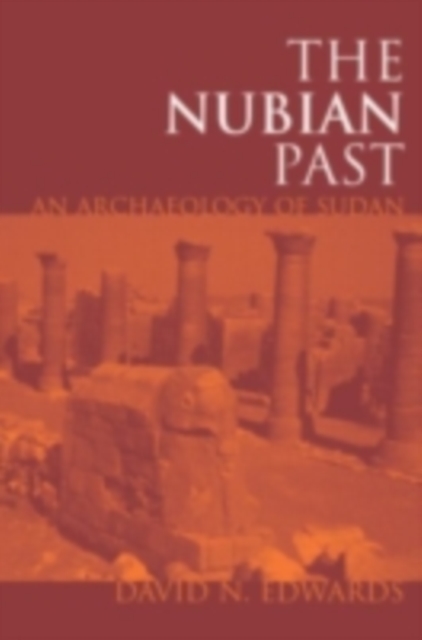
The Nubian Past
This cutting-edge synthesis of the archaeology of Nubia and Sudan from prehistory to the nineteenth century AD is the first major work on this area for over three decades. Drawing on results of the latest research and developing new interpretive frameworks, the area which has produced the most spectacular archaeology in sub-Saharan Africa is examined here by an author with extensive experience in this field. The geographical range of the book extends through the Nubian north, the Middle Nile Basin, and includes what has become the modern Sudan. Using period-based chapters, the region's long-term history is traced and a potential for a more broadly framed and inclusive 'historical archaeology' of Sudan's more recent past is explored. This text breaks new ground in its move beyond the Egyptocentric and more traditional culture-histories of Nubia, often isolated in Africanist research, and it relocates the early civilizations and their archaeology within their Sudanic Africa context.
This is a captivating study of the area's history, and will inform and enthral all students and researchers of Archaeology and Egyptology.
1. Introduction: Nubia, Sudan and Sudanic Africa 2. Hunters, Fishers and Gatherers (c.10,000-5,000BC) 3. Developing Complexity and Expanding Worlds of Herders and Farmers (c.5000-2000BC) 4. Kush and Egypt's Imperial Ventures (c.2000BC-1000BC) 5. The Kushite Revival: the XXVth dynasty and Napata (c.1000BC-350BC) 6. Meroitic Kush (c.350BC-AD300) 7. Post-Meroitic Transitions (c.300-500AD) 8. Medieval Nubia (c.500-1500AD) 9. Post-Medieval Sudan and Islam (c.1500-1900AD) 10. Conclusions: Towards an archaeology of the Sudan
David N. Edwards is a Visiting Honorary Fellow in the School of Archaeology and Ancient History, Leicester University, with extensive research experience in Sudan and Nubia since 1985. He has worked extensively as a field archaeologist in Britain as well as Libya, Egypt and Jordan.
eBook

The Polarization of Contemporary American Politics
Political elites of the United States are deeply polarized. Polarization of the Democratic and Republican Parties is higher than at any time since the end of the Civil War. This essay describes how the modern polarization trend emerged and its implications for mass political behavior and public policy outcomes. We contend that contemporary political polarization must be understood in terms of both the ideological divergence of the parties and the expansion of the liberal–conservative dimension of conflict to a wider set of social and cultural conflicts in American society. We close with the speculation that the Republican Party has become the more fractured of the parties along the liberal–conservative dimension at both the elite and mass level.
Journal Article

The Forum, the System and the Polity: Three Varieties of Democratic Theory
The theory of deliberative democracy is here furthered in terms of three images that locate its essence in respectively a single forum, a deliberative system, and an encompassing polity featuring particular integrative norms. The first two are ubiquitous, though contested, the third is stated here. Deliberative theorists need to contemplate how practices that make sense in each image connect to the other two. Forums only make sense when linked in a system that can synthesize very different deliberative virtues (notably, justification, reflection, and inclusion). Any system's democratic qualities can only be evaluated in terms of the polity. While judgment in terms of the conditions of normative integration in the polity is therefore primary, particular forums can promote deliberative authenticity in a system, and systems enable inclusive application of deliberative ideals. Deployed in this way, the three images help solve internal disputes and respond to critics.
Journal Article
