
Catalogue Search | MBRL


Are you sure you want to remove the book from the shelf?

{{itemTitle}}
386
result(s) for
"Polka"
Sort by:
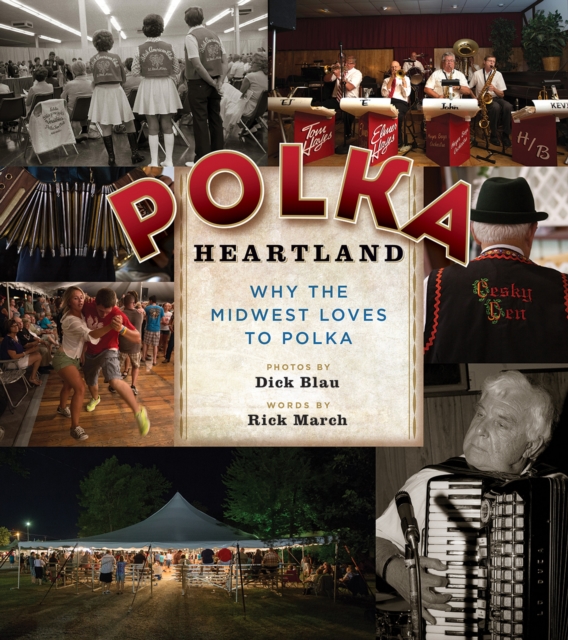
Polka Heartland
Polka Heartland\"\" captures the beat that pulses in the heart of Midwestern culture--the polka--and offers up the fascinating history of how \"\"oompah-pah\"\" came to be the sound of middle America. From the crowded dance tent at Pulaski Polka Days to an off-the-grid Mexican polka dance in small-town Wisconsin, \"\"Polka Heartland\"\" explores the people, places, and history behind the Midwest's favorite music.From polka's surprising origin story as a cutting-edge European fad to an exploration of the modern-day polka scene, author Rick March and photographer Dick Blau take readers on a joyful romp through this beloved, unique, and richly storied genre. \"\"Polka Heartland\"\" describes the artists, venues, instruments, and music-makers who have been pivotal to polka's popularity across the Midwest and offers six full-color photo galleries to immerse readers in today's vibrant polka scene.
eBook

Leading the Other: Gender and Colonialism in Partner Dancing's Long Century
In the 1840s, the polka craze established lead/follow partner dancing as the normative social dance structure in the Atlantic world. In the process, it imposed a choreographed performance of bourgeois heteropatriarchy (originally developed with the waltz) on Europe's colonies and post-colonies. However, a central mechanism of the lead/follow system in social partner dance is the woman's body attitude, and as the nature of that attitude changes, so do the associated dances. In the Americas, women acculturated to African-rooted principles of polycentricity disrupted the equilibrium of the lead/follow dynamic, catalyzing the creation of new partner dance forms and techniques. On the one hand, this resulted in an intensification of the lead/follow system such that men could now control and shape the dissociated parts of their partners’ bodies. On the other hand, it also seeded the fissioning and eventual dissolution of the dance partnership itself.
Journal Article

The Genetic Mechanisms Underlying the Concerted Expression of the yellow and tan Genes in Complex Patterns on the Abdomen and Wings of Drosophila guttifera
How complex morphological patterns form is an intriguing question in developmental biology. However, the mechanisms that generate complex patterns remain largely unknown. Here, we sought to identify the genetic mechanisms that regulate the tan (t) gene in a multi-spotted pigmentation pattern on the abdomen and wings of Drosophila guttifera. Previously, we showed that yellow (y) gene expression completely prefigures the abdominal and wing pigment patterns of this species. In the current study, we demonstrate that the t gene is co-expressed with the y gene in nearly identical patterns, both transcripts foreshadowing the adult abdominal and wing melanin spot patterns. We identified cis-regulatory modules (CRMs) of t, one of which drives reporter expression in six longitudinal rows of spots on the developing pupal abdomen, while the second CRM activates the reporter gene in a spotted wing pattern. Comparing the abdominal spot CRMs of y and t, we found a similar composition of putative transcription factor binding sites that are thought to regulate the complex expression patterns of both terminal pigmentation genes y and t. In contrast, the y and t wing spots appear to be regulated by distinct upstream factors. Our results suggest that the D. guttifera abdominal and wing melanin spot patterns have been established through the co-regulation of y and t, shedding light on how complex morphological traits may be regulated through the parallel coordination of downstream target genes.
Journal Article

Link between lipid metabolism and voluntary food intake in rainbow trout fed coconut oil rich in medium-chain TAG
We examined the long-term effect of feeding coconut oil (CO; rich in lauric acid, C12) on voluntary food intake and nutrient utilisation in rainbow trout (Oncorhynchus mykiss), with particular attention to the metabolic use (storage or oxidation) of ingested medium-chain TAG. Trout were fed for 15 weeks one of the four isoproteic diets containing fish oil (FO) or CO as fat source (FS), incorporated at 5 % (low fat, LF) or 15 % (high fat, HF). Fat level or FS did not modify food intake (g/kg0·8 per d), despite higher intestinal cholecystokinin-T mRNA in trout fed the HF-FO diet. The HF diets relative to the LF ones induced higher growth and adiposity, whereas the replacements of FO by CO resulted in similar growth and adiposity. This, together with the substantial retention of C12 (57 % of intake), suggests the relatively low oxidation of ingested C12. The down-regulation of carnitine palmitoyl-transferase-1 (CPT-1) confirms the minor dependency of medium-chain fatty acids (MCFA) on CPT-1 to enter the mitochondria. However, MCFA did not up-regulate mitochondrial oxidation evaluated using hepatic hydroxyacyl-CoA dehydrogenase as a marker, in line with their high retention in body lipids. At a low lipid level, MCFA increased mRNA levels of fatty acid synthase, elongase and stearoyl-CoA desaturase in liver, showing the hepatic activation of fatty acid synthesis pathways by MCFA, reflected by increased 16 : 0, 18 : 0, 16 : 1, 18 : 1 body levels. The high capacity of trout to incorporate and transform C12, rather than to readily oxidise C12, contrasts with data in mammals and may explain the absence of a satiating effect of CO in rainbow trout.
Journal Article


Banding Together
Why do some music styles gain mass popularity while others thrive in small niches?Banding Togetherexplores this question and reveals the attributes that together explain the growth of twentieth-century American popular music. Drawing on a vast array of examples from sixty musical styles--ranging from rap and bluegrass to death metal and South Texas polka, and including several created outside the United States--Jennifer Lena uncovers the shared grammar that allows us to understand the cultural language and evolution of popular music.
What are the common economic, organizational, ideological, and aesthetic traits among contemporary genres? Do genres follow patterns in their development? Lena discovers four dominant forms--Avant-garde, Scene-based, Industry-based, and Traditionalist--and two dominant trajectories that describe how American pop music genres develop. Outside the United States there exists a fifth form: the Government-purposed genre, which she examines in the music of China, Serbia, Nigeria, and Chile. Offering a rare analysis of how music communities operate, she looks at the shared obstacles and opportunities creative people face and reveals the ways in which people collaborate around ideas, artworks, individuals, and organizations that support their work.
eBook
Fashion Design and the Glamorous of Polka Dot
Fashion design is the art of the application of design and aesthetics or natural beauty to clothing and accessories. The old myth has told that a young Salmon finds a Polka Dot dress floating in the Connecticut River. The young Salmon dressed it and becomes excited about all the Trash in the River where she found a sofa floating and hops onto it. On the other hand young Salmon dreamed about becoming Human. Polka Dot pattern are somewhat a signature of the fashion designers houses. Polka Dot is a pattern consisting of an array of circles with same size of different. Heart motifs are the most common used concept for the valentines theme displays heart structures which have been highlighted with lighting. The most obvious is that when taking inspiration from similar mediums, there's a fine line between \"inspired by\" and \"copied\". Designers themselves are very involved in choosing what appears for their searches in order to promote their presentations and shopping locations. The designers came from different centuries; different countries and many different walks of life, but they all had one thing in common: the nature is the beloved and respect in all of its wonder and significance. Nature is therefore the garden planets and the sea creatures have been a good source of inspiration. However the term \"Polka Dot|| had been embedded and established in our minds and has been a part of our fashion vocabulary. The Polka Dots trend has been an integral part in the fashion industry. Most of the fashion during this era showed sleek silhouettes, emphasis on the waistline and a woman's curves. The dots were usually dainty or small in size and would be found in black, navy blue, or red articles of clothing as it's at sea fish or Begonia plant leaves. The present research is focusing on Polka Dots history, Polka Dots pattern, and its glamorous fashion designs as well as some designs inspired by that motive.
Journal Article

Engineering Technology Of Fish Farming Floating Nets Cages On Polka Dot Grouper (Cromileptes Altivelis) Used Artificial Feed Enriched Phytase Enzyme
One solution is to utilize engineering technology cultivation floating cage net polka dot grouper (ducker grouper), which is given artificial feed enriched with phytase enzymes. The objectives of this study was to examine the use of technology engineering floating net on ducker grouper on artificial feed that is enriched with different dose phytase enzymes to accelerate growth and survival. The research method used ducker grouper fish size 15,5 ± 0,5 cm in the net cages unit (1 m x 1 m x 1 m), 250 fish per cage, using 12 cages. Each net-cages was made of polyethylens netting, mesh size 12.5 mm. with complete randomized design (CRD) 4 treatment and 3 replication were feed Artificial enriched of phytase enzyme with the doses of A (0 FTU · kg-1 diet), B (200 FTU · kg-1 diet), C (500 FTU · kg-1 diet), and D (800 FTU · kg-1 diet) phytase enzyme. Feed was given 2 times a day in the morning and afternoon with 5% biomass per day. Data includes the growth of absolute weight polka dot grouper, FCR, and survival rate analyzed variety and Test Tukey.The result of the research showed that the difference of artificial feeding enriched phytase enzyme significantly (P <0,05) to growth, food conversion ratio (FCR), survival rete of polka dot grouper. The best treatment at C (500 mg / kg of feed) increase growth of absolute weight of 128.75 g, 1.75 (FCR), and a survival rate of 93.5%.
Journal Article

First record of Polka-dot ribbonfish Desmodema polystictum (Pisces: Trachipteridae) from Indian waters
Polka-dot ribbonfish Desmodema polystictum was recorded for the first time from Indian waters. A single specimen of D. polystictum (107 cm total length and weighing 480 g) was collected from Tharuvaikulam landing centre, north to Tuticorin, on the south-east coast of India during September 2010. The distinguishing characters of the species from other species of the family are discussed. Morphometric and meristic characters of D. polystictum are presented in this paper. With the present report, the distribution area of this species now extends to the Indian waters.
Journal Article