
Catalogue Search | MBRL


Are you sure you want to remove the book from the shelf?

{{itemTitle}}
23
result(s) for
"Polonius"
Sort by:

Hamlet
\"This Arden edition of Hamlet, arguably Shakespeare's greatest tragedy, presents an authoritative, modernized text based on the Second Quarto text with a new introductory essay covering key productions and criticism in the decade since its first publication. A timely up-date in the 400th anniversary year of Shakespeare's death which will ensure the Arden edition continues to offer students a comprehensive and current critical account of the play, alongside the most reliable and fully-annotated text available\"--Publisher's description.
Book

Elizabethan Revenge Tragedy, 1587-1642
A most thorough study of the Elizabethan Tragedy of Revenge, its origins, development, the ethical influence affecting it and the inter-relations of the plays.
Originally published in 1966.
The Princeton Legacy Library uses the latest print-on-demand technology to again make available previously out-of-print books from the distinguished backlist of Princeton University Press. These editions preserve the original texts of these important books while presenting them in durable paperback and hardcover editions. The goal of the Princeton Legacy Library is to vastly increase access to the rich scholarly heritage found in the thousands of books published by Princeton University Press since its founding in 1905.
eBook

Writing Old Age and Impairments in Late Medieval England
The old speaker in Middle English literature often claims to be impaired because of age. This admission is often followed by narratives that directly contradict it, as speakers, such as the Reeve in Chaucer's Canterbury Tales or Amans in Gower's Confessio Amantis, proceed to perform even as they claim debility. More than the modesty topos, this contradiction exists, the book argues, as prosthesis: old age brings with it debility, but discussing age-related impairments augments the old, impaired body, while simultaneously undercutting and emphasizing bodily impairments. This language of prosthesis becomes a metaphor for the works these speakers use to fashion narrative, which exist as incomplete yet powerful sources.
eBook

Writing Old Age and Impairments in Late Medieval England
The old speaker in Middle English literature often claims to be impaired because of age. This admission is often followed by narratives that directly contradict it, as speakers, such as the Reeve in Chaucer's Canterbury Tales or Amans in Gower's Confessio Amantis , proceed to perform even as they claim debility. More than the modesty topos , this contradiction exists, the book argues, as prosthesis: old age brings with it debility, but discussing age-related impairments augments the old, impaired body, while simultaneously undercutting and emphasizing bodily impairments. This language of prosthesis becomes a metaphor for the works these speakers use to fashion narrative, which exist as incomplete yet powerful sources.
eBook

Shakespeare's Brain
Here Mary Thomas Crane considers the brain as a site where body and culture meet to form the subject and its expression in language. Taking Shakespeare as her case study, she boldly demonstrates the explanatory power of cognitive theory--a theory which argues that language is produced by a reciprocal interaction of body and environment, brain and culture, and which refocuses attention on the role of the author in the making of meaning. Crane reveals in Shakespeare's texts a web of structures and categories through which meaning is created. The approach yields fresh insights into a wide range of his plays, includingThe Comedy of Errors, As You Like It, Twelfth Night, Hamlet, Measure for Measure,andThe Tempest.
Crane's cognitive reading traces the complex interactions of cultural and cognitive determinants of meaning as they play themselves out in Shakespeare's texts. She shows how each play centers on a word or words conveying multiple meanings (such as \"act,\" \"pinch,\" \"pregnant,\" \"villain and clown\"), and how each cluster has been shaped by early modern ideological formations. The book also chronicles the playwright's developing response to the material conditions of subject formation in early modern England. Crane reveals that Shakespeare in his comedies first explored the social spaces within which the subject is formed, such as the home, class hierarchy, and romantic courtship. His later plays reveal a greater preoccupation with how the self is formed within the body, as the embodied mind seeks to make sense of and negotiate its physical and social environment.
eBook
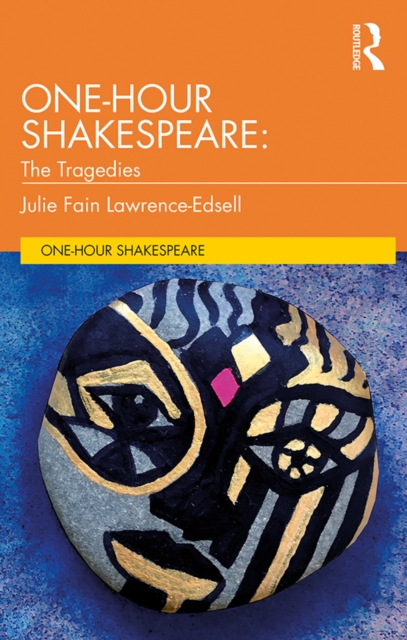
One-Hour Shakespeare
The One-Hour Shakespeare series is a collection of abridged versions of Shakespeare’s plays, designed specifically to accommodate both small and large casts.
This volume, The Tragedies, includes the following plays:
Hamlet
Julius Caesar
Macbeth
Othello
Romeo and Juliet
These accessible and versatile scripts are supported by: an introduction with emphasis on the evolution of the series and the creative process of editing; the One-Hour projects in performance, a chapter on implementing money-saving ideas and suggestions for production, whether in or outside a classroom setting; specific lesson plans to incorporate these projects successfully into an academic course; and cross-gender casting suggestions. These supplementary materials make the plays valuable not only for actors, directors and professors, but for any environment, cast or purpose.
Ideal for both academics and professionals, One-Hour Shakespeare is the perfect companion to teaching and staging the most universally read and performed playwright in history.
eBook

Idea and Act in Elizabethan Fiction
Represents an attempt to apply the techniques of modern literary criticism to the fiction of the Elizabethan period. The author tries \"to determine what Elizabethan fiction writers were trying to do and how they did it.\"
Originally published in 1969.
The Princeton Legacy Library uses the latest print-on-demand technology to again make available previously out-of-print books from the distinguished backlist of Princeton University Press. These editions preserve the original texts of these important books while presenting them in durable paperback and hardcover editions. The goal of the Princeton Legacy Library is to vastly increase access to the rich scholarly heritage found in the thousands of books published by Princeton University Press since its founding in 1905.
eBook

Selected writings on aesthetics
A seminal figure in the philosophy of history, culture, and language, Johann Gottfried Herder (1744-1803) also produced some of the most important and original works in the history of aesthetic theory. A student of Kant, he spent much of his life striving to reconcile the opposing poles of Enlightenment thought represented by his early mentors. His ideas influenced Hegel, Schleiermacher, Nietzsche, Dilthey, J. S. Mill, and Goethe.
This book presents most of Herder's important writings on aesthetics, including the main sections of one of his major untranslated works,Kritische Wälder(Critical Forests). These notes, essays, and treatises, the majority of which appear here in English for the first time, show this idiosyncratic thinker both deeply rooted in the controversies of his day and pointing the way to future developments in aesthetics. Chosen to reflect the extent and diversity of Herder's concerns, the texts cover such topics as the psychology and physiology of aesthetic perception, the classification of the arts, taste, Shakespeare, the classical tradition, and the relationship between art and morality.
Few thinkers have reflected so sensitively and productively on the cultural, historical, anthropological, ethical, and theological dimensions of art and the creative process. With this book, the importance of aesthetics to the evolution and texture of Herder's own thought, as well as his profound contribution to that discipline, comes fully into view.
eBook

Style in Hamlet
Shakespeare intended his plays to be seen, not read. With this thought uppermost in mind, Charney offers here a provocative analysis of Hamlet, the most stylistically inventive of all Shakespeare's plays, strictly in terms of its style-by which he means the distinct modes of expression used by the playwright in accomplishing his dramatic ends. Careful consideration is given to the stagecraft of the play, to lighting and sound effects, gesture and scenery. The play's imagery is discussed with attention to its style as well as to its content. Each of the three main characters is examined in terms of his unique mode of expression. Among the interesting discoveries this approach allows is a new perspective on the character of Hamlet, who is found to have four distinct styles which he employs as the occasion demands.
Originally published in 1969.
The Princeton Legacy Library uses the latest print-on-demand technology to again make available previously out-of-print books from the distinguished backlist of Princeton University Press. These editions preserve the original texts of these important books while presenting them in durable paperback and hardcover editions. The goal of the Princeton Legacy Library is to vastly increase access to the rich scholarly heritage found in the thousands of books published by Princeton University Press since its founding in 1905.
eBook

The Idea of a Theater
An original and beautifully written book on changing perspectives in the art of theater. Through a study of nine plays—Oedipus Rex, Bérénice, Tristan und Isolde, Hamlet, Ghosts, The Cherry Orchard, Six Characters in Search of an Author, Noah, Murder in the Cathedral—the author shows how all playwrights seek to \"hold the mirror up to nature\" and how in this respect the art of drama is always the same, varying only with the philosophical and aesthetic concepts of each age. The Idea of a Theater will delight both readers with a special interest in drama and those who read drama as a source of insight into man's nature and man's changing ideas of himself.
Originally published in 1949.
The Princeton Legacy Library uses the latest print-on-demand technology to again make available previously out-of-print books from the distinguished backlist of Princeton University Press. These editions preserve the original texts of these important books while presenting them in durable paperback and hardcover editions. The goal of the Princeton Legacy Library is to vastly increase access to the rich scholarly heritage found in the thousands of books published by Princeton University Press since its founding in 1905.
eBook